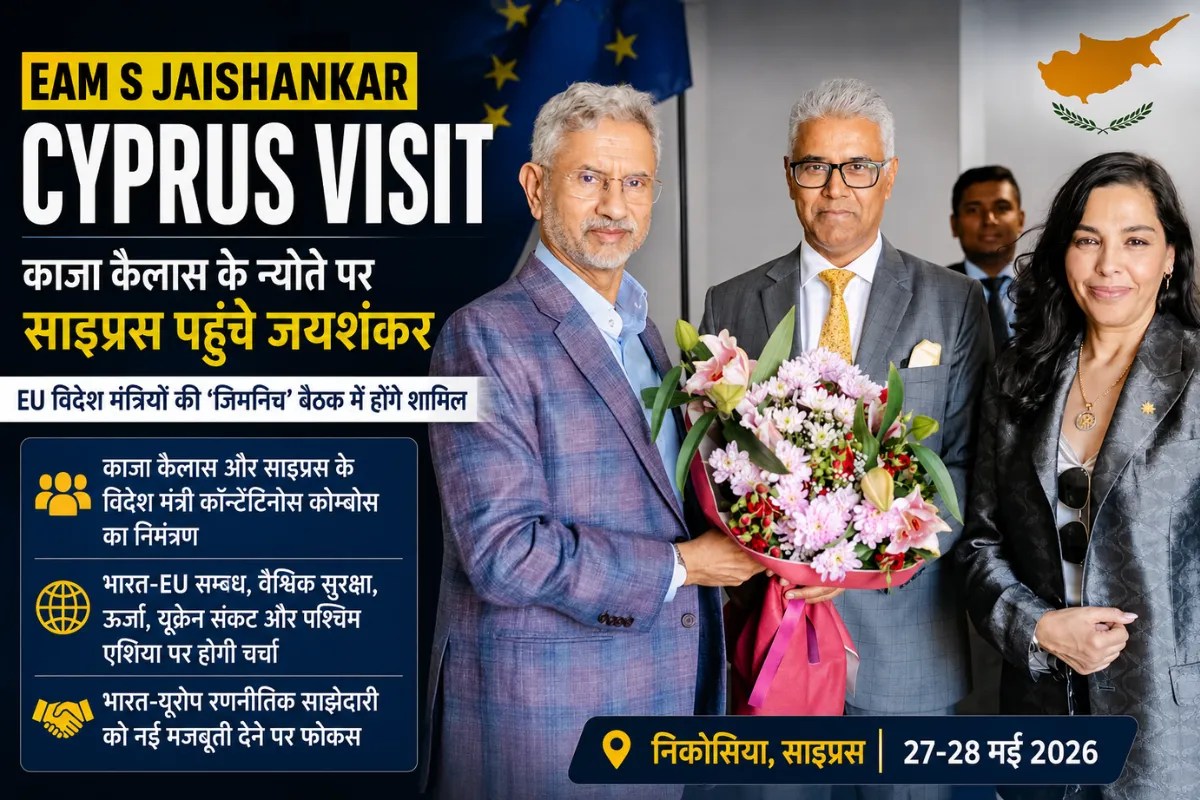
The salt air off the coast of Larnaca doesn’t care about geopolitics. It blows across the tarmac, carrying the same ancient scent of the Mediterranean that Phoenician merchants and Roman generals breathed centuries ago. But today, the tarmac holds something different. A plane arrives bearing India’s External Affairs Minister, S. Jaishankar. He steps out into the Cypriot sun, not for a holiday, but because a massive, quiet shift is happening in how the world connects, and Cyprus is right at the center of it.
He is here at the invitation of Kaja Kallas, the Vice President of the European Commission. On paper, it looks like a standard diplomatic meeting. The headlines read like any other dry press release: bilateral talks, regional security, economic cooperation.
But look closer. Look at the map.
Cyprus is a small island with a massive shadow. It sits at the absolute crossroads of Europe, Asia, and Africa. For India, a nation rapidly expanding its global footprint and seeking a reliable anchor in the Mediterranean, this island is no longer just a dot on a travel itinerary. It is a strategic bridgehead.
The Weight of the Invitation
When the European Union sends an invitation through someone as influential as Kallas, it isn’t small talk. It is a calculated signal. Europe is looking East, and India is looking West. They are meeting in the middle.
Imagine a shipping merchant in Mumbai, trying to figure out how to get textiles or technology into the heart of Europe without relying on increasingly volatile, unpredictable trade routes. The traditional paths are choked with tension. Piracy, regional conflicts, and political instability make the old waters treacherous. The merchant needs a backdoor into Europe—a safe, stable harbor that operates under European law but understands Eastern realities.
That is Cyprus.
When Jaishankar sits down with Cypriot officials and EU representatives, they aren't just reading from briefing binders. They are drawing new lines on the global transit map. They are discussing the India-Middle East-Europe Economic Corridor (IMEC), a project that exists to redefine global trade. If you can secure the Mediterranean node, you secure the future of wealth moving between the world’s most populous nation and the world’s largest single market.
Conversations Behind Closed Doors
The air inside diplomatic chambers is always heavy. It smells of polished wood, espresso, and the intense anxiety of maintaining global order. The discussions in Nicosia cover ground that affects millions of ordinary citizens who may never even hear about the meeting.
- Defense and Maritime Security: The Mediterranean is crowded. Navies from across the globe slice through these waters daily. For India, ensuring freedom of navigation here is directly tied to its economic survival.
- The Mobility Pact: This is where the human element truly shines. It is about talent. India has an abundance of skilled professionals, tech innovators, and students. Cyprus needs that energy to fuel its growing service and technology sectors. They are hammering out ways to make moving between these two worlds legal, smooth, and mutually beneficial.
- Cross-Border Investment: It takes immense capital to build the infrastructure of tomorrow. The talks are designed to reassure investors that their money is safe moving between New Delhi and Nicosia.
Consider the reality of a young software engineer in Bengaluru. Right now, her dreams might be limited by visa caps or complex immigration bureaucracies. The agreements being refined during this visit are designed to melt those barriers away. It is an effort to turn geopolitical alignment into actual, lived opportunity for real people.
Why Cyprus Matters to New Delhi
It is easy to misjudge Cyprus because of its size. That is a mistake. In the theater of international relations, geography is destiny. Cyprus has consistently backed India on major global platforms, maintaining a steady, reliable friendship when other nations wavered.
But friendship in politics is sustained by mutual need. Cyprus wants a powerful ally outside of Europe to balance regional dynamics. India wants a firm foothold inside the European Union family.
The relationship is moving past the stage of polite nods and cultural exchanges. It has entered the realm of hard infrastructure. We are talking about data cables under the sea, shared intelligence on maritime threats, and joint ventures in renewable energy.
The sun begins to set over Nicosia, casting long shadows across buildings that have seen empires rise and fall. The diplomats finish their notes, the handshakes are photographed, and the motorcades hum to life. The true success of Jaishankar’s visit won't be measured by the immediate press conferences, but by the quiet movement of cargo ships, the opening of new corporate offices, and the journeys of young professionals crossing oceans to build a interconnected future.