Silence.
That is the first thing you notice when the internet decides you are a villain—not the screaming of the crowd, which happens miles away in glow-lit bedrooms and podcast studios, but the sudden, suffocating quiet of your own phone refusing to ring from people you have known for twenty years. Meanwhile, you can read similar events here: Why Blaming the UN for Global Failures is a Lazy Comfort Blanket.
Picture a kitchen table in a quiet Utah town. Let us call the man sitting at it David, a hypothetical stand-in for every ordinary citizen who has ever woken up to find their name stitched into a viral conspiracy, though the lawsuit now unfolding in real life belongs to a very real Utah resident who has had enough. David is pouring lukewarm coffee into a chipped mug while the morning light hits the linoleum, his thumb hovering over a screen where millions of strangers are dissecting his life, his face, and his supposed involvement in a tragedy he had nothing to do with.
Outside his window, the street looks entirely ordinary. A neighbor walks a golden retriever. A sprinkler ticks rhythmically against a dry patch of Bermuda grass. Yet inside the invisible architecture of the digital square, David has already been tried, convicted, and sentenced to permanent infamy. To explore the bigger picture, check out the recent analysis by NPR.
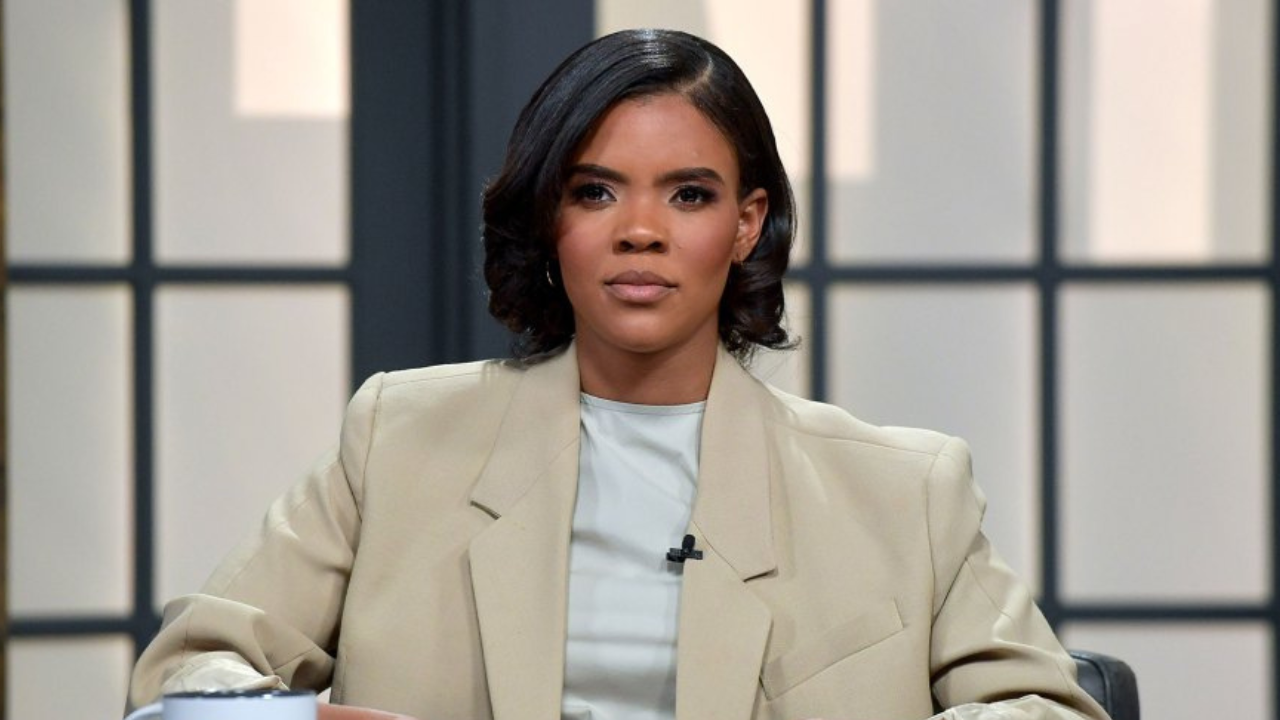
This is the exact fault line beneath the defamation lawsuit filed by a Utah man against political commentator Candace Owens, stemming from allegations broadcast on her podcast in the wake of the Charlie Kirk shooting. On paper, the legal filing looks like a dry collision of torts, jurisdictional rules, and First Amendment defenses. In reality, it is a story about what happens when a private life gets caught in the gears of a modern outrage machine—and whether the law still remembers how to protect a person who never asked to be famous.
The Anatomy of a Digital Wildfire
To understand why a man in Utah would take on one of the loudest microphones in American media, you have to understand the physics of modern rumor.
Years ago, I watched a local business owner in my own community get falsely linked to a municipal scandal by a mid-sized blog. It took four hours for the post to go local, twelve hours for his storefront windows to be egged, and three years for his name to stop triggering a nervous pause in bank loan offices. The retraction, published six weeks later in twelve-point font at the bottom of a Tuesday update, was read by roughly forty people. The original lie had been shared forty thousand times.
When a tragedy like the Charlie Kirk shooting erupts into the national bloodstream, the hunger for immediate answers outpaces the slow, methodical grind of actual police work. Law enforcement moves in days and weeks; the podcast ecosystem moves in minutes.
Consider what happens next in that vacuum. A high-profile tragedy occurs, and millions of eyes turn toward the screen, desperate for a narrative that makes sense of senseless violence. Into that void steps a commentator with an audience larger than most cable news networks, armed with speculation, "just asking questions" framing, or outright assertions about who was involved and why.
In the Utah lawsuit against Candace Owens, the plaintiff alleges that statements made on her podcast crossed the line from protected political commentary into actionable defamation—falsely linking him to the shooting and turning his real-world existence into a waking nightmare.
But the real problem lies elsewhere. Most people assume that if you are innocent, the truth eventually rescues you. That is a comforting fairy tale from an era when rumors traveled at the speed of a printing press. Today, an accusation delivered from a studio microphone carries the kinetic force of a artillery shell, while the truth arrives weeks later on a bicycle.
Private Figures in a Public Execution
Why does the law treat a Utah resident differently than a politician or a media pundit when both are insulted on the internet?
Think of fame as a voluntary step onto a boxing ring. Under landmark American legal precedent—specifically the Supreme Court’s 1964 ruling in New York Times Co. v. Sullivan—public figures who step into that ring accept that they will take heavy punches, and the law requires them to prove "actual malice" to win a defamation suit. They must show the speaker knew the statement was false or acted with reckless disregard for the truth.
A private citizen, however, never climbed through the ropes. They were just walking past the arena on their way to buy groceries.
Because private individuals do not have access to press conferences, national TV appearances, or million-follower feeds to clear their names, the law traditionally lowers the bar they must clear to prove defamation. In most jurisdictions, including Utah, a private plaintiff generally needs to show negligence—that the speaker failed to exercise reasonable care in checking the facts before broadcasting a reputation-destroying claim to the world.
This distinction is the hidden hinge on which the entire lawsuit turns.
- The Shield of Opinion: Media defendants routinely argue that their broadcasts are rhetorical hyperbole, speculation, or protected opinion rather than statements of verifiable fact.
- The Burden of Harm: A plaintiff must demonstrate that the false statements were published to third parties and caused concrete damage to their reputation, livelihood, or standing in the community.
- The Reach of the Platform: When a podcast reaches millions of listeners, the "publication" is not a whisper over a backyard fence; it is a permanent, searchable archive indexed by every search engine on earth.
It is genuinely unsettling to realize how fragile a clean name has become. You can spend forty years building a reputation through quiet honesty, paying your taxes, coaching little league, and showing up for your neighbors—and watch the entire structure turn to ash in a forty-five-minute audio episode recorded three states away.
The Economics of Certainty
Why do massive platforms so rarely pause to verify before they broadcast?
Follow the incentives. Nuance does not trend. Saying, "We do not yet know who is responsible, and we must wait for forensic evidence," causes listeners to tap forward thirty seconds or switch to another show. Certainty, even fabricated or premature certainty, triggers the exact neurochemical spike that keeps audiences glued to their headphones during a morning commute.
If we imagine a podcast producer sitting in front of a mixing board—a hypothetical glimpse into the editorial reality of high-speed commentary—the clock is always ticking. Another host is already live. Another clip is already circulating on social media. Hesitation feels like losing market share.
And so the guardrails bend. Unverified tips get laundered into "reports." Coincidences get welded into conspiracies. A face in a crowd or a name in a public database becomes a character in a dark drama written for clicks and downloads.
History shows us this pattern is not new, only faster. During the Salem witch trials, spectral evidence—claims based on dreams and visions rather than physical proof—was enough to condemn neighbors because the community was terrified and desperate for someone to blame. Modern digital mobs do not use gallows, yet they wield a modern version of spectral evidence: blurry screenshots, out-of-context social media posts, and the confident cadence of a host who sounds like they know a secret the mainstream media is hiding.
What Happens When the Courtroom Doors Close
As this Utah lawsuit moves through the legal system, people inevitably ask whether a single citizen can actually hold a major media figure accountable, or whether the First Amendment makes podcasters practically untouchable.
The answer lies in a string of high-profile defamation battles over the last decade that proved free speech is not a blank check for falsehood. While the First Amendment fiercely protects vigorous debate on public issues—and rightly so, because a free society cannot survive if citizens are terrified to criticize power—it has never protected the right to falsely accuse an innocent private citizen of involvement in a violent crime.
Yet winning in court is a slow, agonizing remedy.
Legal discovery takes months or years. Depositions force a plaintiff to relive the worst days of their life under oath, answering invasive questions about their family, their finances, and their mental health while defense attorneys probe for any crack in their story. Even if a jury eventually awards damages, no check can delete every cached webpage, erase every hostile comment on a message board, or undo the moment a stranger stared too long at the plaintiff's children in a grocery store aisle.
I find myself torn every time I read filings like this one. On one hand, I want a fiercely protected press and wide breathing room for public commentary, even commentary that makes me wince. On the other, I look at the sheer asymmetry of power between a single person in Utah and a syndication machine capable of reaching millions before lunch.
When the law fails to draw a bright line between robust public debate and reckless character assassination, the cost is paid entirely by the people who can least afford it.
The Quiet After the Broadcast
The legal briefs will eventually pile up in a Utah courthouse, thick with citations about fault standards, contextual meaning, and constitutional protections. Lawyers will argue over the precise inflection of a sentence, the definition of a public controversy, and whether a reasonable listener would take a podcast host’s words as literal truth or speculative theater.
Somewhere away from the filings and the cable news chyrons, a man still has to walk out his front door every morning.
He has to check his mailbox, buy gas, look his neighbors in the eye, and wonder which of the strangers passing him on the sidewalk still carries a distorted version of his face in their head, planted there by a voice they trusted through a pair of earbuds.
The microphone in the studio has long since moved on to the next outrage, the next breaking headline, the next name in the news—leaving behind a quiet street in Utah where one man is still sweeping up the glass.