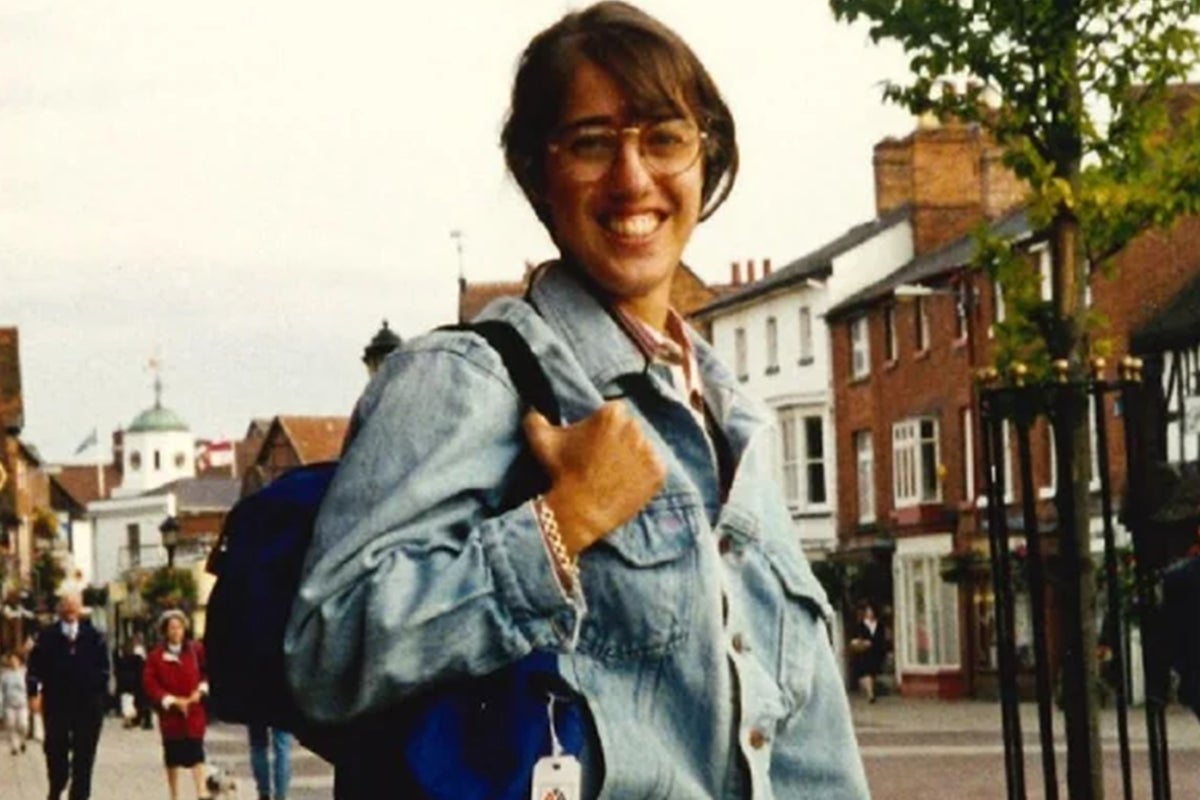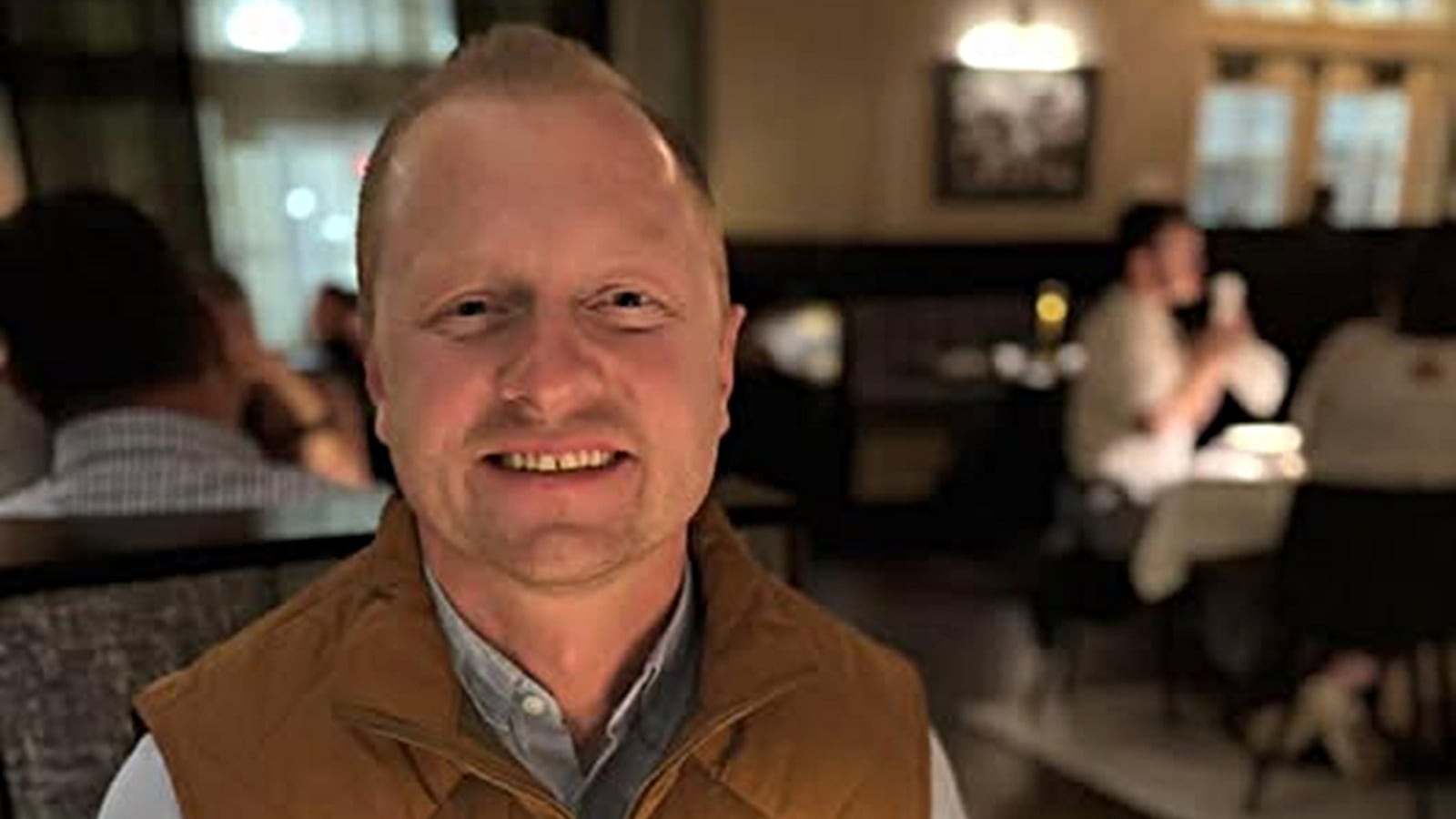
In the sterile, fluorescent-lit hallways of the Broward County courthouse, a legal anomaly is unfolding that defies the standard "eye for an eye" narrative of American justice. On one side stands the state, wielding the full weight of a manslaughter charge against 19-year-old Wesley Desier. On the other side sits the victim’s own widow, demanding the case be dismantled.
The death of Dr. Kellen Williams, a 37-year-old high school teacher and father, appeared at first to be a straightforward tragedy of modern road rage. Following a minor traffic dispute in July 2024, an altercation led to Williams falling and striking his head on the pavement—a blow that proved fatal. Yet, the subsequent push for "Restorative Justice" by his widow, Samantha Williams, has ignited a firestorm within the Florida legal system. She isn't just asking for leniency. She is demanding the total absolution of the man the state says killed her husband.
This case exposes the friction between a rigid criminal justice system designed for retribution and a growing movement of survivors who believe that more incarceration only compounds the original tragedy.
The Collision of Law and Loss
The facts of the night are rarely in dispute, yet the interpretation of those facts varies wildly depending on who is holding the file. Wesley Desier was a teenager with no prior record. Kellen Williams was a respected educator. When their vehicles clipped each other, the resulting confrontation lasted less than sixty seconds.
Under Florida’s manslaughter statutes, the state does not need to prove premeditated intent to kill. They only need to prove "culpable negligence" or an intentional act that caused death. To the prosecutor’s office, Desier’s actions—regardless of his age or lack of criminal history—resulted in the permanent silencing of a community leader. They see a clear-cut case of a life taken and a debt owed to society.
Samantha Williams sees a different ledger.
She has been vocal in her belief that her husband, a man who dedicated his life to teaching and conflict resolution, would never have wanted a young Black man’s life destroyed over a momentary lapse in judgment. Her stance creates a massive hurdle for the prosecution. While a victim’s family does not have the legal power to drop charges—that power belongs solely to the State Attorney—their cooperation is the engine that drives a successful conviction. Without a grieving widow seeking justice on the stand, the state’s narrative loses its emotional core.
The Mechanics of Restorative Justice
What Samantha Williams is advocating for is a process known as Restorative Justice. Unlike the traditional punitive model, which asks "What law was broken and how do we punish the offender?", this model asks "Who was harmed and how do we repair the damage?"
It is an uncomfortable fit for a US legal system built on the adversarial model. In a standard courtroom, the defendant is encouraged to remain silent, and the victim is often treated as a piece of evidence rather than a participant with agency. Williams is attempting to flip that script. She argues that putting Desier in a Florida state prison for fifteen years does nothing to bring back her husband, nor does it make the streets safer. Instead, she has proposed a path that involves community service, mentorship, and a direct acknowledgment of the harm caused.
Critics of this approach, including many in law enforcement, argue that this sets a dangerous precedent. They believe that "mercy" can be a mask for "instability." If the state begins dropping charges every time a grieving spouse feels a surge of compassion, the deterrent effect of the law evaporates. They argue the law exists to protect the public interest, not just the private feelings of the victim's family.
The Prosecution Paradox
The Broward County State Attorney’s Office finds itself in a political and ethical vice. If they proceed with the trial against the widow’s wishes, they look like cold-hearted bureaucrats steamrolling a grieving woman. If they drop the charges, they face accusations of being "soft on crime" and failing to uphold the sanctity of human life.
Historically, prosecutors rely on the "Victim Impact Statement" to secure maximum sentencing. Here, that statement is being used as a shield for the accused. This creates a fascinating legal tension. The state technically represents "The People," a collective entity that includes neighbors, fellow drivers, and the general public who have an interest in discouraging street violence.
But can "The People" truly claim to be more aggrieved than the woman who has to raise her children alone?
The Demographic Subtext
It is impossible to ignore the racial and social dynamics at play. Kellen Williams was a Black educator; Wesley Desier is a young Black man. In many high-profile cases involving the death of Black men, the outcry is for the harshest possible punishment for the perpetrator. Samantha Williams has explicitly stated that she refuses to see another Black man swallowed by a carceral system that she believes is fundamentally broken.
She is choosing to break the cycle of "Black-on-Black" tragedy by refusing to participate in the second half of it: the incarceration. This isn't just about one death; it is about a widow’s refusal to let the state use her husband’s name to justify a system she distrusts.
The Precedent of Forgiveness
While rare, this isn't the first time the legal system has been forced to reckon with extreme forgiveness. We saw it in the case of Brandt Jean, who hugged the police officer who murdered his brother, Botham Jean, in his own apartment. The difference here is that Samantha Williams is taking it a step further. She isn't just offering forgiveness after a conviction; she is trying to prevent the conviction altogether.
This moves the conversation from "personal healing" to "public policy."
If the state yields to her request, it signals a shift in how we value the input of survivors. It suggests that justice might be a customizable product rather than a standardized one. For some, that is the definition of progress. For others, it is the beginning of legal chaos where the outcome of a killing depends on the personality of the survivors left behind.
The High Stakes of Silence
As the trial date approaches, the defense is likely to lean heavily on the "Accidental Death" defense, bolstered by the widow's testimony. If they can prove that the fall was an unforeseeable consequence of a minor shove or a verbal spat, the manslaughter charge begins to crumble.
Wesley Desier remains in a state of legal limbo. He is a young man whose future depends entirely on whether a judge or a jury values the "letter of the law" over the "spirit of the victim." He has remained largely silent, as advised by counsel, but the shadow of Kellen Williams hangs over every motion filed.
The prosecutor’s office has hinted at a possible plea deal, but Williams’ supporters are holding out for a total dismissal. They argue that a felony conviction, even without prison time, is a life sentence in a different form—stripping a young man of voting rights, job opportunities, and housing for decades to come.
A System Under Pressure
The American justice system was never designed to handle grace. It was designed to handle evidence, witnesses, and punishments. When a person like Samantha Williams enters that system and demands something other than blood, the machinery grinds to a halt. It doesn't know what to do with a woman who looks at the man who killed her husband and sees a person worth saving.
The final decision will likely come down to a procedural hearing where the judge must determine if a "Nolle Prosequi" (a formal notice of abandonment of the prosecution) is in the best interest of justice.
Justice, in this case, is a word that has been split in two. For the state, it is a conviction. For the widow, it is the end of the court case. Only one of them can win, and the loser will likely be the very concept of "The People" the court is sworn to protect.
We are watching a collision between the cold logic of the state and the searing, radical empathy of a woman who has already lost everything and refuses to lose her humanity too. This is no longer a simple criminal trial. It is a referendum on whether the law is a tool for healing or merely a hammer for those who have already been broken.
The court must now decide if the state has a right to be angry on behalf of a family that is choosing peace.