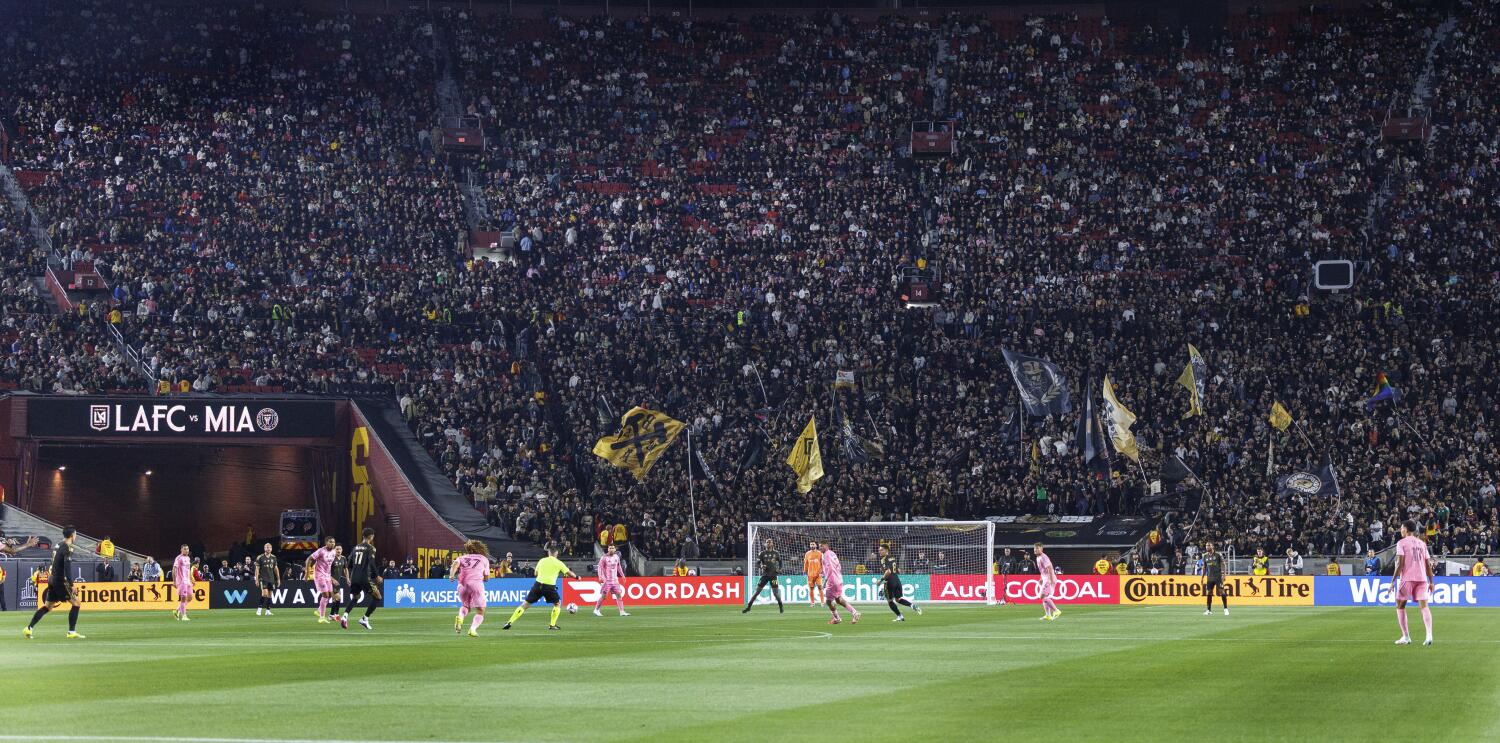
When 22,921 fans packed BMO Stadium to watch LAFC take on Inter Miami, the box office numbers told a story of unprecedented success. Tickets averaged $690 on the secondary market. The guest list read like a Vanity Fair Oscar party, featuring Leonardo DiCaprio, Prince Harry, and LeBron James. On the surface, it looked like American soccer had finally arrived at the center of the cultural zeitgeist. But the "Messi Effect" is a deceptive metric for the health of a domestic league. The record crowd in Los Angeles wasn't just a tribute to one man's greatness; it was a high-stakes stress test for a business model that has spent three decades trying to buy relevance.
Major League Soccer (MLS) is currently operating on a dual track. One track is the frantic, short-term monetization of a global icon. The other is a gritty, localized struggle to build a sustainable sporting culture that survives after the circus leaves town. To understand why that night in LA mattered, you have to look past the pink jerseys and the celebrity selfies. You have to look at the infrastructure of the hype.
The Economics of the Spectacle
For years, the American soccer narrative centered on "growth." We talked about participation rates among youth and the rising value of expansion fees. Then Lionel Messi arrived in Miami, and the conversation shifted from growth to extraction. The LAFC match served as the ultimate proof of concept for a new, aggressive pricing tier in American sports.
Apple TV and Adidas didn't just sign a player; they subsidised a traveling roadshow. When Inter Miami visits a city, ticket prices don't just increase—they decouple from reality. In Los Angeles, a city already accustomed to premium pricing for the Lakers or the Dodgers, the "Messi Tax" pushed the ceiling to a level previously reserved for the Super Bowl. This creates a dangerous precedent. While the league celebrates the short-term revenue spikes, they are effectively pricing out the "supporter" class—the loud, flag-waving fans in the 3252 section who provide the actual atmosphere that television broadcasters crave.
The business logic is simple. If you have a depreciating asset with a limited shelf life—Messi is, after all, in the twilight of his career—you squeeze every cent out of the window available. But the long-term risk is a hollowed-out fan base. If a family of four can no longer afford a mid-week game because the league has pivoted to a "premium event" model, the organic connection to the local community begins to fray.
Why LAFC Was the Perfect Foil
Most teams in MLS act as grateful hosts when Miami comes to town. They move games to NFL stadiums to maximize gate receipts. They lean into the "Harlem Globetrotters" vibe of the encounter. LAFC did something different. They refused to move the game from their 22,000-seat home. They kept the environment intimate, hostile, and focused on their own brand.
This was a clash of two different philosophies of American soccer. Inter Miami represents the "Galactico" model—importing global superstars to create an instant, if perhaps temporary, powerhouse. LAFC represents the "Civic" model—building a team that is deeply integrated into the fabric of Los Angeles, focusing on high-level scouting in South America and a sophisticated data-driven approach to roster building.
The game was a tactical masterclass in how star power can override structural competence. LAFC dominated large stretches of play. They looked like the more cohesive, better-coached unit. Yet, Messi provided two moments of transcendental quality—two assists that carved open one of the best defenses in the league. It was a reminder that in the business of entertainment, the individual often trumps the system. For MLS, the challenge is ensuring the system is strong enough to stand on its own once those individual moments of magic are no longer for sale.
The Apple TV Gamble and the Hidden Data
We cannot discuss the LA crowd without discussing the screen. The 10-year, $2.5 billion deal with Apple changed the math for every owner in the league. This deal is not built on traditional Nielsen ratings. It is built on subscriptions and data harvesting. Every person who tuned in to see Messi play LAFC became a data point in a larger ecosystem.
The league is no longer just selling a sport; it is selling a tech platform. The record-breaking attendance numbers are essentially marketing collateral for the Apple TV "Season Pass." When you see A-list celebrities in the stands, you aren't just seeing fans; you are seeing "influencers" in a carefully curated broadcast product. The goal is to move the perception of MLS from a "retirement league" to a "must-see lifestyle brand."
The Vulnerability of the Single-Entity Structure
MLS is unique because of its single-entity structure. The league owns all player contracts; the "owners" are actually investor-operators in the league itself. This was designed to prevent the kind of financial collapse seen in previous American soccer iterations. However, the Messi era is testing the limits of this socialism.
When Inter Miami’s valuation skyrocketed toward $1 billion following Messi’s arrival, it lifted the floor for everyone else. But it also created a massive disparity in leverage. If you are an owner in a smaller market like Columbus or Salt Lake City, you are benefiting from the shirt sales in Miami, but you are also struggling to compete for the same level of global attention. The league is currently a house divided between those who want to spend like European giants and those who want to maintain the strict cost-control measures that have ensured survival for thirty years.
The Youth Development Paradox
While the cameras were trained on the Argentine legend, a more significant shift was happening on the pitch. MLS has quietly become one of the most prolific exporters of young talent in the world. The league’s academies are finally producing players who are being sold to the Premier League and the Bundesliga for tens of millions of dollars.
The danger of the current "Superstar Era" is that it overshadows this progress. For every veteran like Sergio Busquets or Jordi Alba on the pitch in LA, there were young players like Bryce Duke or Kwadwo Opoku (before his trade) whose development is the real key to the league's future. If the league becomes too focused on being a destination for aging icons, it risks clogging the pathways for the domestic talent that will eventually comprise the US National Team.
The spectacle in LA was a sugar high. It felt great, it looked incredible on social media, and it generated a massive amount of cash. But a league cannot live on sugar alone. The "how" behind that crowd involves a sophisticated mix of scarcity marketing, celebrity curation, and the gravity of a once-in-a-century talent.
The Infrastructure of the Aftermath
What happens when the 2026 World Cup ends and Messi eventually hangs up his boots? This is the question that haunts the executive offices in New York. The infrastructure being built right now—the stadiums like BMO, the training centers, and the streaming platforms—must be able to sustain interest without a singular focal point.
The LAFC match proved that there is a massive appetite for "Event Soccer" in America. The task now is to convert the casual observers who came to see a celebrity into "Life-ers" who will show up on a rainy Wednesday in March to see a game between two mid-table teams. That transition requires more than just high ticket prices and famous faces. It requires a level of tribalism that can't be manufactured in a boardroom.
Tribalism is born from history, geography, and shared struggle. It is the one thing money cannot buy. While the LAFC-Inter Miami game was a commercial triumph, it was also a reminder of how far the league still has to go. Most of the people in those $700 seats weren't there because they loved the clubs; they were there because they wanted to say "I was there" for a specific moment in pop culture.
The real victory for American soccer won't be another record crowd for a global superstar. It will be the day a stadium in the Midwest sells out at a premium price for two teams composed of players the average person on the street hasn't heard of yet. Until then, the league remains in a state of gilded transition—thriving in the spotlight of others while still trying to find its own voice.
Focus on the season ticket holders who have been there since the days of half-empty NFL stadiums. They are the ones who will determine if this era was a legitimate turning point or just another expensive footnote in the long, complicated history of the sport in the United States. Ensure the pricing models do not permanently alienate the very people who built the foundation for this moment.