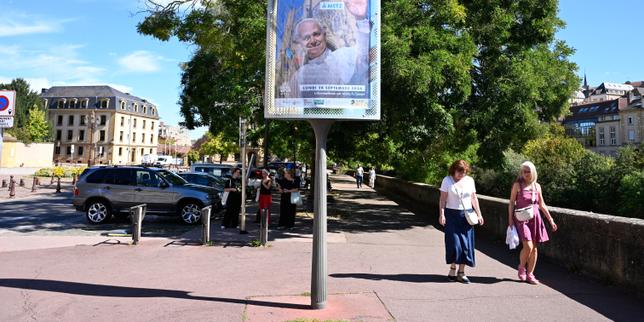
The medieval stone of Metz does not yield easily to modern optimism. When municipal leaders whisper of salvation arriving in a papal carriage, they are indulging in a very old European delusion: the belief that a high-profile ecclesiastical visit can permanently wash away decades of economic stagnation, industrial abandonment, and civic bruising. The impending visit of a pontiff—fictitiously or speculatively framed in local discourse around a figure of historic reconciliation like a hypothetical Pope Leo XIV coming to celebrate peace and European integration—is treated by city halls not merely as a spiritual event, but as a desperate public relations lifeline. It is an attempt to use the immense theatrical gravity of the Vatican to rewrite an urban narrative that has grown stubbornly difficult to market.
For decades, Metz has wrestled with its identity. Situated in the Grand Est region of France, this borderland city watched its steel and coal scaffolding crumble long before the rest of the continent admitted to post-industrial decay. The closure of heavy industries left gaping physical and psychological wounds. While tourist brochures lean heavily on the Gothic majesty of the Saint-Étienne Cathedral and the gleaming, titanium-clad curve of the Centre Pompidou-Metz, the reality on the ground for everyday residents is far more complex. Unemployment numbers stubbornly hover above national averages, youth drain toward Luxembourg for higher wages, and the municipal budget strains under the weight of maintaining historical architecture without a robust manufacturing tax base.
Enter the enduring myth of the royal or papal visit. Throughout European history, struggling municipalities have thrown exorbitant sums at pageantry, hoping that a grand spectacle will convince foreign investors and restless citizens that a renaissance is underway. But public relations spectacles rarely alter economic fundamentals. A pontifical mass draws thousands of pilgrims, fills hotel rooms for a weekend, and generates fleeting television coverage. Then the altars are dismantled, the road barriers are cleared, and the structural deficit remains.
To understand why civic leaders cling so desperately to these grand gestures, one must examine the mechanics of contemporary urban branding. Mid-sized European cities caught between major metropolitan hubs face a brutal competitive landscape. Metz sits in the shadow of Paris, Frankfurt, and Brussels. It cannot compete on pure financial scale or tech sector gravity. Instead, it must sell heritage, culture, and European symbolism. The rhetoric surrounding European peace and cross-border cooperation is deeply embedded in the local ethos, given the region's blood-soaked history of shifting national borders between France and Germany. When politicians frame a papal visit as a diplomatic triumph for European unity, they are playing to a deep-seated local yearning for relevance. They want Metz to be viewed not as a decaying provincial outpost, but as the beating heart of transnational reconciliation.
Yet, this romanticized view overlooks the hard mechanics of urban turnaround. Real renewal requires boring, unglamorous investments: vocational training schools that actually match local employer needs, aggressive zoning reforms to encourage small business density, and sustainable infrastructure projects that reduce commuter dependency on neighboring countries. A papal benediction does not pave roads, nor does it lower corporate tax burdens for startups trying to establish a foothold in the local market. Relying on divine or diplomatic intervention to fix structural municipal decline is an admission of political exhaustion.
The danger of the papal PR strategy lies in the inevitable hangover. When a city invests its political capital and financial reserves into staging a mega-event, other critical municipal services often absorb the budgetary shock. Parks go unmaintained, public transit schedules are cut, and social services are stretched thin, all while millions are funneled into security apparatuses, crowd control barriers, and aesthetic touch-ups designed to impress visiting dignitaries for forty-eight hours.
Towns that stake their futures on cultural tourism and high-profile institutional visits frequently fall into the trap of gentrification without growth. The historic center gets a fresh coat of paint and expensive coffee shops open their doors, while peripheral neighborhoods—where the real demographic weight of the city resides—continue to rot away from lack of attention. This creates a deeply fractured urban fabric where the postcard version of the city bears almost no resemblance to the daily lived experience of its inhabitants.
If Metz is truly to transcend its post-industrial hangover, it must shed its reliance on external saviors, whether they wear white vestments or corporate suits. The obsession with image management is a symptom of a broader malaise: a lack of faith in indigenous political agency. True urban resilience cannot be imported from Rome or Paris. It must be forged through the grinding, unromantic work of local consensus-building, economic diversification, and a cold-eyed assessment of what the city can realistically sustain.
The cathedral bells will ring, the incense will drift across the Place d'Armes, and the dignitaries will exchange solemn handshakes about the eternal promise of European peace. But when the last television crew packs its cables and departs, Metz will still belong to the people who live there, forced to confront the same economic gravity they faced before the holy motorcade ever rolled into town. The real work has never waited for permission from the Vatican.