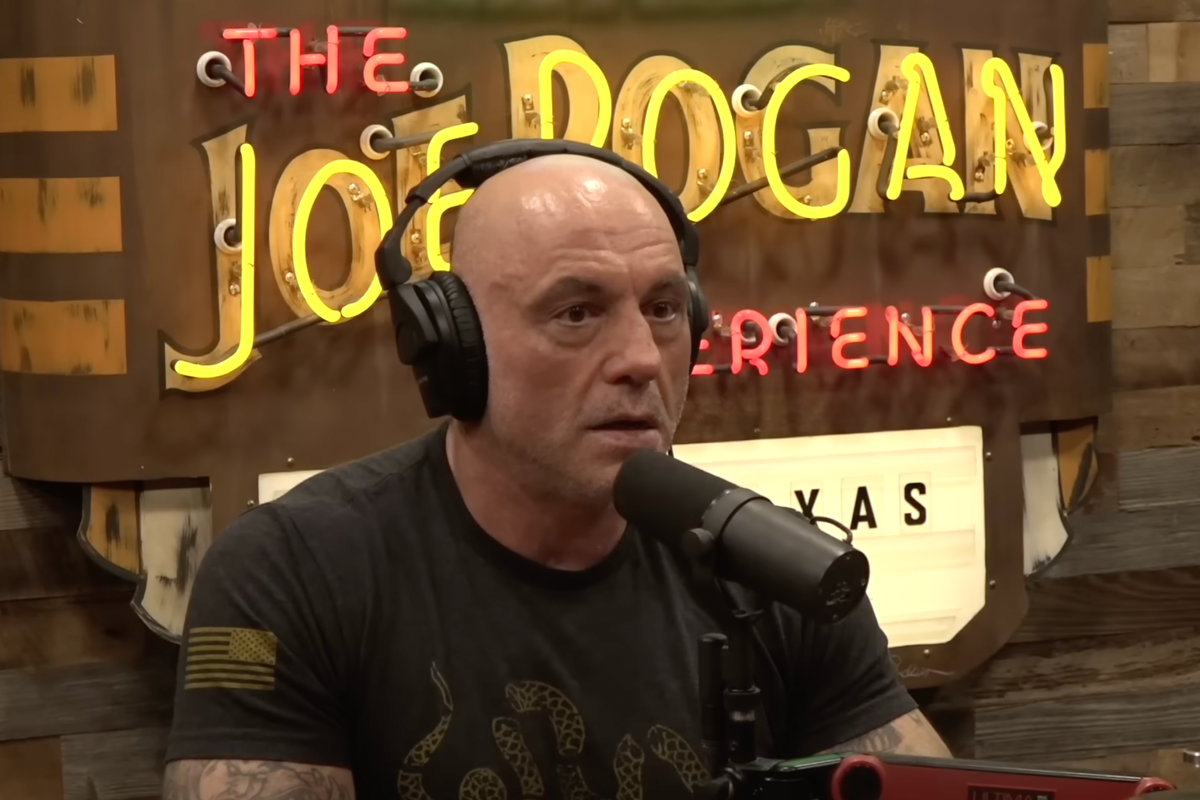
The room is intentionally insulated. Soundproof foam lines the walls, absorbing the stray frequencies of a humid Austin afternoon. In the center sits a heavy wooden table, cluttered with headphones, swivel mounts, and two studio microphones. To an outsider, it looks like a high-end garage setup where friends gather to argue about martial arts, comedy, or UFOs. But when the red light glows, this quiet room becomes one of the most volatile pieces of real estate on the planet.
For years, we watched the media ecosystem fracture from the comfort of our living rooms. We saw the old guard—the nightly news anchors with their perfectly parted hair and solemn gravity—slowly lose their grip on the public consciousness. They spoke from teleprompters in sterile studios, delivering highly polished, focus-grouped narratives. Then came the era of unedited, multi-hour conversations. No commercial breaks. No producers whispering frantic corrections into an earpiece. Just two people talking until they ran out of things to say.
Power has always been obsessed with control. If you control the printing press, you control the town. If you control the broadcast towers, you control the nation. But what happens when the most influential broadcast in human history is just a guy in a t-shirt asking questions that make bureaucrats uncomfortable?
The answer arrived not with a public press release or a formal congressional hearing, but behind the closed doors of a multi-billion-dollar tech corporation.
The Call from Pennsylvania Avenue
Picture an executive sitting at a minimalist desk in Stockholm or New York. The phone rings. The caller ID indicates an origin point somewhere within the federal apparatus of the United States government. This is not a routine check-in. It is an exercise of immense pressure disguised as a polite inquiry.
Joe Rogan recently pulled back the curtain on these silent collisions. During a conversation on his show, he dropped a casual bombshell that barely registered with the traditional news cycle but sent shockwaves through the independent media world. He revealed that sitting presidents—or at least the sprawling administrations operating under their names—personally reached out to Spotify. Their objective was simple: shut him down. Get him off the platform. Silence the feed.
"It was nuts," Rogan recounted, his voice carrying the slight detachment of a man who has looked directly into the sun and lived to tell the story.
The sheer absurdity of the situation deserves closer inspection. The leader of the free world, tasked with managing geopolitical conflicts, economic crises, and the massive machinery of a superpower, was actively worried about a podcaster talking to comedians and scientists. It reveals an unspoken truth that the political establishment desperately tries to hide: they are terrified of unmonitored human connection.
Consider the mechanics of a modern presidency. Every syllable uttered by a commander-in-chief is scrubbed by speechwriters, vetted by legal teams, and weighed for political risk. It is an existence defined by curation. When that apparatus encounters a medium that completely rejects curation, a profound systemic panic sets in. They cannot predict what will be said next. They cannot issue a retraction fast enough to catch a viral clip. The old tools of media manipulation simply do not work on a three-hour audio file downloaded by millions of people within minutes of its release.
The Invisible Stakes of the Open Mic
We often talk about free speech as an abstract legal concept. We cite constitutional amendments and historical precedents, turning a living, breathing human necessity into a dry debate for courtroom lawyers. But the pressure placed on Spotify to crush its most profitable creator shows that the battle for free speech is fought in much dirtier, more practical arenas.
When an administration pressures a private corporation to alter its content distribution, it bypasses the legal system entirely. It utilizes the quiet lever of corporate compliance. A large company has regulatory vulnerabilities. It has tax considerations. It has antitrust scrutiny to worry about. A nudge from a government official carries an implicit threat: Fix this problem for us, or we might find a reason to look closer at your business.
This is where the human element becomes painful. It forces us to look at the people caught in the middle. The engineers who built the platform, the executives who risked their careers to sign historic distribution deals, and the listeners who rely on these shows to get through a long drive or a lonely night shift.
Think about a long-haul truck driver cruising down an empty interstate at two in the morning. The headlights pierce the darkness, and the only companionship is the voice coming through the dashboard speakers. For that driver, a long-form podcast is not just entertainment; it is a tether to sanity. It feels real because it is messy. People stumble over their words. They change their minds mid-sentence. They laugh at things they shouldn't.
When the state attempts to sever that tether, they are not just regulating media. They are policing the auditory companionship of the working class. They are deciding what thoughts you are allowed to keep you company in the dead of night.
The Anatomy of the Panic
Why did the pushback reach such an extreme peak? The answer lies in the nature of authority itself. Bureaucracy thrives on predictability and expertise. For decades, the public was told to listen exclusively to credentialed experts who operated within strict Institutional boundaries.
Then came the fractures of the early 2020s. The world grew complicated, confusing, and deeply frightening. People wanted answers, but more than that, they wanted to see the math. They wanted to hear the arguments happen in real-time, flaws and all.
When a podcast hosts a controversial figure, it does not mean the host agrees with every word spoken. It means the room is big enough for the conversation to happen. But to an administration obsessed with managing public perception, an open conversation is indistinguishable from dissent. They view the audience not as autonomous adults capable of sorting truth from fiction, but as volatile components that must be carefully handled.
The internal conversations within Spotify during those high-pressure months must have been agonizing. On one side stood the financial reality: Rogan was the anchor tenant of their entire podcasting strategy, pulling in numbers that traditional television networks could only dream of. On the other side stood the immense, crushing weight of political disapproval.
It is easy to imagine the late-night emails, the emergency board meetings, and the quiet reassurances whispered to nervous investors. The corporate entity had to balance its commitment to creative freedom against the cold reality of political survival.
Yet, the platform held its ground. Not necessarily out of pure altruistic heroism, but because they recognized a fundamental shift in the wind. If you bend the knee to one administration, you belong to every administration that follows. The moment a platform allows a politician to dictate who gets a microphone, it ceases to be a platform. It becomes a megaphone for the state.
The Shift That Cannot Be Reversed
The revelation that presidents tried to break the back of an independent podcast marks a point of no return. It exposes the desperation of an aging system trying to maintain its grip on an audience that has already walked out of the theater.
But the real problem lies elsewhere, far beyond the specific details of a single streaming contract. The true tension is found in the widening gap between how the ruling class speaks and how everyday humans communicate. We live in an era where trust in major institutions has plummeted to historic lows. When people see the highest offices in the land attempting to reach down and silence a talk show, it does not make them trust the institutions more. It does exactly the opposite. It validates their deepest suspicions. It makes the banned content look like forbidden knowledge.
Every attempt to suppress a voice only amplifies its signal. The phenomenon is old, well-documented, and entirely human. We are hardwired to look at the thing someone is trying to hide from us.
Sitting in that soundproof room in Texas, adjusting his headphones, Rogan seemed to understand the gravity of what he survived. He wasn't bragging; he was observing a bizarre cultural milestone. A guy who used to commentate on cage fights and host reality television game shows had inadvertently become a primary concern for the most powerful office on earth.
The microphones remain on. The conversations continue to stream out across the globe, uninterrupted by the anxieties of Washington. The world has changed, and no amount of high-level phone calls can put the old media monopoly back together again. The listeners have tasted a raw, unedited version of reality, and they are never going back to the script.