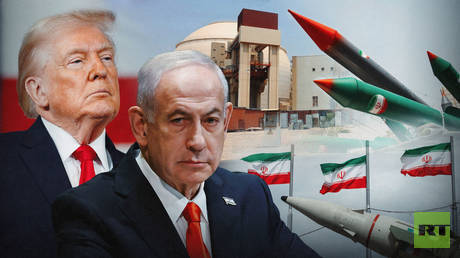
Fear sells, and in the world of Middle Eastern geopolitics, "nuclear catastrophe" is the ultimate premium product. For decades, the beltway pundits and the think-tank industrial complex have peddled a vision of the region as a hair-trigger powder keg where one rogue centrifuge or a single miscalculated strike leads to an immediate atomic exchange. They are wrong. They aren't just wrong about the timeline; they are wrong about the fundamental mechanics of power in the Levant and the Gulf.
The lazy consensus suggests that we are standing on the precipice of a regional nuclear arms race. This narrative ignores the cold, hard reality of the Stability-Instability Paradox. This concept, famously articulated by Glenn Snyder, suggests that when two nations achieve nuclear parity, the probability of a direct, large-scale war actually decreases, even if it emboldens them to engage in smaller, proxy skirmishes. We aren't looking at a countdown to Armageddon; we are looking at the messy, frustrating, but ultimately stable arrival of a new regional balance.
The Myth of the Mad Mullahs and Irrational Actors
The most persistent—and intellectually lazy—argument is that Middle Eastern leaders are "irrational actors" who would gladly embrace national suicide for a religious or ideological win. History says otherwise. From the Cold War to the present, every state that has acquired nuclear weapons has behaved with extreme caution the moment they actually possessed the button.
Look at the Iranian leadership. They are survivalists. They have navigated decades of sanctions, internal unrest, and "maximum pressure" campaigns. You don't survive that by being a martyr; you survive that by being a ruthless pragmatist. The pursuit of nuclear "threshold" status isn't about starting a fire; it’s about buying the ultimate fire insurance. They want the capability because the capability itself is the deterrent. Using the weapon is the only thing that actually guarantees their total destruction.
Proliferation is a Slow Walk Not a Sprint
The media loves to scream about "breakout times." They track days and weeks as if nuclear weapons are a weekend DIY project. This ignores the massive gap between having enough highly enriched uranium (HEU) and having a deliverable warhead.
- Weaponization: Shrinking a nuclear device to fit on top of a ballistic missile is a monumental engineering feat.
- Re-entry: Building a vehicle that can survive the heat of re-entering the atmosphere without incinerating the payload is a high-level physics hurdle.
- Command and Control: Establishing the secure, redundant systems needed to manage a nuclear arsenal is a decade-long organizational challenge.
The "catastrophe" narrative treats these as trivialities. In reality, they are the friction that slows the march to nuclearization to a crawl. Saudi Arabia isn't going to buy a "nuke in a box" from Pakistan tomorrow. That’s a Tom Clancy plot, not a viable foreign policy. Any nation entering this space knows that the moment they move from "capability" to "deployment," the geopolitical price tag triples.
Why Israel Prefers the Gray Zone
Standard reporting suggests Israel is desperate to stop any regional nuclear development at any cost. This misses the nuance of the Begin Doctrine. While Israel has historically used preemptive strikes—Osirak in Iraq (1981) and Al-Kibar in Syria (2007)—to prevent rivals from going nuclear, the strategic calculation has shifted.
The regional powers have learned. They don't build single, massive reactors anymore. They build deeply buried, decentralized, and redundant facilities. A single surgical strike no longer solves the problem; it only delays the inevitable while providing the victim with the perfect moral justification to sprint for the finish line.
Israel knows this. Their strategy has evolved from "total prevention" to "managed delay." Cyber operations like Stuxnet and targeted assassinations are designed to make the program's cost-to-benefit ratio unbearable, not to trigger a regional war. The "catastrophe" is avoided not by grand treaties, but by the constant, grinding friction of clandestine competition.
The Nuclear Taboo is Stronger Than Your Fear
Since 1945, the nuclear taboo has held firm. Even during the height of the Cold War, with thousands of warheads on high alert and leaders who genuinely loathed one another, no one pulled the trigger. Why? Because nuclear weapons are the only tools of war that lose their value the moment they are used.
In the Middle East, the "bomb" is a tool of diplomacy and prestige. It is the seat at the table. It is the "don't touch me" sign on the front door. The idea that a regional power would use a nuclear weapon against a neighbor—knowing that the fallout (both literal and political) would devastate their own territory and turn them into a global pariah—defies every law of political gravity.
The Real Danger Isn't a Mushroom Cloud
If you want to worry about something, stop obsessing over a nuclear exchange. The real threat is miscalculation in the gray zone. When every player is trying to dance right up to the edge of the other's "red line" without crossing it, someone eventually trips.
Imagine a scenario where a cyberattack intended only to disable a centrifuge inadvertently causes a catastrophic failure that leaks radiation. Or a situation where a conventional drone strike on a "civilian" research facility is interpreted as the start of a decapitation strike. These are the risks of the status quo. It’s not a planned catastrophe; it’s an accidental one born of overconfidence in our ability to manage "limited" escalation.
Stop Asking if the Middle East is Close to a Catastrophe
The premise of the question is flawed. It assumes a binary: either we have a deal, or we have a mushroom cloud. The reality is a permanent state of high-tension equilibrium.
We are moving into a "multipolar" Middle East where power is shared among several heavily armed regional players. This isn't a disaster; it’s a transition. It’s the end of the era where one or two superpowers could dictate terms from thousands of miles away. It will be loud, it will be tense, and there will be plenty of "red alerts" to keep the cable news cycles churning.
But the "catastrophe" isn't coming. The players are too smart, the stakes are too high, and the weapons are too destructive to actually use. The Middle East isn't on the brink of a nuclear war; it's entering a period of nuclear-armed peace—and that is exactly what the fear-mongers can't afford to admit.
Accept the tension. Stop waiting for the end of the world. It’s not happening.



