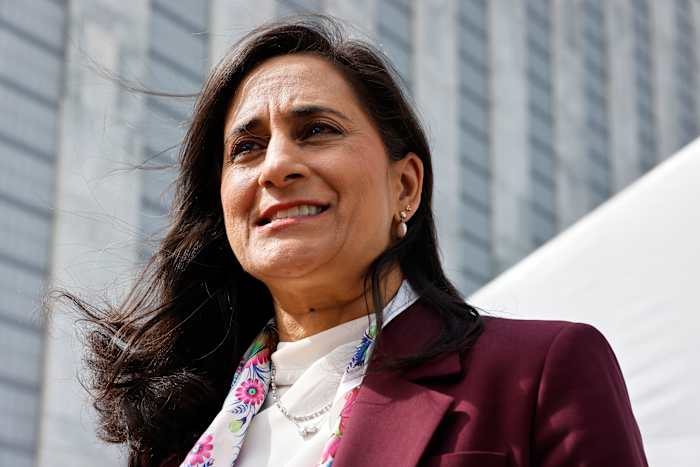
Canada’s foreign ministry is desperately trying to rebrand. At the United Nations General Assembly, senior officials leaned heavily into a nostalgic political security blanket: the middle powers strategy. The pitch is straightforward. As global superpowers fracture multilateral institutions and trade rules break down under economic nationalism, Ottawa claims it will rally mid-sized nations to forge new coalitions, diversify trade away from Washington, and defend the international rules-based order.
It sounds sophisticated. It plays well in domestic press briefings. But it is largely a diplomatic fiction masking a profound structural vulnerability. Don't forget to check out our recent coverage on this related article.
To understand why this strategy carries an expiration date, one must look past the polished rhetoric of diplomatic podiums and examine the unvarnished realities of modern statecraft. Canada is attempting to project global leadership while its own economic foundations remain tethered entirely to a volatile superpower neighbor, and while its domestic policy contradictions undermine its international credibility.
The Geography Trap and the Trade Illusion
The fundamental flaw in Ottawa's grand design is simple: geography cannot be negotiated away. Roughly three-quarters of Canadian exports cross the southern border into the United States. No amount of high-level handshaking in New York, Geneva, or Beijing alters the brute fact of continental integration. If you want more about the history of this, NBC News offers an excellent breakdown.
When political figures talk up trade diversification as an alternative to American dominance, they are selling a comforting illusion. Over the past year, Canadian delegations have signed dozens of bilateral defense, security, and economic agreements spanning dozens of nations. Yet, signing an memorandum of understanding with a distant partner does not instantly construct supply chains, port infrastructure, or deep commercial integration.
Take the recent diplomatic outreach toward Asian and European markets. While securing alternative markets is a prudent risk-management exercise, it cannot replace the velocity of capital and goods moving across the Detroit River or the 49th parallel. When middle powers like Canada attempt to play across multiple boards without a primary anchor, they risk being squeezed rather than empowered. True strategic autonomy requires an independent economic base that Canada has consistently failed to cultivate over decades of industrial stagnation and lagging productivity.
The Credibility Gap on the World Stage
A middle power strategy relies entirely on moral authority and diplomatic consistency. If you want smaller nations to follow your lead against great power coercion, your domestic actions must match your international declarations.
This is where the strategy collapses under the weight of its own hypocrisy. Canadian diplomats routinely lecture international forums on climate action, sustainable transitions, and the necessity of moving away from fossil fuels. Simultaneously, domestic policy realities force the federal government to approve pipeline expansions, back fossil fuel projects, and navigate tense internal disputes over energy production.
When Canadian representatives arrive at global summits preaching environmental stewardship while heavily tied to resource extraction economies that miss emission targets, developing nations notice the double standard. Credibility in international coalitions cannot be sustained through rhetoric alone. When nations with vastly different governance models—such as emerging middle powers in the Global South—look at Ottawa's positioning, they see an ally of convenience rather than a principled independent leader.
Variable Geometry Versus Hard Reality
Proponents of the middle power revival often point to the concept of variable geometry—the idea that nations can form shifting, issue-specific coalitions rather than rigid, permanent blocs. You partner with one country on critical minerals, another on artificial intelligence regulation, and a third on maritime security.
In theory, this allows a nimble middle power to punch above its weight class. In practice, variable geometry is code for ad-hoc improvisation in a world governed by raw power dynamics. When a major superpower imposes tariffs or exerts secondary sanctions, flexible coalitions tend to evaporate. Nations with smaller economies ultimately look out for their immediate survival. They do not risk economic retaliation from a superpower to support a middle-tier nation unless there is a direct, transactional payoff.
Canada’s current diplomatic posture attempts to straddle two incompatible worlds. It wants the security guarantees and economic integration of the North American fortress while retaining the moral high ground of an unaligned global mediator.
History suggests this balancing act rarely survives a severe systemic shock. As great power competition intensifies, the middle of the road becomes a dangerous place to stand. If Ottawa wants its diplomatic maneuvers to amount to more than empty theater, it must confront the hard truth: influence abroad requires economic resilience, industrial capacity, and domestic coherence at home. Until those foundational pieces are fixed, the middle power strategy remains nothing more than whistling past the geopolitical graveyard.
Fubu Toy review
The selected video provides live news footage and direct statements from Canada's foreign minister discussing the middle powers strategy at the United Nations General Assembly.