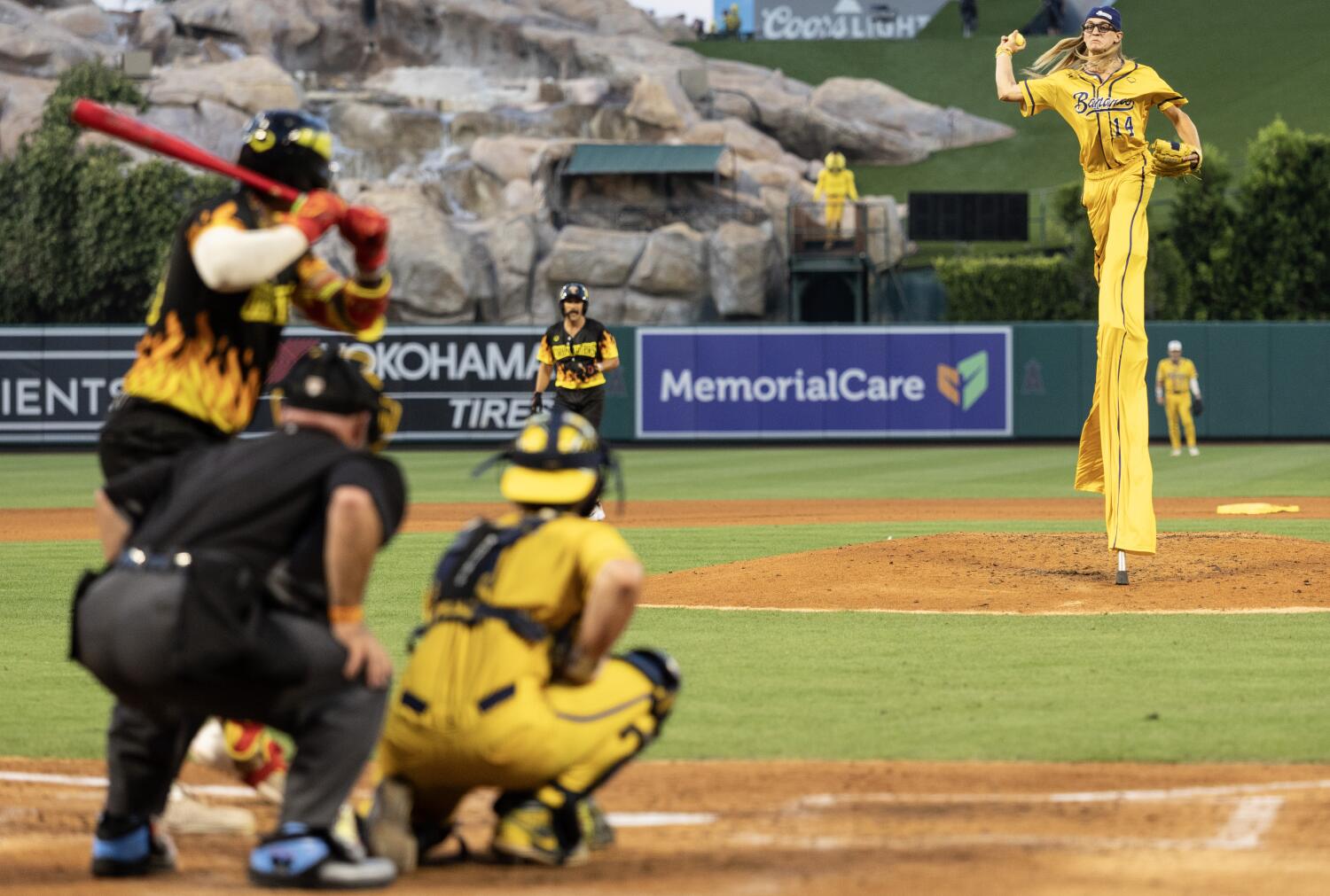
Major League Baseball is finally letting you stream the Angels, Dodgers, and Padres without a $150 cable bill. The industry is taking a victory lap. The press is calling it a "win for the fans."
They are wrong.
What the league just announced isn't a revolution. It’s a desperate fire sale of a dying distribution model. By bringing in-market streaming to these specific teams, MLB isn't "solving" the blackout problem; they are admitting that the Regional Sports Network (RSN) gold mine has collapsed and they have no idea how to replace the lost revenue without gouging the few fans they have left.
For decades, the RSN model was the greatest heist in sports history. You paid for the Dodgers even if you didn't know a baseball from a beach ball. It was baked into your cable bundle. That subsidized the massive $200 million and $300 million contracts we see today. Now that the bundle is dead, MLB is trying to pivot to Direct-to-Consumer (DTC) streaming.
But here is the math no one wants to show you: A cable subscriber used to pay roughly $5 to $8 a month for an RSN as part of a package. Now, MLB wants to charge you $20 to $30 a month for that same single team. They are asking the most loyal 10% of the fan base to pay 400% more to cover the 90% of people who stopped paying when they cut the cord.
That isn't a "fan-friendly" move. It’s a tax on loyalty.
The Blackout Lie
The narrative is simple: "We want to end blackouts."
The reality is more cynical. MLB loves blackouts because blackouts are the only leverage they have left to force distributors to pay up. The reason the Angels, Dodgers, and Padres are the "pioneers" of this streaming movement isn't because MLB found a moral compass. It's because Diamond Sports Group (Bally) and other RSNs went bankrupt or hit a wall.
When the middleman dies, you have to sell the product yourself.
But selling a single-team streaming service is a nightmare of customer acquisition costs. When a fan buys a subscription to watch the Padres, they are only paying for six months of the year. In the winter, they churn. In the summer, if the team is 20 games out of first place by July, they churn.
The old RSN model provided year-round, guaranteed checks regardless of team performance. By moving to this DTC model, MLB is exposing its teams to the brutal volatility of the open market. I’ve seen teams lose 30% of their projected local media revenue in a single season because they couldn't find a streaming partner to replace a collapsing cable network. This "fix" is actually a massive financial downgrade that will eventually lead to lower payrolls and a wider gap between the "haves" and "have-nots."
The Ghost of 1994
People ask: "Why can't I just pay one price to see every game with no blackouts?"
The answer is the "Sports Broadcasting Act of 1961" and a tangled web of antitrust exemptions that MLB guards like the crown jewels. If MLB centralized all rights and sold a national "No Blackout" package, they would have to split that money evenly.
The Yankees don't want to split money with the Athletics. The Dodgers don't want to subsidize the Marlins.
By allowing these "in-market" streaming deals to happen on a team-by-team basis, MLB is ensuring that the rich stay rich. They are keeping the local territory system alive, which is the very thing that prevents a truly modern, national streaming product from existing.
They are recreating the same fragmented, frustrating system we had with cable, just with more apps and higher prices. You’ll need one app for the local games, another for Friday Night Baseball on Apple TV+, another for Sunday morning on Roku, and a third for the postseason on TBS or Fox.
The Pricing Trap
Let’s talk about the $19.99 to $29.99 price point.
Most analysts argue this is "fair value" compared to a cable bill. This is a fundamental misunderstanding of consumer psychology. When a fan sees a $20 monthly charge for one team, they compare it to Netflix, Disney+, or Max.
- Netflix: $15.49/mo (Thousands of movies and shows).
- Disney+ Bundle: $14.99/mo (Hulu, Disney, ESPN+).
- MLB Single-Team Stream: $19.99/mo (Just the Angels).
The value proposition is broken. Unless you are a die-hard fan who watches 100+ games a year, the "cost per hour" of entertainment is astronomical compared to any other digital service.
By pricing the service this high, MLB is effectively telling the "casual fan"—the kid who wants to watch a game once a week, the person who just moved to a new city—that baseball is a luxury product they don't need. They are killing the pipeline of future fans to satisfy the immediate cash flow needs of the current owners.
The Technical Debt Nobody Mentions
Building a streaming infrastructure that doesn't crash during the bottom of the ninth in a rivalry game is incredibly expensive.
MLB Advanced Media (BAM) used to be the gold standard. They literally built the technology that powered HBO Now and Disney+. Then, MLB sold the majority of that tech arm (BAMTech) to Disney for billions.
Now, the league is trying to rebuild that capability or outsource it back. Every time a game buffers or the "location services" fail to verify that you are actually in Anaheim, the brand takes a hit. The "in-market" streaming experience is often inferior to the illegal pirate streams that fans use to bypass blackouts.
If the "official" product is more expensive and more difficult to use than a pirated stream, the official product will fail. Period.
Why the "National Solution" is a Fantasy
Fans keep shouting for a single "MLB.tv with no blackouts" for $150 a year.
It won't happen.
If MLB offered that, the big-market teams would see their local TV revenue vanish. A team like the Dodgers gets upwards of $150 million to $200 million a year from their local deal. To replace that with a $150/year streaming service, they would need over 1.3 million local subscribers just to break even on that one team's rights.
The Dodgers don't have 1.3 million people willing to pay $150/year for a streaming app. No team does.
The math of "in-market streaming" only works if the price is high and the audience is small, or if the price is low and the audience is everyone. MLB has chosen a high price and a small audience. This is the definition of a niche product.
Baseball used to be the national pastime. This move officially cements it as a premium hobby for the affluent.
The Strategy for the Discerning Fan
If you are waiting for MLB to "fix" this, stop waiting. They aren't fixing the system; they are managing its decline.
If you want to watch your team without being exploited, you have to look at the landscape for what it is: a fragmented mess. The smart move isn't to hit "subscribe" the moment your team offers an in-market app. The smart move is to demand a bundled solution that forces these teams back into a competitive price bracket.
Until fans stop paying $25 a month for a single-team feed, the league has no incentive to create a unified, affordable national product.
Stop thanking them for the "privilege" of paying $300 a year to watch the Padres. They didn't do you a favor. They lost their biggest revenue stream and they are reaching into your pocket to find the difference.
The blackout isn't over. It just got more expensive.
Go to the stadium. Buy a cheap ticket. Watch the game in person. It’s ironically often cheaper than the data plan and the subscription fee you’ll need to watch it on your phone.
Would you like me to break down the specific revenue loss projections for the teams transitioning to this model in 2026?