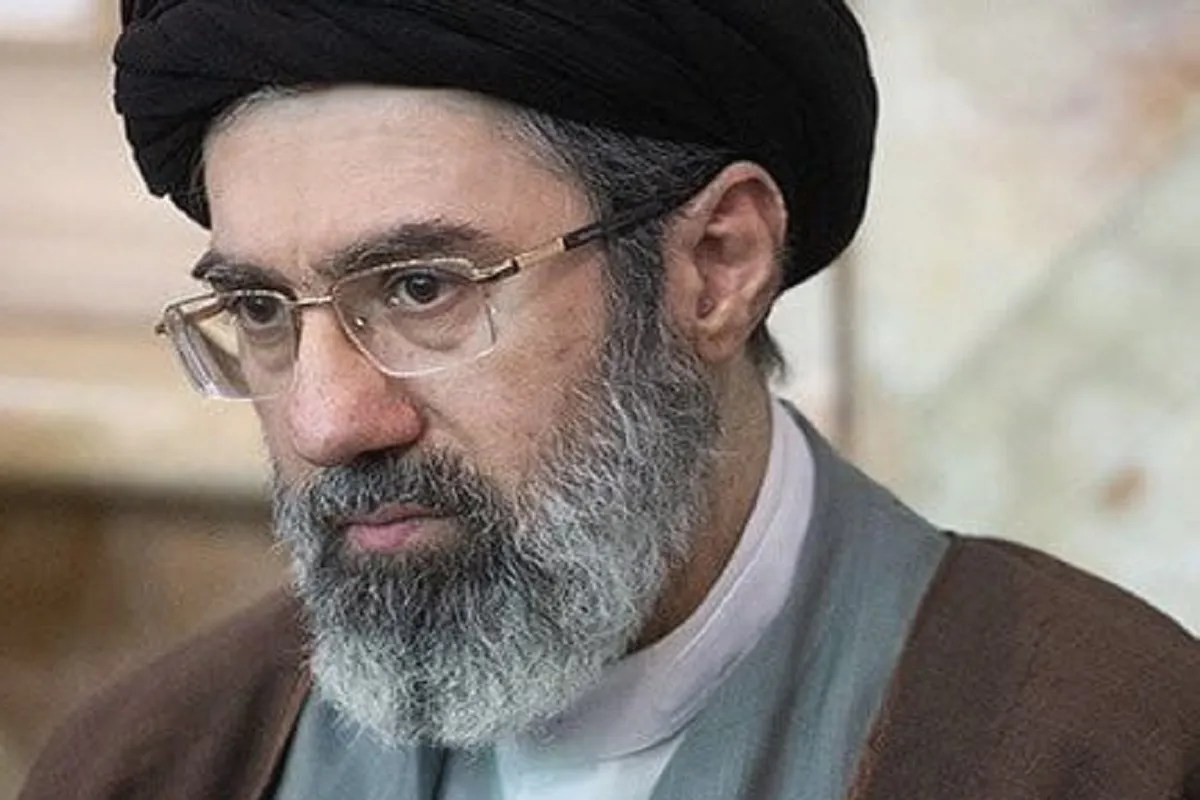
The international press is obsessed with the "Prince of Qom." They look at Tehran and see a Shakespearean drama where Mojtaba Khamenei is the inevitable heir to the Supreme Leadership. It is a lazy narrative built on Western monarchical tropes and a fundamental misunderstanding of how power actually breathes in the Islamic Republic.
Assuming Mojtaba Khamenei simply "takes command" because he is the son of Ali Khamenei ignores forty years of revolutionary theology designed specifically to prevent exactly that. The Republic was born from the blood of those who died to end a monarchy. To install a son to succeed his father is not a transition; it is a theological suicide note.
The Assembly of Experts is Not a Rubber Stamp
Most analysts treat the Assembly of Experts like a boardroom full of yes-men. They aren't. They are 88 clerics with individual agendas, regional power bases, and a deep-seated fear of being marginalized.
While the "Office of the Supreme Leader" has consolidated massive economic power through organizations like Setad, that power is not a private bank account. It is tied to the office, not the bloodline. I have spent years tracking how authoritarian regimes mask their instability with the illusion of hereditary stability. In Iran, the moment the current Supreme Leader dies, the "Mojtaba Consensus" will evaporate.
Why? Because the Clerical establishment in Qom views Mojtaba as a political operator, not a jurist. He lacks the Marja status—the highest level of religious authority—required to lead without constant internal challenge. You can buy loyalty with oil revenue, but you cannot buy the soul of a revolutionary Shi’ite establishment that values the "Guardianship of the Jurist" over the "Rule of the Prince."
The IRGC Factor: Partners or Puppets?
The Islamic Revolutionary Guard Corps (IRGC) is often cited as the force that will carry Mojtaba to the throne. This is a profound misunderstanding of military-clerical dynamics.
The IRGC does not want a strong Supreme Leader. They want a useful one.
A Supreme Leader with his own independent, hereditary claim to power is a threat to the IRGC’s corporate interests. They prefer a compromise candidate—a weak cleric who will sign off on their regional expansion and internal security crackdowns without asking questions about the budget.
Imagine a scenario where the IRGC picks a dark horse like Alireza A'rafi or a collective leadership council. It protects their autonomy. Handing the keys to Mojtaba creates a "New Shah" dynamic that the IRGC rank-and-file, many of whom are ideological purists, would find repulsive.
The Economic Mirage of Succession
People ask: "How will the economy change under a new Leader?"
They are asking the wrong question. The Iranian economy is not a market; it is a series of overlapping fiefdoms.
- The Bonyads: Charitable foundations that control up to 20% of GDP.
- The Setad: A multibillion-dollar conglomerate answerable only to the Leader.
- The Gray Market: Smuggling networks designed to bypass sanctions.
Mojtaba’s supposed "command" of these entities is a house of cards. These organizations run on personal loyalty to Ali Khamenei, a man who has held power since 1989. That loyalty is not transferable. When the transition happens, we should expect an internal asset grab that makes the 1990s Russian privatization look like a bake sale.
Dismantling the Stability Argument
The "Lazy Consensus" suggests that a Mojtaba succession ensures stability. In reality, it is the most volatile path available.
- Internal Fracture: The traditionalists in the clergy will see it as a betrayal of the 1979 revolution.
- Public Unrest: The Iranian street, already simmering with resentment over the "Woman, Life, Freedom" movement, will see a hereditary succession as the ultimate proof that the Republic is just a religious version of the Pahlavi dynasty they overthrew.
- Regional Miscalculation: Neighbors and adversaries will view the transition period as a window of extreme weakness.
The risk of a hereditary handoff is not that it works too well, but that it fails instantly.
The Nuance the Media Ignores
Is it possible Mojtaba takes over? Yes. But it won't be a "succession." It will be a coup.
If Mojtaba Khamenei sits in that chair, he will do so not because of a vote by the Assembly of Experts, but because the security apparatus has cleared the streets and arrested every rival cleric in Qom. That isn't a transition of power; it's a regime change from within.
I’ve seen this pattern in failing corporate structures and crumbling states alike. When the leadership stops being about the mission and starts being about the family, the foundation is already gone.
The Western press loves a simple story. "Son follows father" is simple. But Iran is a labyrinth of competing centers of gravity—the Bazaar, the Clergy, the Guard, and the Street. None of them are incentivized to let a 55-year-old son inherit the most powerful position in the Middle East just because of his last name.
Stop looking for a coronation. Start looking for the knives.
When the dust settles, the name on the door won't matter as much as the fact that the door is no longer holding back the tide. If you’re betting on a smooth Mojtaba transition, you’re betting on a version of Iran that hasn't existed for decades. The Republic is a pressure cooker, and hereditary succession is the surest way to weld the safety valve shut.
Burn the playbook that says "Stability equals Mojtaba." In the real world, Mojtaba equals the end of the Islamic Republic as we know it.


