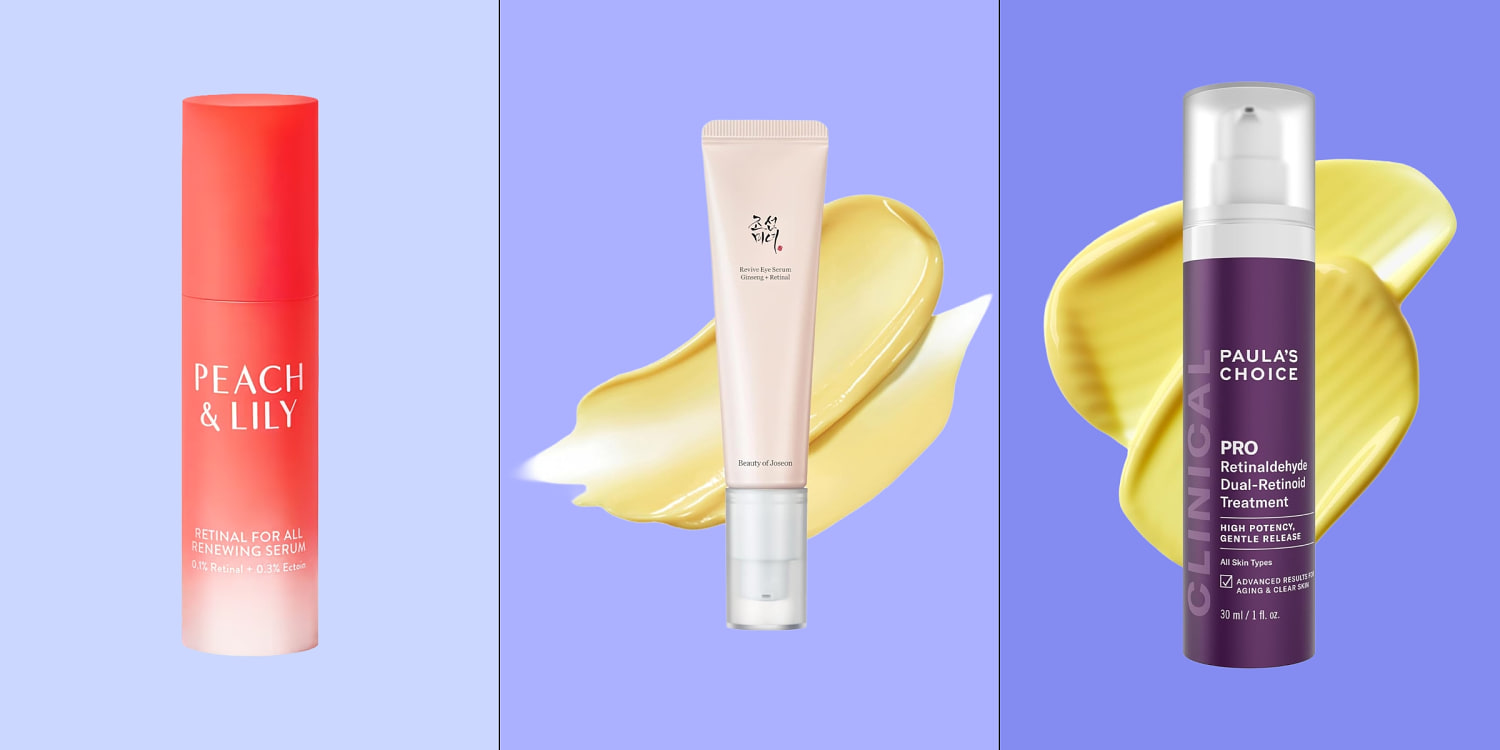
The consumer skincare market treats retinoids as a homogenous category differentiated only by price and marketing narrative. This is a fundamental misclassification. Retinol and retinaldehyde (retinal) are distinct chemical entities governed by predictable enzymatic kinetic laws, and their efficacy is a direct function of biological conversion steps rather than brand positioning. Selecting between them is not a matter of preference; it is a calculation of cellular bioavailability versus epidermal tolerance.
To optimize topical retinoid use, one must evaluate the biological cost function of vitamin A delivery to the skin. The goal of any topical retinoid is to bind to Retinoic Acid Receptors (RAR) and Retinoid X Receptors (RXR) within the cell nucleus. This binding triggers the transcription of genes responsible for collagen synthesis, epidermal turnover, and melanin regulation. However, the human body cannot utilize retinol or retinal in their native states. They must be enzymatically converted into the only biologically active form: retinoic acid.
The Retinoid Conversion Cascade
The efficiency of a topical retinoid is determined by its proximity to retinoic acid in the metabolic pathway. Each step in this pathway requires specific enzymes, introduces kinetic bottlenecks, and results in a loss of potential potency.
The Two-Step Retinol Bottleneck
When retinol is applied to the stratum corneum, it must penetrate the epidermal barrier and undergo a two-step oxidation process within the keratinocytes:
- Oxidation to Retinaldehyde: Retinol is converted into retinaldehyde via alcohol dehydrogenases (ADHs) and retinol dehydrogenases (RDHs). This step is reversible, highly regulated by the cell, and serves as the primary rate-limiting bottleneck.
- Oxidation to Retinoic Acid: Retinaldehyde is then converted into active retinoic acid via retinaldehyde dehydrogenases (RALDHs).
Because the first step is inefficient, a massive percentage of topically applied retinol is degraded, stored as inactive retinyl esters, or cleared before it ever achieves conversion. This creates a steep dose-response curve where high concentrations of retinol are required to achieve meaningful cellular signaling, concurrently increasing the risk of surface-level irritation.
The Single-Step Retinaldehyde Advantage
Retinaldehyde bypasses the initial rate-limiting enzymatic step entirely. Upon application, it requires only a single oxidation reaction (via RALDH) to become active retinoic acid.
Because this pathway bypasses the ADH/RDH bottleneck, retinaldehyde delivers a significantly higher payload of active retinoic acid to the receptors per unit of concentration. Clinical data indicates that retinaldehyde exhibits up to ten times the biological activity of retinol, allowing for lower operational concentrations to achieve equivalent or superior gene transcription outcomes.
The Irritation-Yield Paradox
A common error in formulation strategy is assuming that greater biological activity linearly correlates with increased skin irritation (retinoid dermatitis). In the case of retinaldehyde, the data refutes this linear relationship. This phenomenon can be explained by the localized feedback loops of the epidermis.
When a high concentration of retinol is applied to the skin, the excess unconverted retinol sits in the extracellular space or is converted non-specifically, disrupting the lipid bilayer and triggering the release of pro-inflammatory cytokines (IL-1 alpha, TNF-alpha). This causes erythema, scaling, and barrier dysfunction before any significant retinoic acid reaches the cell nucleus.
Retinol Pathway:
[Topical Retinol] ---> [Extracellular Accumulation / Barrier Disruption] ---> Cytokine Release (Irritation)
       | (Slow/Inneficient ADH Enzyme Conversion)
       v
[Retinaldehyde] ------> [Retinoic Acid] ---> Nuclear Receptor Binding (Efficacy)

Retinaldehyde Pathway:
[Topical Retinaldehyde] ---> [Rapid Intracellular RALDH Conversion] ---> [Retinoic Acid] ---> Receptor Binding
       | (Regulated by Cell Demand)
       v
[Minimal Extracellular Accumulation] ---> Low Irritation Profile
Retinaldehyde behaves differently due to a biological storage mechanism. Keratinocytes possess the ability to temporarily store excess retinaldehyde by converting it back into retinyl esters if the RALDH enzymes are saturated. This creates a controlled-release reservoir inside the cell. The skin converts retinaldehyde into retinoic acid strictly on an as-needed basis, dictated by the availability of RALDH enzymes. Consequently, retinaldehyde delivers higher efficacy than retinol with an equivalent, or frequently lower, irritation profile.
Comparative Matrix: Kinetic and Operational Variables
To quantify the differences between these two molecules, they must be measured across specific operational parameters that dictate their real-world performance.
- Enzymatic Steps to Active Form: Retinol requires two steps; retinaldehyde requires one step.
- Relative Biological Potency: Retinol is valued at 1x; retinaldehyde demonstrates an approximate 10x multiplier in conversion efficiency.
- Primary Kinetic Limitation: Retinol is limited by ADH/RDH enzyme availability and cellular saturation; retinaldehyde is limited solely by RALDH enzyme availability.
- Epidermal Residence Time: Retinol remains unconverted on the surface longer, increasing the probability of barrier disruption; retinaldehyde is rapidly internalized or converted into storage esters.
- Inherent Antibacterial Activity: Retinol possesses none; retinaldehyde exhibits direct, documented antibacterial properties against Propionibacterium acnes (Cutibacterium acnes) due to its specific aldehyde molecular structure.
Formulating and Stabilizing the Aldehyde Group
The primary barrier to the widespread adoption of retinaldehyde is not biological; it is chemical and economic. The aldehyde functional group on retinaldehyde is significantly more chemically unstable and prone to oxidation than the hydroxyl group on retinol.
When exposed to UV light, ambient oxygen, or temperature fluctuations, retinaldehyde rapidly degrades into biologically inert polymers. This degradation renders the formulation useless and can generate free radical byproducts that exacerbate skin inflammation.
To counter this stability deficit, advanced formulation architecture relies on specific stabilization vectors:
Micro-Encapsulation Delivery Networks
Raw retinaldehyde must be suspended within a protective matrix—typically liposomes, solid lipid nanoparticles (SLNs), or cyclodextrin carriers. These structures shield the aldehyde group from ambient oxygen and light. Operational deployment of encapsulated retinaldehyde ensures that the molecule remains intact until it encounters the enzymatic environment of the viable epidermis.
Deoxygenated Manufacturing Environments
Production requires closed-loop, nitrogen-purged manufacturing systems to eliminate oxygen exposure during compounding. This adds capital expenditure and operational complexity to the manufacturing line, which explains why high-performance retinaldehyde formulations command a price premium over standard retinol products.
Strategic Protocol Design
Implementing these molecules requires a precise framework based on individual skin architecture, lipid barrier integrity, and specific target pathologies.
The Acne and Congestion Protocol
For skin types exhibiting high sebum production, open and closed comedones, and active inflammatory acne, retinaldehyde is the mandatory choice. The aldehyde group exerts a direct bactericidal effect on Cutibacterium acnes, a property entirely absent in retinol.
- Actionable Framework: Deploy retinaldehyde at a concentration of 0.05% to 0.1% in a lightweight, non-comedogenic emulsion base. Apply exclusively in the nocturnal cycle. The single-step conversion ensures rapid clearance of follicular hyperkeratosis, while the antibacterial action reduces colony counts within the pilosebaceous unit.
The Chrono-Aged and Thinned Epidermis Protocol
As skin ages, structural proteins decline and the epidermal-dermal junction flattens. While retinaldehyde offers faster results, the slower, metered conversion of retinol can be leveraged to build tolerance in highly sensitive, thin skin profiles.
- Actionable Framework: Begin with a low-dose, encapsulated retinol (0.3% to 0.5%) combined with barrier-support lipids (ceramides, cholesterol, free fatty acids). This slow-release mechanism conditions the epidermis to upregulated retinoid receptor expression over a 6-to-8 week induction phase. Once the skin demonstrates barrier equilibrium, transition the patient or consumer to a 0.05% retinaldehyde formulation to maximize long-term neocollagenesis.
Quantifying the Boundaries of Topical Retinoids
Topical retinoids are highly effective, but they operate under strict biological constraints that must be factored into any treatment strategy.
First, the maximum rate of epidermal transformation is capped by cellular receptor density. Once RAR and RXR receptors are fully saturated by retinoic acid, increasing the concentration or frequency of application yields no further therapeutic benefit; it merely accelerates barrier degradation.
Second, topical retinoids cannot repair structural volume loss caused by the degradation of deep subcutaneous fat pads or bone resorption. Mistaking epidermal smoothing and dermal thickening for structural volume restoration leads to flawed clinical expectations.
Third, the conversion efficiency of both retinol and retinaldehyde is wholly dependent on an individual's endogenous enzyme levels. Genetic polymorphisms in the genes encoding RDH and RALDH enzymes mean that two individuals using the exact same percentage of retinol or retinaldehyde will experience highly variable rates of retinoic acid production and, consequently, divergent clinical outcomes.
The Ultimate Strategic Allocation
The data dictates a clear shift in skincare portfolio optimization. For immediate, high-efficiency outcomes targeting photoaging, hyperpigmentation, and acne, retinaldehyde is the superior molecular asset. Its single-step enzymatic conversion bypasses the critical cellular bottleneck that cripples retinol's potency, delivering an accelerated cellular response without a proportional increase in inflammation.
Retinol should be reserved as a cost-effective, entry-level molecule for resilient skin types requiring basic maintenance, or as an initial conditioning agent for highly reactive skin. For any formulation or regimen engineered to deliver maximum physiological modification per unit of volume, phase out retinol assets and allocate resources toward stabilized, encapsulated retinaldehyde systems.