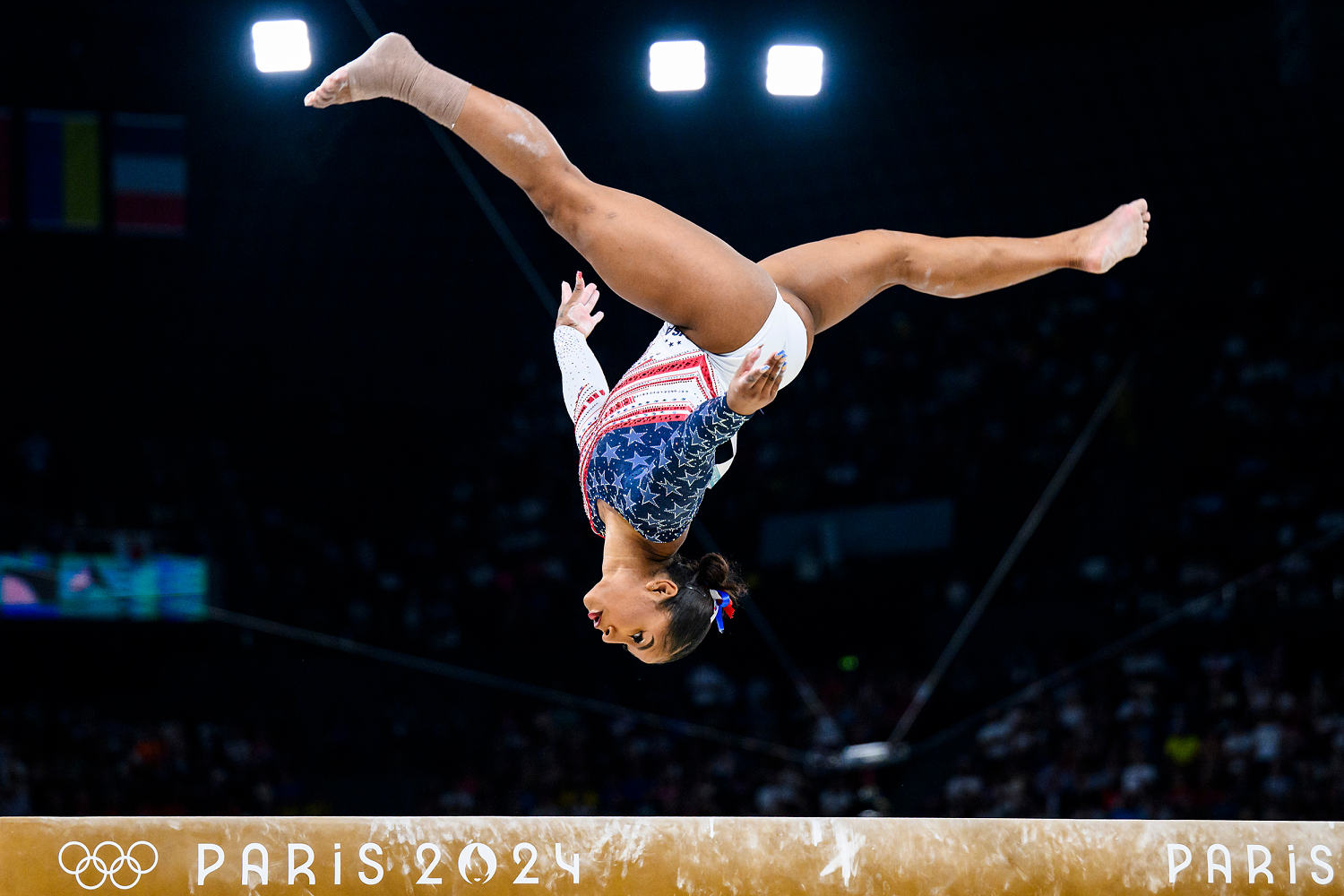
The feel-good narrative is a trap.
Every few years, usually after a World Cup win or a record-shattering NCAA tournament, the sports media industrial complex rolls out the same tired script: "The moment is finally here." We see Brandi Chastain’s iconic 1999 jersey-waving celebration looped on repeat, paired with platitudes about "building momentum" and "sparking a movement." It’s an easy story to sell. It’s also fundamentally wrong.
Momentum is a physics term, not a business strategy. In sports business, what people call momentum is actually just a temporary spike in curiosity. If you treat a spike like it’s a permanent shift in the tectonic plates of the industry, you’ve already lost. We don’t need more moments. We need better math.
The obsession with "momentum" suggests that women's sports are in a perpetual state of starting over. It implies that unless we keep the "energy" high, the whole house of cards will collapse. That’s an insult to the product. The reality? The industry is being held back by a "charity-case" mindset and a refusal to price the product at its actual value.
The Fallacy of the Perpetual Inflection Point
Stop calling it an "inflection point."
If women's sports have been at an inflection point since 1999, then the line isn't curving—it's flat. The constant insistence that "now is the time" creates a sense of fragility. It tells brands and broadcasters that they are "investing in a cause" rather than buying into a high-growth asset.
I’ve sat in rooms where executives talk about women’s sports like they’re doing a favor for their daughters. That’s the death knell for real growth. You don't see Nike or Coca-Cola "supporting" the NFL because it’s the right thing to do. They do it because they’ll get fired if they don’t reach that audience.
Until the conversation shifts from "supporting women" to "exploiting a massive, undervalued market," the momentum will continue to be a series of disconnected peaks rather than a rising floor.
Stop Selling Identity Start Selling Rivalry
The "inspiration" angle is exhausted.
Competitor articles love to focus on how athletes are role models. That’s fine for a cereal box, but it’s terrible for long-term engagement. People don't tune into the NBA because LeBron James is a nice guy with a great work ethic. They tune in because they want to see him crush the hopes of a rival city.
Women’s sports have been packaged as "wholesome" for too long. Wholesome is boring. Wholesome doesn’t drive the 24-hour news cycle. We need more villains. We need the Angel Reese vs. Caitlin Clark energy every single week.
That rivalry didn't work because it was "inspiring." It worked because it was high-stakes, high-friction, and deeply personal. It gave the casual viewer a reason to pick a side. Friction creates heat; heat creates light. The "momentum" everyone felt during the 2024 NCAA tournament wasn't about the growth of the game—it was about the growth of the drama.
If you want to sustain the numbers, stop asking athletes to be ambassadors for their gender. Let them be athletes. Let them be arrogant. Let them be hated.
The Scarcity Trap and the Value of the Gate
There is a pervasive myth that women's sports must stay "accessible" (read: cheap) to grow.
This is a race to the bottom. When you price your championship tickets at $40 while the men’s equivalent starts at $400, you aren't being "accessible." You are signaling to the market that your product is worth 10% of the competition.
Veblen goods—products where demand increases as the price goes up because of their status—exist in sports. The Super Bowl is the ultimate Veblen good. By keeping women's sports prices artificially low, leagues are actively suppressing their own perceived value.
The Cost of Underpricing
- Ad Inventory: If the gate is cheap, the TV spots are cheap.
- Production Quality: Lower revenue leads to fewer cameras, worse lighting, and "B-team" commentators, which reinforces the "junior varsity" feel.
- Player Compensation: You cannot pay top-tier talent what they are worth if you are terrified of charging the fans what the experience is worth.
The data shows the appetite is there. When the Nebraska women’s volleyball team packed a football stadium with 92,003 fans, it wasn't because the tickets were a bargain. It was because it was an event.
The Media Rights Delusion
The biggest hurdle isn't "exposure." It’s "placement."
For decades, the "momentum" was killed by what I call the "2:00 PM on a Tuesday" problem. Broadcasters would buy the rights for a pittance, bury the games on secondary networks, and then point to low ratings as a reason not to pay more next time.
It is a circular logic designed to keep rights fees suppressed.
The industry is finally waking up to the fact that women’s sports fans are a distinct, highly digital, and incredibly loyal demographic. They don't just watch the game; they dominate social media discourse. But the "momentum" will stall if leagues keep signing "bundle" deals where the women’s rights are thrown in as a sweetener for the men’s rights.
Unbundle the rights. Force the market to price the NWSL or the WNBA on their own merits. When you bundle, you hide the value. When you unbundle, you expose the truth: the growth rate of women's sports viewership is eclipsing almost every other legacy sports product.
The "Build It and They Will Come" Fallacy
You cannot just build a league and wait for the "momentum" to carry you.
The WNBA is nearly 30 years old. The NWSL is over a decade old. The "newness" has worn off. We are now in the grind phase. The "battle scars" of failed leagues like the WUSA or the WPS show that star power (even the 1999 World Cup team) isn't enough to overcome bad infrastructure.
Success in this space requires a brutal focus on the "boring" stuff:
- D2C Distribution: Stop relying on ESPN to give you a crumb of airtime. Own the relationship with the fan.
- Localized Marketing: A national "movement" is useless if you can't sell out an arena in Atlanta or Seattle.
- Data Sovereignty: If you don't know exactly who your fan is, what they buy, and why they watch, you are just guessing.
The Downside of the Contrarian Approach
Let’s be honest: moving away from the "inspiration" narrative is risky.
There is a significant portion of the current fanbase that loves the community and the "pure" nature of women's sports. If you lean into the villain arcs, the high ticket prices, and the aggressive commercialization, you will alienate some of the pioneers.
But you cannot scale a "community." You scale a business. You have to decide if you want a niche product that makes people feel good, or a global powerhouse that dominates the cultural conversation. You can't have both.
Stop Waiting For Permission
The most dangerous thing Brandi Chastain or any other legend can tell the next generation is that they need to "keep the momentum going."
It puts the burden on the athletes to be marketers, lobbyists, and activists.
The athletes' only job is to perform at a level that makes it impossible to look away. The rest is up to the money. And the money is finally starting to realize it’s been leaving billions on the table because it was too busy looking for a "moment" instead of a market.
Stop talking about the jersey rip. Stop talking about "the future of the game." The game is here. The audience is here. If the suits can't figure out how to monetize a product that is already breaking records, that’s not a lack of momentum—it’s a lack of competence.
Move past the sentimentality. Kill the "inspiration" talk. Price the tickets for what they're worth. Let the players be heels.
If you want to win, stop treating women’s sports like a cause and start treating it like a monopoly.