The salt air off Ocean Parkway doesn't just smell like the Atlantic; it smells like isolation. For decades, thousands of people drove past the scrub brush and the sand dunes of Gilgo Beach, their minds on weekend plans or the mundane drag of a Monday morning. They were looking at the horizon. They were never looking at the brambles. If they had, they might have seen the places where the earth had been disturbed, where the secret life of a quiet architect from Massapequa Park finally met the soil.
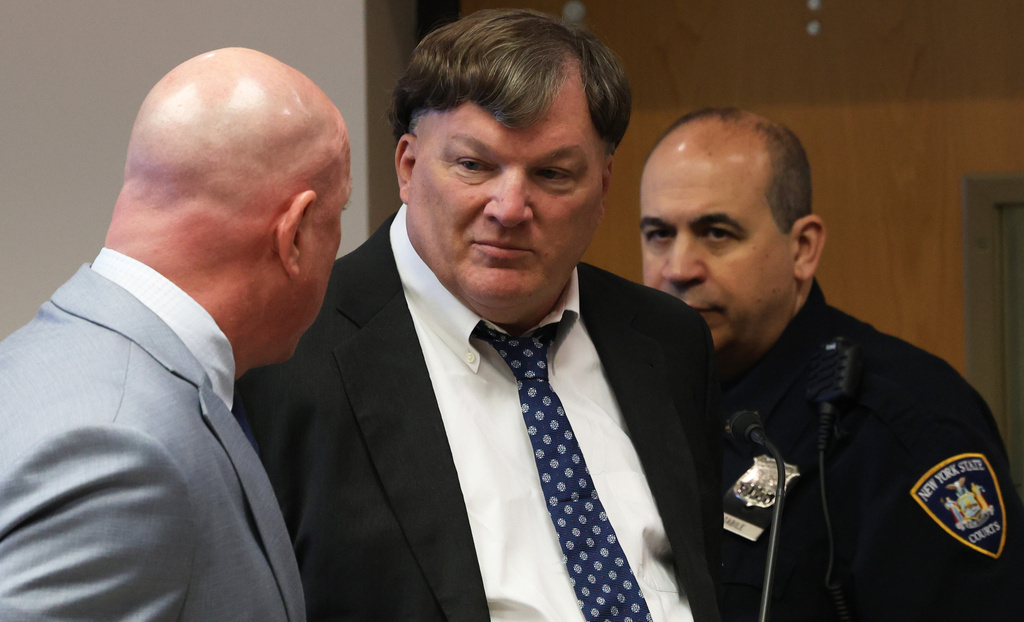
For thirteen years, the mystery of the Gilgo Beach murders was a shadow that hung over Long Island. It was a cold case that felt frozen in time, a collection of Jane Does and discarded lives that the world seemed content to forget. But the silence broke with the sound of a confession. Rex Heuermann, the man who lived in the red house with the overgrown lawn, the man who spent his days in a suit navigating the steel and glass of Manhattan, finally spoke. If you found value in this article, you should look at: this related article.
He didn't just admit to a crime. He admitted to a pattern of extinction. Eight women. Eight lives reduced to a tally in a courtroom.
The Architect of a Double Life
Imagine the discipline it takes to build a skyscraper. You need precision. You need to understand how much weight a foundation can bear before it cracks. You have to be obsessed with the things people don't see—the wiring, the plumbing, the structural integrity. Rex Heuermann was an expert in these invisible systems. For another perspective on this development, refer to the latest coverage from BBC News.
Neighbors saw a hulking man who stayed to himself. They saw a father and a husband. In the city, clients saw a consultant who knew the intricate labyrinth of New York City building codes. He was a master of the "boring" details. That was his camouflage. The most terrifying monsters aren't the ones screaming in the woods; they are the ones sitting next to you on the Long Island Rail Road, checking their watches and worrying about the conductor.
The tragedy of the Gilgo Beach case isn't just the brutality of the acts; it is the terrifying ease with which a person can bifurcate their soul. One half of Heuermann was obsessed with the rules of the city. The other half was obsessed with breaking the most fundamental rule of humanity.
He chose women who lived on the margins. These were mothers, sisters, and daughters who had fallen through the cracks of a system that is often indifferent to the plight of sex workers. He banked on that indifference. He counted on the fact that when a woman like Megan Waterman or Amber Lynn Costello went missing, the world wouldn't look too hard. He used our collective apathy as his primary tool of concealment.
The Anatomy of a Confession
When the news broke that Heuermann had admitted to strangling eight women, the shock wasn't just in the number. It was in the clinical nature of the admission. This wasn't a man broken by guilt. This was a man finally conceding to the blueprints.
The victims—Maureen Brainard-Barnes, Melissa Barthelemy, Megan Waterman, Amber Lynn Costello, Jessica Taylor, Sandra Costilla, and two others—were not just names on an indictment. They were individuals with distinct orbits. Melissa was a dreamer from Erie, Pennsylvania. Megan was a young mother who loved her daughter. They were people who were loved, even if the investigation for years treated them as "the bodies in the burlap."
The use of burlap is a detail that sticks in the throat. It is a coarse, utilitarian material. It’s what you use to move trees or protect a construction site. By wrapping these women in it, Heuermann attempted to strip them of their humanity one last time. He treated them like material. Like debris.
But the evidence eventually became a weight even he couldn't support. It wasn't one "smoking gun" that brought him down, but a mountain of microscopic truths. A pizza crust discarded in a trash can in Manhattan. A strand of hair. The digital breadcrumbs of burner phones that moved in perfect synchronicity with his own movements.
Forensic science has changed the way we tell stories about justice. We used to rely on witnesses, on the fallible memories of people standing in the rain. Now, we rely on the ghost of a cell signal and the unique sequence of a genetic code. Heuermann’s confession is a testament to the fact that you can hide for a decade, but you cannot outrun your own biology.
The Invisible Stakes of Silence
There is a specific kind of pain reserved for the families of the Gilgo Beach victims. It is the pain of being told your loved one’s life is a "lifestyle choice" rather than a tragedy. For years, the investigation was plagued by internal politics and a lack of urgency. The families didn't just fight the killer; they fought the silence of the authorities.
Consider the case of Shannan Gilbert. Her disappearance in 2010 was the catalyst for finding the others. She wasn't one of the women Heuermann admitted to killing, but without her terrified flight through the marsh that night, the graveyard off Ocean Parkway might never have been found. The police weren't looking for a serial killer; they were looking for a missing girl who had called 911 in a state of pure, unadulterated panic.
"There's someone after me," she told the operator.
The stakes were always higher than a simple criminal investigation. This was a trial of our societal values. If we only care about victims who are "perfect," we leave the door wide open for the Rex Heuermanns of the world. He preyed on the vulnerable because he knew we weren't watching.
He was a predator who understood the social hierarchy. He knew who would be missed and who would be dismissed. The confession is a hollow victory because it confirms what the families knew all along: their daughters were hunted by a man who saw them as disposable objects.
The Red House in Massapequa Park
The most haunting image of this entire saga is the house. It is a small, somewhat dilapidated home tucked into a neighborhood of neatly manicured lawns and bright shutters. It is the kind of house children might avoid on Halloween, not because they know it’s evil, but because it feels heavy.
Inside that house, police found a vault. They found hundreds of firearms. They found a life lived in the dark.
His wife and children claimed they knew nothing. They were away when the crimes happened, tourists in their own lives while the patriarch was out in the night. The betrayal there is a different kind of violence. It is the realization that the person who pours your coffee and asks about your day is a stranger. It is the collapse of the domestic sanctuary.
People in the neighborhood now walk their dogs past the house and stare. They are looking for clues they missed. They are trying to remember if he ever smiled, if he ever waved, if there was anything in his eyes that suggested the vacuum behind them. But there never is. The terrifying truth is that there is no "look" to a monster. They look like architects. They look like neighbors.
The Long Road to This Moment
Justice is rarely a lightning bolt. It is more like a slow, grinding tide that eventually wears down the stone.
The task of the prosecution now is to turn a confession into a permanent record. They have the DNA. They have the phones. They have the words from his own mouth. But the "why" remains elusive. We want a reason. We want to hear about a trauma or a trigger that makes sense of the senseless.
But often, there is no "why" that satisfies. There is only the "what."
He killed because he could. He killed because he enjoyed the power of the structural collapse. He took women who were already struggling and he ended their struggle in the most permanent way possible.
The confession brings a certain kind of closure, but it is a jagged, uncomfortable thing. It doesn't bring anyone back. It doesn't erase the thirteen years of wondering. It doesn't fix the systemic failures that allowed him to operate in plain sight for so long.
What it does do, however, is give the victims their names back. They are no longer the "Gilgo Four" or the "unidentified remains." They are women who were stolen from the world by a man who thought he was too smart to be caught.
The Echoes in the Marsh
If you go to Gilgo Beach today, the wind still whips off the water. The brush is still thick and tangled. It is a beautiful, desolate place.
But the air feels different now. The mystery that defined this stretch of road for a generation has been replaced by a grim reality. The monster has a name. He has a face. He has a cell.
We like to think we are safe because we follow the rules. We live in houses with foundations and roofs that don't leak. We trust the architects of our society to keep us upright. We believe that if we stay in the light, the dark can’t touch us.
But Rex Heuermann lived in both. He walked the streets of Manhattan with a briefcase and a plan, while the ghosts of eight women waited in the sand for someone to find them.
The lesson of Gilgo Beach isn't just about the capture of a serial killer. It’s about the cost of looking away. It’s about the women we choose not to see until they are gone. It’s about the fact that the most dangerous people in the world aren't hiding in the shadows; they are the ones who know exactly how to stand in the sun.
The red house in Massapequa Park stands as a monument to the duality of man. It is a reminder that the person who builds the world during the day can be the same person who tears it apart at night.
The Atlantic continues to beat against the shore. The tide comes in and the tide goes out. The sand shifts. Secrets eventually surface, no matter how deep you bury them, and no matter how much burlap you use to hold them down.
Truth, like the sea, is patient. It eventually finds the cracks in the foundation.