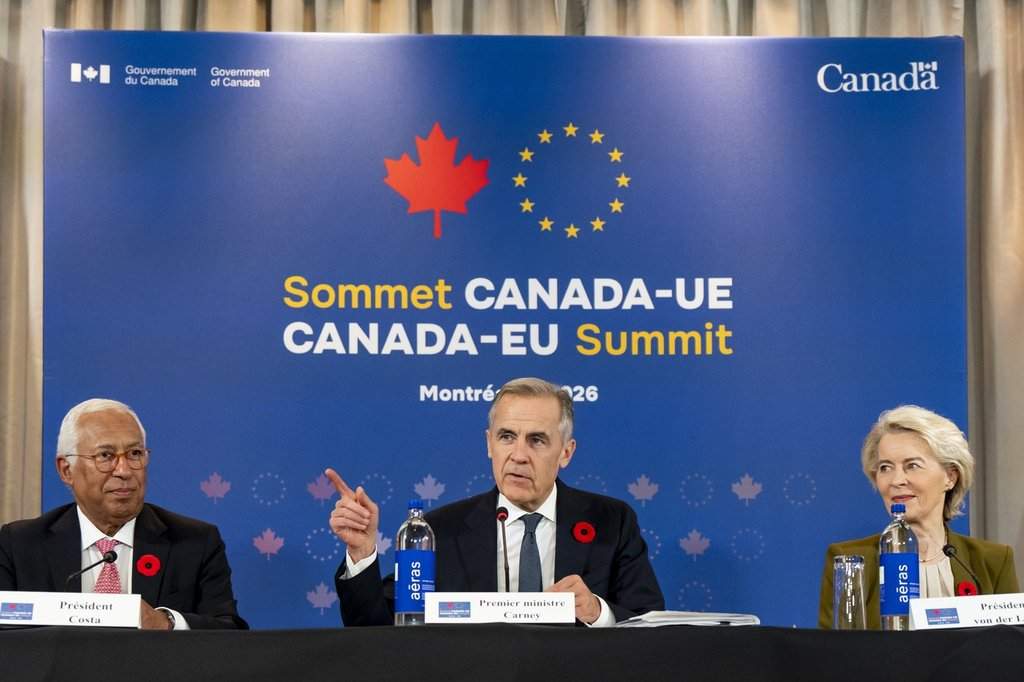
When leaders from Canada and the European Union wrapped up the 21st summit in Montreal on October 30, 2026, digital trade wasn't just another bullet point on a crowded communiqué. It was the centerpiece that turns a solid trading relationship into something built for the modern economy.
Let's be honest. Most summit recaps read like press releases with the adjectives swapped out. They tell you two sides "reaffirmed ties" and move on. Here's what actually matters if you run a company, manage compliance, or care about how cross-border commerce works between Ottawa and Brussels.
At the summit, negotiators concluded substantive talks on a bilateral Digital Trade Agreement (DTA) alongside a broader "Alliance for the Future" package. Canada and the EU already had the Comprehensive Economic and Trade Agreement (CETA) in place, yet CETA's digital provisions were written for an earlier era of online commerce. Concluding this DTA gives businesses clearer rules for cross-border digital transactions while keeping each side's right to regulate sensitive areas like privacy, public-sector data, cybersecurity, and culture.
Look out over downtown Montreal with fall colors across the foreground and you see a city that's long sat between English North America and French-speaking Europe. Hosting the leaders' summit there wasn't accidental symbolism. It underlined how much both sides want practical economic ties when global trade friction makes single-market reliance risky.
Why Digital Trade Took Center Stage In Montreal
Trade between Canada and the EU already reached roughly $178 billion across goods and services in 2025, making the bloc Canada's second-largest global trading partner. Still, selling software, cloud services, or digital media across borders has felt clunky compared to moving physical pallets.
Negotiations on the DTA only kicked off in March 2026 at the CETA Joint Committee meeting, yet both sides wrapped up substantive talks by late October. That speed tells you something real. Both Ottawa and Brussels felt pressure to lock down predictable digital rules rather than let companies guess how existing frameworks apply to newer online business models.
I've watched plenty of trade announcements over the years where "concluded negotiations" still leaves years of heavy lifting ahead. That's true here too. Concluded talks mean the negotiating text is settled at a political and technical level, not that the deal goes live tomorrow. Both sides still have formal steps to finish—including legal scrubbing, translations into all EU official languages, and approval by the Council and European Parliament.
Complementing CETA Without Erasing Regulatory Guardrails
A common mistake people make is assuming a digital trade pact automatically wipes out local rules. It doesn't. According to Global Affairs Canada, the agreement aims to reduce unjustified barriers to digital commerce while preserving Canada's ability to regulate privacy, cybersecurity, financial regulation, national security, government procurement, public-sector data, and culture.
That balance is tricky. Businesses want frictionless cross-border operations, while regulators want guardrails that don't get hollowed out by trade disputes.
Legal experts have already pointed out subtle friction points worth watching once the full text is scrutinized. For instance, legal scholar Michael Geist noted that Canada's anti-spam law (CASL) treats an existing business relationship as implied consent for only two years after a purchase or six months after an inquiry, whereas digital trade rules could look different unless explicit exceptions are spelled out. Cultural carve-outs and rules around online media also get extra scrutiny whenever Canada signs trade terms modeled closely on European templates.
Beyond Digital Rules In The Alliance For The Future
If you only look at digital trade, you miss half the story from Montreal. The summit bundled digital commerce into a wider push that touches computing power, antitrust enforcement, space, and defense supply chains.
Here is what stood out from the joint announcements:
- Supercomputing access: Canada joined the European High-Performance Computing Joint Undertaking (EuroHPC JU), opening doors for Canadian researchers and innovators to tap European supercomputing resources like JUPITER and deepen AI collaboration.
- Competition enforcement: Both sides concluded negotiations on a second-generation competition agreement so authorities can cooperate more closely against anti-competitive conduct affecting transatlantic markets.
- Critical minerals and investment: Canada and the European Investment Bank concluded negotiations on a framework to support European investment in Canadian critical raw materials, alongside work on supply chain resilience and stockpiling.
- Space, security, and support: Announcements also covered cooperation on IRIS² satellite connectivity, Galileo navigation services in areas including the Arctic, defense-related contracting, border agency coordination, and Canada's intention to join the EU's Ukraine support loan effort.
Put those pieces together and you see a clear pattern. Digital trade needs physical and technical backbone—reliable networks, high-end compute, clean energy and minerals for hardware, and trust in market competition. Treating them together makes practical sense, even if it makes the summit agenda feel sprawling.
Some headlines also floated talk of deeper institutional ties, including ideas around "associate membership" for Canada. Take big constitutional labels with a grain of salt until concrete rules exist; binding trade and investment commitments carry far more near-term weight for operators on the ground.
What Businesses And Policymakers Often Get Wrong
When a trade deal hits the news, companies usually split into two camps. One group treats it like a magic wand that instantly opens every European door. The other ignores it until a lawyer flags a contract issue months later. Both approaches waste time.
First, concluding negotiations is a milestone, not the finish line. Legal review, translation, parliamentary approval, and implementation timelines all sit between a Montreal announcement and enforceable day-to-day rules. Based on prior trade timelines—such as roughly 18 months from conclusion to entry into force for comparable agreements—planning around multi-month legal and ratification stages is far smarter than betting on instant changes.
Second, regulatory compliance doesn't vanish because trade barriers drop. Even with stronger digital trade rules, companies still have to navigate data privacy expectations, sector-specific rules, and domestic laws like CASL or EU digital regulations. A trade agreement sets baseline commitments; it doesn't replace basic compliance hygiene.
Third, smaller and mid-sized firms often underuse trade frameworks. Big multinationals have armies of trade counsel and government affairs teams. Smaller digital firms sometimes assume bilateral agreements only benefit giants, missing out on clearer commercial predictability or research and innovation tie-ins.
Practical Steps To Take Right Now
You don't need to wait for final ratification to get smart about what Montreal changed. If you work in cross-border tech, e-commerce, legal compliance, or strategy, start with a few concrete moves:
- Audit your cross-border data and consent flows. Map where customer data, marketing lists, and cloud workloads move between Canada and the EU, and check your practices against both Canadian rules like CASL and European requirements.
- Track the official text and ratification steps. Follow updates from the European Commission Trade Directorate and Global Affairs Canada so you see exact provisions once legal scrubbing wraps up.
- Review commercial contracts for digital clauses. If you license software, run cross-border platforms, or partner with European vendors, flag standard terms that may benefit from updated digital trade protections once the DTA enters into force.
- Look beyond pure commerce to research and supply chains. If your team works on AI, high-performance compute, clean tech, or critical inputs, check whether the EuroHPC and investment initiatives announced alongside the summit open relevant partnerships.
A summit headline fades in a week. The companies that benefit are the ones that quietly align their compliance, contracts, and partnerships before the rules become standard practice.