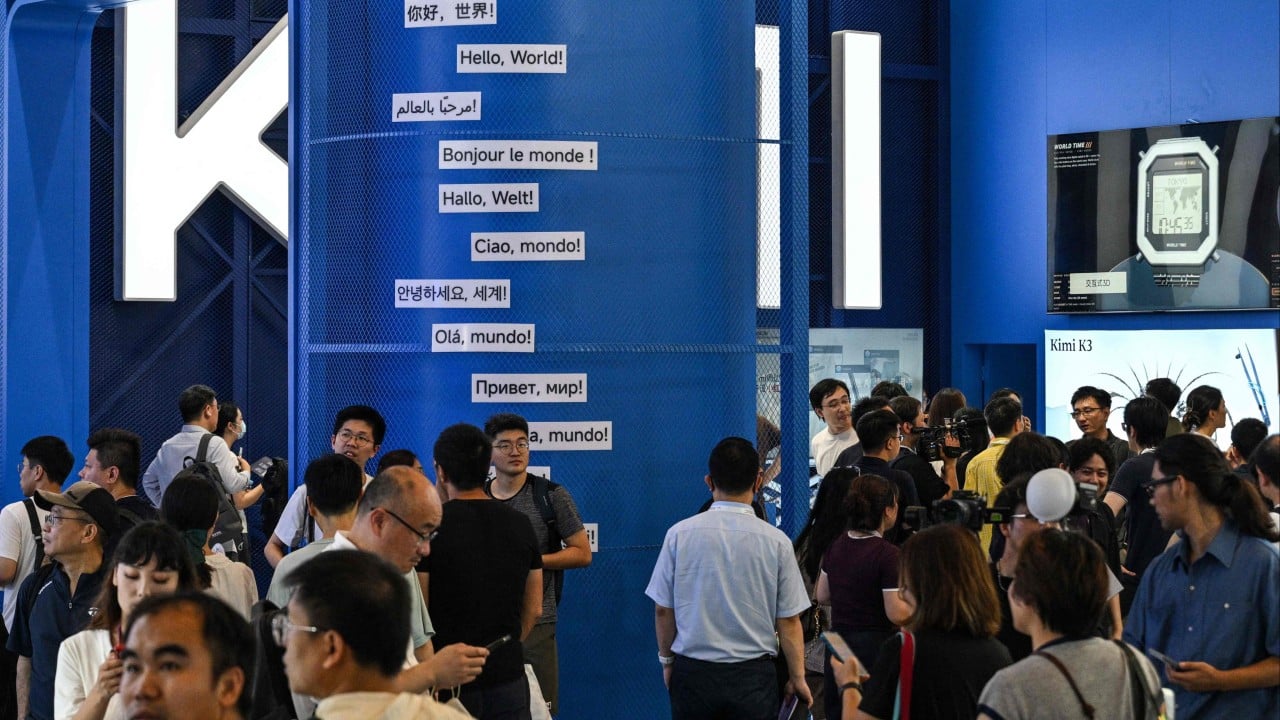
Moonshot AI’s decision to deploy its Kimi large language models into scientific research represents a calculated pivot from consumer-facing chat interfaces toward high-value enterprise and institutional compute. While surface-level coverage frames this move as an entry into an abstract race for discovery, the operational reality is an attempt to solve two structural bottlenecks in foundation model economics: data exhaustion and commoditized inference margins. By targeting scientific literature synthesis, hypothesis generation, and automated reasoning, Moonshot is positioning Kimi’s long-context and reinforcement-learning architectures as a research accelerator capable of justifying high compute costs through institutional adoption.
The Structural Economics Behind the Scientific Pivot
Consumer chatbots suffer from severe unit-economic compression. High acquisition costs, free-tier subsidization, and near-zero switching costs make consumer text generation a losing proposition unless backed by an existing distribution monopoly. Scientific research, conversely, operates on grant-funded or corporate R&D budgets where time-to-insight carries measurable financial value.
To understand Moonshot’s strategy, one must examine the three primary economic mechanisms driving AI labs toward hard science:
- The High-Value Token Premium: A token generated to summarize a casual email carries negligible economic utility. A token generated to identify a previously unnoticed protein-ligand interaction or synthesize conflicting materials-science papers saves weeks of wet-lab expenditure. Institutional buyers pay orders of magnitude more per compute cycle when the output directly compresses R&D timelines.
- Proprietary Data Flywheels: Public internet text has been largely ingested by frontier models. Scientific discovery generates net-new, verifiable data through simulation, experimental validation, and formal proof checking. By embedding Kimi into research workflows, Moonshot gains access to high-signal human feedback from domain specialists—data that cannot be scraped from the open web.
- Geopolitical Compute Optimization: Operating within China’s semiconductor supply constraints forces domestic AI labs to prioritize algorithmic efficiency over brute-force cluster scaling. Focusing on specialized reasoning and long-context retrieval allows Moonshot to extract maximum utility from constrained hardware allocations rather than burning FLOPs on generalized consumer entertainment.
Deconstructing Kimi’s Architectural Fit for Research
Moonshot AI built its early technical reputation on extreme context-window scaling, enabling Kimi to ingest massive volumes of text in a single pass. In consumer applications, multi-million-token context windows are frequently underutilized; few users regularly upload entire codebases or multi-book corpora for casual queries. In scientific workflows, however, deep context is a baseline functional requirement.
Scientific knowledge does not exist in isolated paragraphs. It is distributed across dense, cross-referential PDFs, supplementary datasets, methodological appendices, and decades of iterative literature. When a model attempts to synthesize a sub-field using standard retrieval-augmented generation (RAG), chunking mechanisms routinely sever the logical link between an experimental setup in section two and a statistical anomaly noted in an appendix.
By loading entire literature corpora directly into active attention memory, Kimi’s architecture bypasses chunking degradation. This enables cross-document entity resolution and contradiction detection at scale. However, long-context ingestion alone does not produce scientific discovery; it merely solves the information-retrieval bottleneck.
The second architectural pillar required for science is test-time compute scaling—specifically, reinforcement learning applied to multi-step reasoning chains (similar to the mechanics popularized by OpenAI’s o1 and DeepSeek’s R1). Scientific deduction requires the ability to explore a hypothesis tree, recognize a logical dead end, backtrack, and test an alternative premise without human intervention. Moonshot’s push into scientific reasoning relies on training Kimi to verify intermediate steps against formal rules in mathematics, chemistry, and physics before outputting a final synthesis.
The Three Tiers of AI-Assisted Discovery
To evaluate whether Kimi’s entry into science will yield genuine breakthroughs or merely incremental productivity gains, analysts must separate scientific AI capabilities into three distinct operational tiers.
Tier 1: Literature Compression and Meta-Analysis
At this baseline level, the model acts as an automated research assistant. It ingests thousands of papers, standardizes terminology across disparate studies, extracts experimental parameters, and maps consensus versus outlier findings. Kimi’s context capabilities make it immediately competitive here. The operational impact is reduced literature-review time, shifting human researchers from search tasks to evaluation tasks.
Tier 2: Hypothesis Generation and Experimental Design
At the second tier, the model identifies structural holes in existing knowledge. By mapping variables across disconnected domains—such as applying a fluid-dynamics optimization technique to a vascular-modeling problem—the system proposes novel hypotheses. It then drafts experimental protocols, specifying control variables, sample sizes, and expected failure modes. This requires high-order reasoning and low hallucination rates, as a flawed premise wastes physical laboratory resources.
Tier 3: Autonomous Closed-Loop Discovery
The highest tier removes the human from the iterative loop. The AI generates a hypothesis, writes the code to simulate it or dispatches instructions to automated robotic wet labs, ingests the resulting telemetry, updates its internal weights or context state, and designs the next experiment.
Currently, general-purpose large language models—including Kimi—operate primarily within Tier 1 and the lower bounds of Tier 2. Moving into Tier 3 requires specialized domain-specific architectures, such as AlphaFold for protein structure or GNoME for materials science, paired with physical laboratory automation. Moonshot is not replacing specialized geometric deep-learning models; rather, it is building the natural-language orchestration layer that connects human researchers, literature databases, and domain-specific simulation tools.
Operational Limitations and Failure Modes
Deploying general-purpose LLMs into rigorous scientific environments introduces severe failure modes that standard benchmarks fail to capture. Practitioners integrating Kimi or competing reasoning models into R&D pipelines must account for four structural vulnerabilities.
- Sycophancy Bias in Hypothesis Validation: LLMs are trained via reinforcement learning from human feedback (RLHF) to be helpful and agreeable. In a scientific context, this manifests as confirmation bias. If a researcher prompts the model with a flawed hypothesis, the model will frequently construct a plausible-sounding theoretical justification rather than falsifying the premise. True scientific utility requires models tuned for aggressive falsification.
- The Interpolation Trap: Transformer architectures excel at interpolating within the distribution of their training data. Genuine scientific breakthroughs, by definition, occur out-of-distribution. When pushed beyond established empirical boundaries, models tend to hallucinate mechanisms that sound mathematically or chemically coherent while violating fundamental physical constraints.
- Context Rot and Attention Dilution: Even with massive context windows, empirical testing demonstrates that model recall and reasoning accuracy degrade as token counts approach maximum capacity—a phenomenon known as context rot. When analyzing fifty dense scientific papers simultaneously, critical edge-case constraints buried in the middle of the prompt are frequently ignored during synthesis.
- Lack of Epistemic Calibration: Foundation models struggle to distinguish between a universally accepted physical law, a replicated clinical finding, and a speculative preprint with a sample size of twelve. Without explicit metadata weighting, the model treats all ingested text as equally valid evidence, contaminating downstream synthesis with unreplicated noise.
Competitive Dynamics in the Global AI-for-Science Market
Moonshot AI is entering an increasingly crowded arena where differentiation requires far more than benchmark performance on standardized exams like GPQA (Graduate-Level Google-Proof Q&A).
In the West, Google DeepMind dominates specialized structural biology and materials science through purpose-built architectures, while OpenAI and Anthropic compete for the general reasoning and coding orchestration layer. Within China, Moonshot faces direct pressure from DeepSeek, which has demonstrated exceptional cost-to-intelligence efficiency in mathematical and logical reasoning, as well as state-backed research institutions like the Beijing Academy of Artificial Intelligence (BAAI) and Tsinghua University’s various AI spin-offs.
Passing graduate-level science benchmarks does not equate to generating novel intellectual property. Benchmarks measure the ability to retrieve and apply known rules to closed-form problems. Real-world science is open-ended, noisy, and defined by incomplete information. Moonshot’s survival and commercial success in this sector depend on its ability to transition Kimi from a model that answers science questions to a system that executes scientific workflows.
The Strategic Play for Research Organizations and AI Builders
For institutional R&D leaders evaluating Kimi or comparable reasoning models, the optimal deployment strategy is strict architectural compartmentalization. Do not deploy general-purpose LLMs as autonomous hypothesis generators without deterministic verification layers. Instead, route literature synthesis and cross-domain mapping through long-context models like Kimi, while enforcing hard validation gates—such as symbolic math solvers, molecular dynamics simulators, or compiler checks—between every reasoning step.
For Moonshot AI, the path to capturing durable enterprise value requires abandoning generalized benchmark chasing in favor of verticalized workflow integration. The winning move is to build native tool-use pipelines directly into Kimi’s inference loop—allowing the model to autonomously query chemical databases, execute Python-based statistical validations, and interface with electronic lab notebooks (ELNs). Intelligence without verification is merely plausible fiction; the lab that couples reasoning models with deterministic falsification engines will own the next decade of industrial R&D.