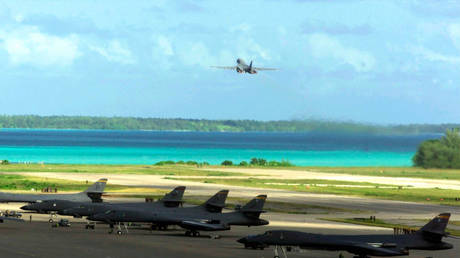
The machinery of war is grinding toward a conflict that defies every metric of the Just War tradition. While diplomats trade barbs and analysts calculate the range of ballistic missiles, the fundamental ethical framework designed to prevent unnecessary slaughter is being dismantled in real-time. We are witnessing the systematic weaponization of "self-defense" to justify a preemptive strike on Iran—a move that would not only ignite a regional firestorm but would permanently shatter the international norms governing when and how nations can kill.
Just War Theory is not a pacifist's dream. It is a realist's checklist. Developed over centuries by figures like Thomas Aquinas and Hugo Grotius, it rests on two pillars: jus ad bellum (the right to go to war) and jus in bello (right conduct during war). For a war against Iran to be "just," it must meet strict criteria: just cause, right intention, last resort, and a high probability of success. Current geopolitical posturing fails every single one. In similar updates, we also covered: The Geopolitics of Chokepoint Monetization: Strategic Logic of the Hormuz Toll Proposal.
The Myth of the Preemptive Shield
The primary argument for a strike on Iran centers on the "imminent threat" of a nuclear-armed Tehran. This is the cornerstone of the just cause requirement. However, the definition of "imminent" has been stretched until it is unrecognizable. In classical ethical theory, an imminent threat is a sword drawn and held to the throat. It is not a hypothetical capability that might exist in eighteen months or three years.
By moving the goalposts from "imminent threat" to "emerging capability," advocates for war are asking for a blank check. If a nation can be attacked simply because it might one day possess the means to defend itself or threaten others, then the concept of sovereignty is dead. This isn't defense. It is a preventive war, which has historically been condemned as an act of aggression. The Guardian has analyzed this critical issue in great detail.
The intelligence failures leading up to the 2003 Iraq invasion should have been a permanent lesson. Yet, the same patterns are emerging. We see "selective declassification" of data and the amplification of worst-case scenarios. When we analyze the "why" behind the push for conflict, it becomes clear that the intention isn't merely to stop a bomb; it is to force a total collapse of the current Iranian political structure. This violates the "right intention" clause. A war started for the purpose of regime change, rather than immediate defense, lacks the moral standing required by international law.
The Last Resort That Never Was
Diplomacy is often treated as a box to be checked before the real business of bombing begins. Under Just War Theory, "last resort" means that every viable non-violent alternative has been exhausted. It does not mean "we tried a few rounds of sanctions and got bored."
The abandonment of the Joint Comprehensive Plan of Action (JCPOA) remains the most significant ethical breach in this saga. You cannot claim war is a last resort when you unilaterally walked away from a functioning diplomatic mechanism. The current environment of "maximum pressure" is designed to provoke a response, not to find a solution. When you corner an adversary and leave them no exit except through violence, you have forfeited the right to claim you are acting in self-defense when they eventually lash out.
Economic warfare is often presented as a "humane" alternative to kinetic war, but the reality on the ground tells a different story. Sanctions that target a nation's entire economy, preventing the import of medicine and basic goods, occupy a gray area in jus in bello. If the intent is to make the civilian population suffer so much that they rise up against their government, the strategist has already violated the principle of non-combatant immunity.
The Calculus of Proportionality and Success
A strike on Iran would not be a surgical event. It is a fantasy to believe that a few dozen sorties could "neutralize" a nuclear program buried deep under mountains without triggering a massive, multi-front retaliation. This brings us to the principle of proportionality. The good achieved by the war must outweigh the evil it causes.
If a strike leads to the closure of the Strait of Hormuz, a global economic depression, and a regional war involving Hezbollah in Lebanon, militias in Iraq, and proxies in Yemen, the "good" of delaying a nuclear program by a few years is eclipsed by the "evil" of a decade of chaos. Furthermore, the "probability of success" is nearly zero. You can blow up centrifuges, but you cannot blow up the knowledge inside the heads of Iranian scientists. War, in this case, would only harden the resolve of the Iranian state to acquire a deterrent, making the very outcome we seek to avoid inevitable.
The Erosion of Non Combatant Immunity
Should a conflict break out, the conduct of the war—jus in bello—is guaranteed to be a humanitarian catastrophe. Iran's military infrastructure is deliberately woven into its civilian urban fabric. Any campaign to "degrade" their capabilities would involve strikes on power grids, communication hubs, and transport links used by 85 million people.
We have seen the playbook in Gaza and Ukraine. Modern "precision" munitions are marketed as a way to minimize collateral damage, but the sheer scale of the required bombing in Iran would render the term "precision" meaningless. When a 2,000-pound bomb is dropped in a densely populated suburb to hit a command center, the "collateral damage" isn't an accident; it is a statistical certainty.
The use of cyber warfare also complicates the ethical landscape. If a state disables the water treatment plants or the electrical grid of an adversary, they are attacking the survival mechanisms of the civilian population. These are not "clean" weapons. They are blunt instruments that kill the most vulnerable—the elderly in hospitals and children in homes—long before a soldier ever sees a battlefield.
The Dangerous Precedent of the Global Policeman
The push for war with Iran is also a symptom of a deeper crisis in the international order. For Just War Theory to function, there must be a "legitimate authority" to declare it. In the modern era, that is supposed to be the United Nations Security Council. However, we have moved into a period where individual nations or small coalitions decide for themselves when the rules apply and when they don't.
When the world’s most powerful militaries bypass international consensus, they create a "might makes right" paradigm. If the United States or its allies can strike Iran based on "suspected future intent," then what stops China from striking Taiwan, or India from striking Pakistan under the same logic? By abandoning the strictures of Just War Theory for short-term strategic gains, we are dismantling the very fences that keep the world from descending into a permanent state of total war.
The Industrial Incentive for Conflict
We must look at the "how" of the pro-war narrative. It is fueled by a massive infrastructure of think tanks and defense contractors who benefit from perpetual tension. These entities provide the "intellectual" cover for unprovoked aggression, framing it as a moral necessity. They utilize a sophisticated media apparatus to dehumanize the "enemy," making the prospect of their deaths more palatable to a domestic audience.
This dehumanization is the ultimate betrayal of the Just War tradition. The theory exists precisely to remind us that the "enemy" is composed of human beings with inherent rights. When we start talking about "mowing the grass" or "sending a nation back to the Stone Age," we have moved out of the realm of ethics and into the realm of barbarism.
The Tactical Reality of an Iranian Response
The Iranian military is not the Iraqi army of 2003. They have spent two decades studying the American way of war. Their strategy is built on "asymmetric defiance"—using swarms of low-cost drones, sophisticated anti-ship missiles, and deep-seated proxy networks to make the cost of an invasion or a sustained bombing campaign unbearable.
Any "just" analysis must account for the fact that Iran will not fight a conventional war. They will fight a "grey zone" war that targets the global energy supply and the stability of neighboring states. The idea that we can control the escalation ladder is a dangerous delusion. Once the first missile is fired, the "just" intentions of the initiator become irrelevant as the logic of survival takes over on both sides.
The global community stands at a crossroads. We can either demand a return to the rigorous, uncomfortable standards of Just War Theory, or we can continue to allow "security" to be used as a catch-all justification for aggression. A war with Iran would be the final nail in the coffin of the post-WWII moral order. It would be a war of choice, not of necessity; a war of pride, not of defense; and a war of ruin, not of resolution.
The most "just" action available right now is not a tactical strike or a new round of sanctions. It is a disciplined, grueling return to the negotiating table. Anything less is a calculated march toward a disaster that we will have no right to act surprised by. Real strength isn't found in the ability to start a war, but in the courage to prevent one when the drums are beating the loudest. Stop the engines of escalation before the momentum becomes a self-fulfilling prophecy.