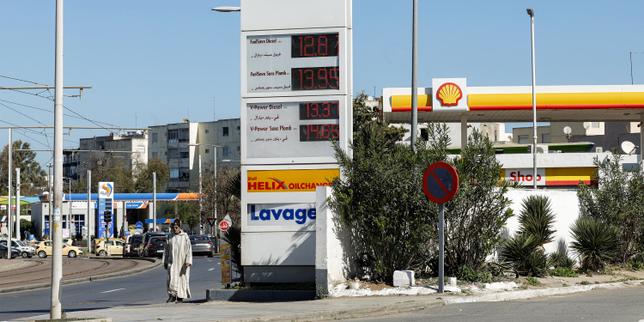
Morocco is currently walking a fiscal tightrope as the conflict in the Middle East threatens to dismantle its hard-won economic stability. While the kingdom has spent years diversifying its energy mix and shoring up domestic industry, its Achilles' heel remains a heavy reliance on global commodity markets. The primary threat isn't just a spike in oil prices; it is a systemic shock to the supply chains that feed Moroccan households and power its manufacturing hubs. If the regional instability expands, the Moroccan government faces a brutal choice between draining its foreign exchange reserves or allowing inflation to erode the purchasing power of its middle class.
The Illusion of Energy Independence
Morocco has long been the darling of renewable energy advocates. The massive solar arrays in Ouarzazate and wind farms along the Atlantic coast are impressive feats of engineering. However, the reality on the ground is far more grounded in fossil fuels. Renewables currently account for about 20% of the actual energy mix used in daily consumption, leaving a massive 80% gap filled by imported hydrocarbons.
When tensions flare in the Middle East, the Brent crude benchmark reacts instantly. For Morocco, a $10 increase in the price of a barrel isn't just a statistic on a screen at the Casablanca Finance City. It is a direct hit to the trade balance. The state-owned Office National de l'Electricité et de l'Eau Potable (ONEE) absorbs much of this volatility to keep consumer lights on, but that debt eventually settles on the taxpayer’s lap.
The strategy of "hedging" only goes so far. Long-term contracts offer a temporary umbrella, but they cannot stop a downpour that lasts for years. We are seeing a shift where the cost of logistics—shipping insurance and freight rates through the Mediterranean—is becoming as prohibitive as the raw cost of the fuel itself.
Food Sovereignty and the Fertilizer Paradox
There is a cruel irony in Morocco’s position as a global leader in phosphate production. While the kingdom exports the very chemicals needed to fertilize the world's crops, it remains dangerously exposed to the price of imported soft wheat and sugar. The Middle East crisis complicates this through the "gas-to-bread" pipeline.
Natural gas is a primary input for producing nitrogen-based fertilizers. While Morocco has phosphates, it still requires nitrogen to create the balanced NPK fertilizers used in its own "Green Generation" agricultural strategy. If regional instability drives up global gas prices, the cost of farming within Morocco skyrockets.
The Cereal Ceiling
Morocco’s Caisse de Compensation (Compensation Fund) is the atmospheric pressure valve of the economy. It subsidizes gas, flour, and sugar to prevent social unrest.
- Subsidies under pressure: The 2024 budget already allocated billions of dirhams to price stabilization.
- The Drought Factor: A multi-year drought has already decimated local harvests, forcing the state to import over 8 million tonnes of cereals.
- Logistical Redlines: With the Red Sea becoming a no-go zone for many shippers, the "Cape of Good Hope" detour adds weeks to delivery times and thousands of dollars to every container.
This isn't a theoretical risk. It is a mathematical certainty. When you combine a domestic crop failure with a global supply chain disruption, the result is a massive spike in the "imported inflation" index.
The Tourism Vulnerability
Luxury hotels in Marrakech and surf camps in Taghazout are currently operating at high occupancy, but the industry is built on a foundation of European perception. Historically, any major escalation in the Middle East creates a "contagion of caution" among Western travelers. They rarely distinguish between the stability of Rabat and the volatility of the Levant.
A drop in tourism arrivals does more than hurt hotel owners. It chokes the flow of hard currency into the country. Morocco relies on these euros and dollars to pay for its energy imports. Without a steady stream of tourists, the Dirham faces downward pressure, making every liter of imported gasoline even more expensive in local terms. It is a feedback loop that the central bank, Bank Al-Maghrib, is watching with extreme anxiety.
Bank Al-Maghrib and the Interest Rate Trap
Abdellatif Jouahri, the veteran governor of Morocco’s central bank, is known for a conservative approach that favors stability over aggressive growth. He knows that raising interest rates to combat inflation is a double-edged sword. If he raises rates too high, he kills the momentum in the construction and automotive sectors—the twin engines of Moroccan growth.
If he keeps rates too low while the Federal Reserve and the European Central Bank stay hawkish, capital will flee the country in search of higher returns elsewhere. This would devalue the Dirham and make the "inflationary shock" even more painful for the average citizen.
The central bank's strategy has been to pause and observe, but the window for observation is closing. As the conflict in the Middle East enters a more protracted phase, the "transitory" nature of these price hikes is being exposed as a permanent shift in the global economic order.
Re-engineering the Supply Chain
To survive this era of perma-crisis, Morocco is attempting to pivot toward "near-shoring." The goal is to make the kingdom the essential factory for Europe, providing a shorter, safer alternative to Asian supply routes.
This works for car parts and aerospace components, but it doesn't solve the immediate problem of the cost of living. The Moroccan worker making wiring harnesses for a French car manufacturer is still paying 15 dirhams for a liter of fuel and seeing the price of vegetables climb every week.
Overlooked Factors in the Inflation Fight
- Remittances: Moroccans living abroad (MREs) send back billions. In times of crisis, these flows often increase as families help their relatives back home. This acts as a silent stabilizer that many analysts ignore.
- Informal Economy: Nearly 30% of Morocco's GDP moves through informal channels. This sector is more resilient to interest rate changes but highly sensitive to transport costs.
- The Pivot to Africa: By deepening ties with West Africa, Morocco is trying to find new markets that aren't as tied to the Mediterranean powder keg.
The Strategy of Forced Austerity
The Moroccan government is quietly signaling that the era of "everything for everyone" is over. The reform of the Compensation Fund is the most politically sensitive move in a generation. By moving toward "targeted" social support—direct cash transfers to the poorest—the state is trying to stop subsidizing the swimming pools of the wealthy while protecting the bread of the poor.
This transition is happening at the worst possible time. Implementing a major welfare overhaul during a regional war and a domestic drought is a high-stakes gamble. If the digital registry for these transfers fails, or if the criteria are seen as unfair, the inflationary shock won't just be an economic problem. It will become a security problem.
The Logistics of Resilience
Tangier Med port is the crown jewel of Moroccan infrastructure. It is the most efficient port in the Mediterranean. Yet, even this titan is at the mercy of global maritime insurance markets. If the Middle East conflict pushes insurers to declare the wider region a "high-risk zone," the port fees and shipping costs will rise across the board.
Morocco is not just fighting a price war; it is fighting a geography war. It must convince the world that it is part of the Atlantic stability zone, not the Middle Eastern volatility zone.
The coming months will test the depth of the state's pockets. The treasury has a buffer, but it is not infinite. To navigate this, the kingdom must accelerate its domestic gas exploration and finalize the pipeline deals with Nigeria, though those are decades-long projects that offer no relief for the current winter.
The immediate path forward requires a ruthless prioritization of resources. This means pausing non-essential infrastructure projects to keep the food and energy subsidies alive just long enough for the regional temperature to drop. There is no magic bullet. There is only the cold, hard reality of the balance sheet.
Tighten the belt. Diversify the supplier base. Protect the most vulnerable. These are not suggestions; they are the requirements for national survival in a world where the old certainties of cheap energy and open seas have vanished.