Mainstream war reporting has devolved into a repetitive exercise in hyper-fixating on tactical noise while completely missing the strategic signal.
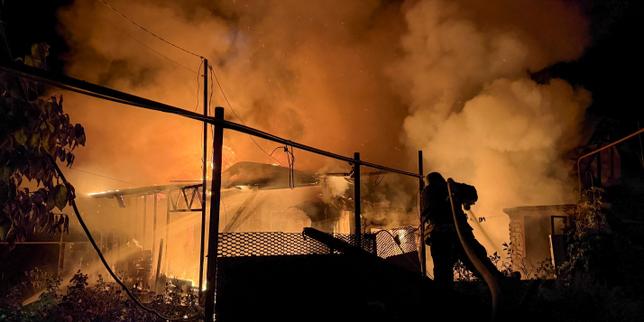
When a drone strike hits a residential building in Ukraine or triggers a temporary ground-stop at Vnukovo airport in Moscow, the press immediately rushes out the same predictable headlines. They count the tragic casualties on one side, measure the momentary panic on the other, and imply that these isolated incidents are shifting the needle of the conflict.
They are not.
This hyper-focus on daily strikes and superficial disruptions feeds a lazy consensus. It suggests that modern attrition warfare is won by PR victories and localized terror. The reality is far uglier, far more mechanical, and entirely divorced from the sensationalized headlines flashing across western screens.
The Logistics Fallacy: Why Closing Moscow Airports Matters Less Than You Think
Commentators love to point at a two-hour closure of Moscow’s airspace as evidence that the war is "coming home to Russia." They paint a picture of a regime rattled by logistics failures and an elite suddenly feeling the squeeze of a conflict they thought they could ignore.
This is wishful thinking masquerading as analysis.
Airspace management in a centralized, authoritarian state does not operate under Western commercial logic. When an unidentified radar track appears, the Russian Federal Air Transport Agency shuts down the skies because they can afford the friction. It is a rigid, bureaucratic protocol, not a symptom of systemic collapse.
To understand the flaw in the current media narrative, we have to look at how military logistics actually flow.
- Commercial airspace is not military airspace. The temporary grounding of civilian flights at Domodedovo or Sheremetyevo does nothing to halt the rail networks moving heavy armor out of the Urals.
- The cost asymmetry favors the defender. A cheap drone forcing a multi-million dollar air defense missile to fire looks like a win on paper for the attacker. But when that defense system is integrated into a massive, state-subsidized military-industrial complex, the economic disruption is negligible.
- The psychological effect backfires. History shows us that sporadic, non-existential aerial bombardment rarely breaks civilian morale; instead, it hardens resolve and legitimizes the state’s wartime narrative.
I have analyzed defense supply chains for over a decade. I have watched analysts predict the imminent collapse of Russian precision-guided munition stockpiles every three months since late 2022. They missed a fundamental rule of defense economics: a state with total control over its domestic manufacturing, access to grey-market semiconductors, and an uninterrupted flow of raw materials cannot be starved out by localized drone disruptions.
Dismantling the People Also Ask Queries About Drone Warfare
The public, fed on a steady diet of sanitized breaking news notifications, asks the wrong questions. Let us dismantle the most common ones with brutal honesty.
Can tactical drone strikes on infrastructure win an attrition war?
No. They cannot. Drones are highly effective tools for tactical reconnaissance, localized precision strikes, and forcing an adversary to reposition air defense assets. However, they lack the payload capacity to achieve strategic denial.
To put this in perspective, consider the physics of destruction. A standard loitering munition carries a warhead weighing anywhere from 5 to 50 kilograms. To permanently knock out a hardened industrial facility, a thermal power plant, or a military airfield, you need sustained bombardments using tons of high explosives. Sporadic strikes create compelling video footage for social media, but they are minor operational speed bumps in a industrial-scale war.
Is Russia running out of missiles and drones?
The short answer is no, and believing so is a dangerous delusion.
The flawed premise assumes that sanctions act as an absolute barrier. In reality, sanctions are merely a tariff on authoritarian supply chains. They increase the transaction cost and the lead time for obtaining components, but they do not stop the flow. By routing microelectronics through third-party intermediaries in Central Asia or East Asia, defense industries maintain production lines. Western media outlets routinely mistake a temporary lull in strikes for an exhaustion of stockpiles, failing to realize the adversary is simply accumulating mass for the next coordinated wave.
The Brutal Math of Industrial Attrition
We must stop treating war like an episodic television drama where every drone strike is a plot twist. War is a meat grinder calibrated by raw math: industrial capacity, demographic depth, and artillery shell production.
+-------------------------------------------------------------+
|               THE REAL EQUATION OF ATTRITION                |
+-------------------------------------------------------------+
|  Monthly Production of 155mm/152mm Artillery Shells        |
|  + Sustainable Domestic Drone Manufacturing At Scale        |
|  + Total Mobilizable Force Pool Capacity                    |
|  - Daily Material Consumption and Attrition Rates           |
|  = ACTUAL STRATEGIC TRAJECTORY                              |
+-------------------------------------------------------------+
When you view the conflict through this lens, the mainstream headlines look absurd. A strike that claims six lives in a northeastern Ukrainian city is a human tragedy, but in the cold, calculus of a war of attrition, it does not alter the frontline equilibrium. The preoccupation with these events allows governments to avoid facing the harsher truth: the current level of industrial support being provided to Ukraine is insufficient to break the structural gridlock.
The West loves the narrative of the agile, technologically superior underdog outsmarting a clumsy giant. It appeals to our cultural myths. But in a protracted conflict, mass eventually develops a quality of its own. If one side is producing four times as many artillery rounds as the other, no amount of clever drone footage or temporary airport closures in the enemy's capital will reverse that structural deficit.
Stop Celebrating the Tactical; Demand the Strategic
If we want to understand where this conflict is heading, we have to look away from the smoke plumes in the suburbs of Kharkiv or the flight delay boards in Moscow.
The real metrics of success are boring, unphotogenic, and rarely make it to a live blog. They are found in the energy consumption data of heavy machinery plants in the Urals. They are found in the tonnage of ammunition moving across the rail lines from North Korea. They are found in the exact deployment rate of advanced electronic warfare systems capable of neutralizing the very drones the media loves to hypostatize.
Continuing to view this war through the lens of episodic daily updates isn't just lazy journalism; it creates a false sense of complacency among Western policymakers. It allows them to believe that incremental aid packages and symbolic strikes are enough to achieve victory.
The reality is that this conflict is being decided by grinding, industrial-scale endurance. Until the strategy shifts from managing public perception to matching the raw industrial output of the adversary, the headlines will keep repeating themselves while the lines on the map barely move. Turn off the live blogs. Look at the factory floors. That is where the war is being won and lost.