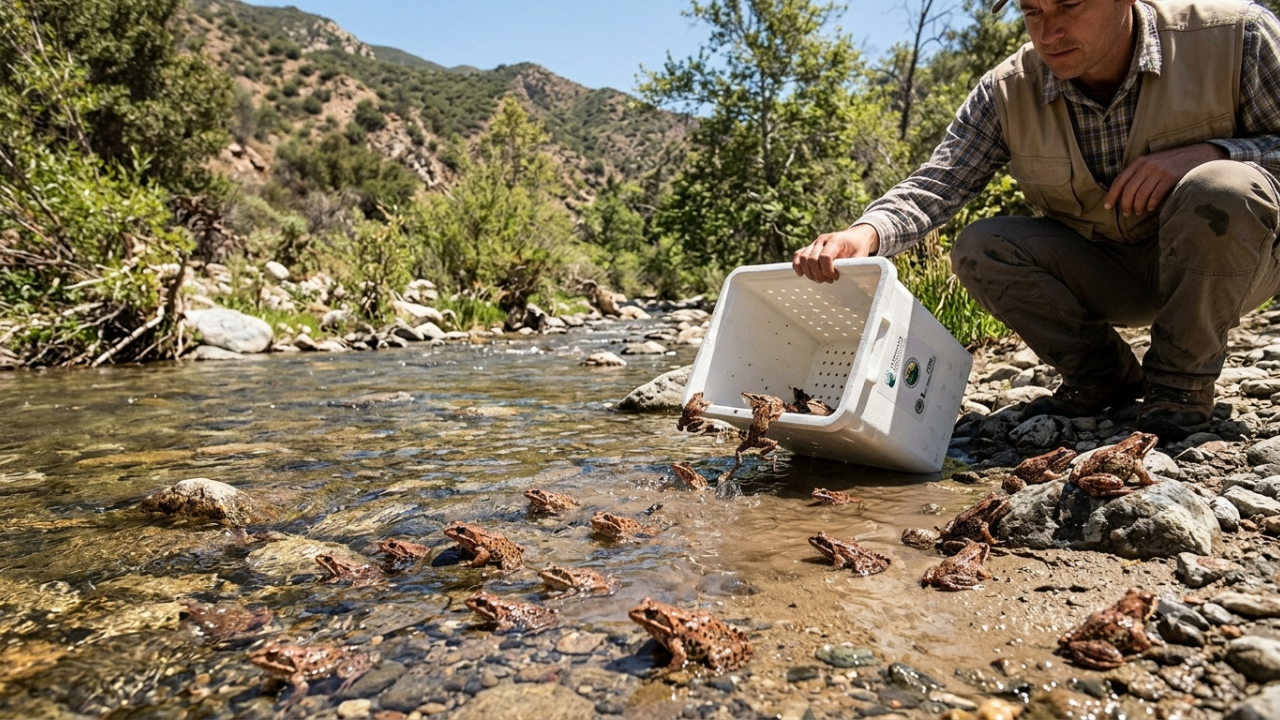
The return of Southern California's mountain yellow-legged frogs begins not with a triumphant roar, but with the quiet splash of 650 captive-reared amphibians entering chilly high-elevation streams. Conservationists celebrate these individual releases as victories, yet the broader ecological reality remains precarious. Decades of habitat fragmentation, introduced predators, and changing climate patterns have pushed these native survivors to the edge of extinction. Returning frogs to the wild is only the first step in a much larger, grueling campaign to rebuild an entire ecosystem from the brink.
Understanding the fragility of mountain yellow-legged frogs requires looking backward. Historic populations once thrived across the San Gabriel, San Bernardino, and San Jacinto mountains, dominating coldwater habitats from mountain trickles down to larger creeks. Then came a cascade of ecological disruptions. Non-native trout introduced for sport fishing decimated tadpoles. Chytrid fungus swept through watersheds globally, wiping out populations with brutal efficiency. By the turn of the century, biologists estimated that over ninety-nine percent of the historic population had vanished.
Captive breeding programs emerged as the last defense against total erasure. Zoos, aquariums, and specialized research facilities stepped in to maintain insurance populations. Technicians manage water temperatures, monitor genetic diversity, and simulate natural winter dormancy cycles to keep captive lines healthy. Every single release candidate represents months of meticulous husbandry and veterinary oversight. Releasing 650 frogs sounds like a massive influx of life, but in biological terms, it is a fragile down payment against immense environmental pressures.
Survival post-release is where the real battle starts. Laboratory-raised frogs face an alien world upon arrival. They must evade predators like garter snakes and birds without the benefit of parental guidance or prior field experience. More critically, they encounter wild strains of amphibian chytrid fungus immediately upon entering native waters. Some individuals possess natural immune resistance, while others succumb within weeks. Field researchers track these dynamics using passive integrated transponder tags and visual identification markers, monitoring survival curves with cautious apprehension.
Habitat restoration runs parallel to captive breeding, addressing the root causes of the original decline. Watershed managers work to remove invasive trout from specific stream reaches, creating safe havens where native frogs can breed without constant predation pressure. Restoring these areas involves grueling physical labor in remote backcountry terrain, hauling equipment on foot or relying on specialized pack animals. Protecting stream corridors from wildfire damage and excessive human recreation adds layers of complexity to an already difficult management mandate.
Climate change introduces a volatile new variable into recovery equations. Prolonged droughts dry up seasonal tributaries, forcing populations into shrinking pools where disease spreads rapidly. Higher water temperatures alter metabolic rates and diminish oxygen levels, stressing aquatic life. Conservation scientists now model future temperature shifts to predict which high-elevation refuges will remain viable over the coming decades. These projections often point toward an urgent need to assist migration higher up mountain slopes where cooler microclimates persist.
Funding and institutional stamina dictate the trajectory of these long-term recovery efforts. Public agencies, non-profit organizations, and academic institutions must maintain coordinated support over multi-decade timelines. Funding ebbs and flows with political cycles and economic shifts, threatening ongoing research and monitoring programs. When budgets tighten, field surveys get canceled and monitoring gaps open up, leaving managers blind to emerging threats like new disease strains or illegal water diversion projects.
The fate of the mountain yellow-legged frog serves as an indicator for broader Western watershed health. When key aquatic species collapse, the entire food web unravels, affecting everything from aquatic insects to forest predators. Saving these amphibians requires accepting that passive protection is no longer enough. Active intervention, continuous genetic management, and aggressive habitat defense form the only viable path forward for species caught in the crosshairs of rapid environmental change.