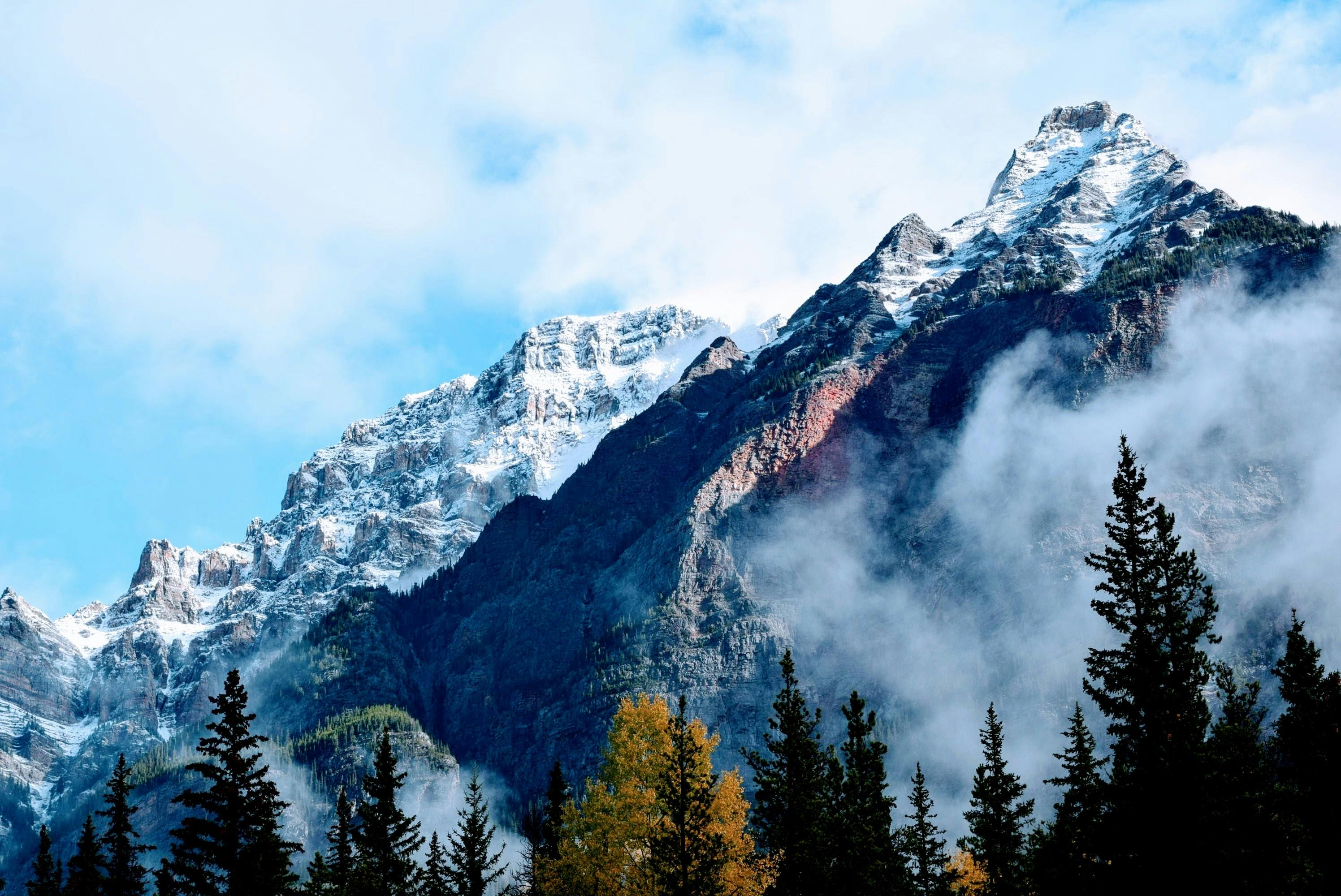
When a massive boulder detaches from a steep cliffside and slams into a moving car on a Chinese mountain highway, the viral dashcam footage treats the event as a freak stroke of bad luck. It is not. These terrifying rockfalls are the predictable, mechanical consequence of carving thousands of miles of high-speed infrastructure through some of the youngest, most fractured, and seismically active terrain on Earth. While drivers miraculously survive many of these impacts thanks to modern automotive crumple zones, the underlying geological instability threatening China's western and southwestern road networks remains an escalating engineering crisis.
You have likely seen the videos. A sedan rounds a blind bend in Sichuan, Yunnan, or Guizhou. Suddenly, a multi-ton block of granite or limestone drops out of the frame, crushing the hood or bouncing off the roof in a cloud of pulverized dust. Local traffic police clear the debris, issue a brief statement noting zero fatalities, and reopen the lane within hours. The news cycle moves on.
After twenty years covering infrastructure failures and civil engineering across Asia, I have seen this exact pattern repeat hundreds of times. Viral clips reduce complex geotechnical failures to ten seconds of shock value. To understand why boulders keep falling onto Chinese highways, you have to look past the dashcam and examine the violent intersection of tectonic uplift, aggressive road construction, and shifting precipitation patterns.
The Physics of a Falling Mountain
A rockfall does not happen without warning, even if it looks instantaneous on camera. Mountains are not solid blocks of stone; they are deeply fractured puzzles held together by friction, root systems, and hydrostatic pressure.
When civil engineers blast a road cut into a steep mountain slope, they fundamentally alter the stress distribution of the entire rock face above it. Removing the toe of a slope eliminates the natural buttress supporting millions of tons of overlying rock. The mountain immediately begins trying to reach a new state of equilibrium.
Water is the primary trigger that finishes the job. During the summer monsoon season across southern and western China, torrential rains penetrate microscopic fissures in the exposed cliff faces. Water adds immense weight to the rock mass, lubricates clay-filled joints, and builds up pore water pressure that literally pushes slabs of stone outward from the cliff wall.
In higher elevations across the Tibetan Plateau and neighboring provinces, freeze-thaw cycles do the same damage over winter and spring. Liquid water seeps into cracks during the day, freezes at night, and expands by roughly nine percent. That expansion exerts thousands of pounds per square inch of outward force, acting like a slow-motion hydraulic jack prying boulders loose from the parent rock.
Once a boulder breaks free, gravity converts its potential energy into lethal kinetic energy at terrifying speed. A seemingly modest cubic meter of granite weighs roughly 2.7 metric tons. Dropping from a height of just fifty meters, that single rock hits the asphalt traveling at over 110 kilometers per hour. No standard passenger vehicle roof is engineered to absorb that kind of concentrated vertical impact, which is why survival in these incidents usually comes down to a fraction of a second—the difference between a boulder hitting the engine block versus the passenger cabin.
Building Roads Where Roads Were Never Meant to Go
To grasp the sheer scale of this hazard, look at a topographical map of China's infrastructure boom over the past two decades. Having largely completed its highway network across the flat eastern plains, Beijing pushed aggressively into the rugged interior—provinces like Sichuan, Yunnan, Guizhou, Tibet, and Qinghai.
This region sits directly in the collision zone where the Indian tectonic plate drives northward into the Eurasian plate. The resulting uplift created the Himalayas, the Hengduan Mountains, and the Sichuan Basin. The rock here is intensely sheared, faulted, and weakened by millions of years of tectonic grinding. Historic earthquakes, such as the devastating 2008 Wenchuan quake and the 2022 Luding earthquake, further shattered the upper crust, leaving billions of cubic meters of loose rock perched precariously above valley floors.
In these valleys, flat land is nonexistent. Engineers have only two choices when building a highway or a railway: bore a tunnel through the mountain, or blast a shelf into the canyon wall directly beside a rushing river.
Tunnels are safer from rockfalls, though they carry their own severe geological risks. However, tunneling is astronomically expensive and time-consuming. For thousands of miles of provincial highways, rural connector roads, and older national routes like the famous G318, blasting a bench cut into the mountainside was the only economically viable option.
This construction method leaves behind vertical or near-vertical cut slopes towering hundreds of feet above passing traffic. Every mile of canyon highway represents a continuous, miles-long target zone for every loose rock on the ridge above.
Why Traditional Slope Protection Fails
Drive along any major expressway in western China and you will see massive investments in slope engineering. Mountainsides are draped in heavy steel wire mesh, pinned down with thousands of rock bolts, and sprayed with thick layers of shotcrete—concrete blown at high velocity onto the rock face to seal cracks and prevent weathering.
These systems work well for small-to-medium debris. A high-tensile steel catch fence can absorb the energy of a falling boulder the size of a washing machine, deforming like a catcher's mitt to bring the rock to a halt before it reaches the tarmac.
They fail catastrophically when the failure originates high above the engineered zone.
Budget and logistical constraints mean engineers typically stabilize only the immediate cut slope—the first fifty to one hundred meters above the road. Yet many of the most destructive boulders detach from natural cliffs three hundred, five hundred, or even a thousand meters up the mountainside, well above the reach of anchor bolts and catch fences.
By the time a multi-ton boulder bounces down a natural gully and reaches the highway's protective barriers, it is moving too fast and carrying too much momentum. It tears straight through steel netting like tissue paper, vaults over concrete retaining walls, and lands squarely in the path of oncoming traffic.
There is also a subtle trap built into shotcrete and concrete slope facing. If engineers seal a rock face with concrete without installing enough drainage pipes—known as weep holes—water becomes trapped behind the concrete shell. Hydrostatic pressure builds up unseen until the entire concrete wall, along with the rock behind it, blows out onto the highway in a massive structural collapse.
The Climate Multiplier on Fragile Slopes
The engineering baseline used to design many of China's mountain roads is rapidly becoming obsolete. Historical rainfall data no longer reflects reality in the upper reaches of the Yangtze and Yellow River basins.
Meteorological records show a clear trend toward more extreme, localized precipitation events—intense cloudbursts that dump a month's worth of rain onto a single mountain catchment in a few hours. Soil and fractured rock that could safely drain steady, moderate rainfall become instantly oversaturated during these downpours.
Simultaneously, rising temperatures at high altitudes are degrading alpine permafrost. Across western Sichuan, Qinghai, and Tibet, ice that has permanently cemented fractured rock faces together for millennia is thawing. As this permafrost retreats higher up the peaks, previously stable cliff faces are suddenly shedding massive volumes of rock, feeding debris flows and sending solitary boulders crashing down into valleys that have been safe for generations.
Hypothetically, consider a mountain pass built in the late 1990s. Its drainage culverts and rockfall catch fences were calculated based on 20th-century rainfall averages and assumed a permanently frozen upper ridge. Twenty-five years later, that same road faces warmer summers, thawing ridge lines, and violent monsoon cloudbursts. The concrete retaining walls have not gotten weaker, yet the mountain above them has become exponentially more active.
The Maintenance Deficit Nobody Wants to Fund
Building a spectacular new bridge or carving a highway through an impossible gorge wins political promotion and media praise. Quietly inspecting rusting rock bolts on a twenty-year-old provincial road does not.
Across the global civil engineering sector, infrastructure maintenance suffers from chronic underfunding compared to new construction, and China is no exception. Maintaining mountain slope protection is grueling, dangerous, and expensive work. Inspectors must rappel down sheer cliffs to check the tension on ground anchors, clear accumulated rocks out of catch fences, and unclog drainage weep holes.
When a catch fence fills up with loose scree and small boulders over two or three seasons, it loses its energy-absorbing capacity. If a large boulder strikes a fence that is already packed full of debris, the rock simply uses the accumulated pile as a ramp to launch itself directly onto the highway.
Furthermore, automated monitoring systems—such as InSAR satellite radar, ground-based LiDAR, and wireless tiltmeters—are heavily concentrated on high-profile national expressways and high-speed rail corridors. Thousands of miles of secondary roads, tourist routes, and rural highways still rely entirely on visual inspections by local maintenance crews who are stretched thin across vast, mountainous jurisdictions.
How Drivers Actually Survive Direct Impacts
When a boulder does beat the odds and slams into a car, survival looks like a miracle on security footage. In reality, it is the result of specific physical variables colliding in the driver's favor.
First is impact geometry. Boulders tumbling down a mountainside rarely fall straight down like an anvil; they bounce and roll with immense forward horizontal velocity. When a rolling boulder strikes the front corner or hood of a car, the vehicle's crumple zones absorb a massive portion of the kinetic energy while deflecting the rock's trajectory upward or to the side. The engine block acts as a dense metal shield, often getting torn completely off its mounts while keeping the rock out of the passenger firewall.
Second is vehicle speed and driver reaction. Paradoxically, braking hard at the last second can sometimes worsen the outcome if it puts the passenger cabin directly under the falling trajectory rather than letting the hood take the blow. Conversely, swerving violently on a narrow mountain road risks sending the car over the outer guardrail into a gorge—a far more reliably fatal outcome than taking a glancing blow from a rock.
Modern unibody vehicle construction, reinforced A-pillars, and side-curtain airbags have dramatically improved survival rates in glancing impacts. Yet physics remains undefeated. If a boulder weighing more than two tons lands directly on the center of a passenger roof at terminal velocity, no commercially available passenger car can prevent catastrophic intrusion.
Moving From Reactive Cleanup to Predictive Defense
Highway authorities cannot net every mountain in western China. The geography is simply too vast, and the vertical relief too extreme. Attempting to physically bolt down every loose boulder from Chengdu to Lhasa would bankrupt the state.
Instead, the most effective engineering strategies are shifting away from brute-force containment toward early detection and traffic interception.
Modern rockfall detection systems use tripwires, fiber-optic vibration sensors embedded along roadside barriers, and millimeter-wave radar to detect debris the exact second it enters the lower slope. These systems link directly to automated traffic signals positioned a kilometer upstream and downstream of known hazard zones. Within two seconds of a rock hitting a catch fence, red lights flash and automated gates drop, halting traffic before drivers can enter the kill zone.
In high-risk corridors where the cliffs are simply too unstable to stabilize, engineers are increasingly abandoning open-cut roads altogether. The modern solution is to build rock sheds—massive, reinforced concrete galleries with thick, angled roofs covered in energy-absorbing layers of sand or gravel. When a boulder falls from the peak above, it hits the sloped roof of the shed and rolls harmlessly over the highway into the river canyon below. Where rock sheds are impractical, engineers are boring deep bypass tunnels to put entire sections of vulnerable canyon highway permanently underground.
Until those upgrades reach the thousands of miles of older mountain roads still winding through China's interior, every heavy rainstorm and spring thaw will continue to load the dice. The mountains are still rising, the rock is still fracturing, and the next viral dashcam video is already waiting to detach from a cliff face somewhere high above the asphalt.



