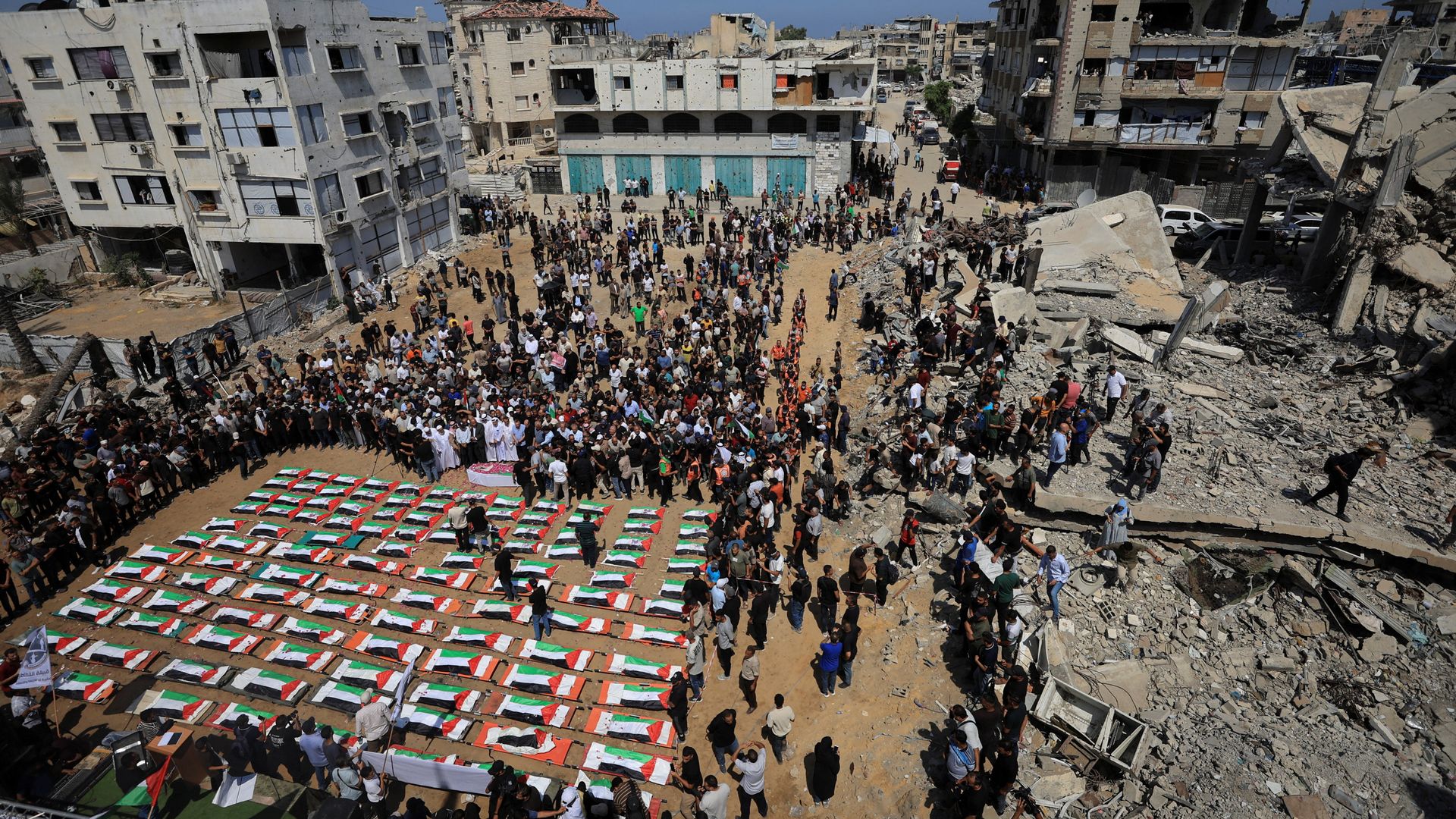
The headlines weep over the delayed burials. Three years of waiting under concrete, finally unearthed, finally given a marker, finally granted the dignity of a grave. The standard media reaction is predictable: horror at the duration, grief for the lost, and a generic finger pointed at the chaos of conflict. Everyone nods along. Everyone agrees it is a tragedy.
And everyone is missing the point.
Focusing on the date on a headstone three years too late is an emotional trap. It lets the system off the hook by framing a structural failure as a logistical delay. When bodies sit under debris for thirty-six months in an urban zone, you are not looking at a mere byproduct of war. You are looking at the total administrative breakdown of civil protection, municipal engineering, and international accountability.
Stop mourning the timeline. Start interrogating why recovery was treated as an afterthought in the first place.
The Myth of the Delayed Closure
The lazy consensus in modern reporting is that time heals, closure matters, and a late funeral provides a vital psychological balm. I have watched recovery operations in active conflict zones across multiple continents, and I can tell you flatly that closure is a commercial invention. People do not heal because a crane finally arrives. They stabilize when accountability replaces uncertainty.
When media outlets fixate on the three-year lag of these Gaza recoveries, they frame the catastrophe as a stopwatch problem. If only the heavy machinery had arrived sooner. If only the border had opened. If only the paperwork cleared.
This framing treats an engineered catastrophe like a delayed flight. It assumes the default state of urban warfare is total infrastructural paralysis, and any recovery is a miraculous bonus. That is a dangerous baseline. Heavy urban search and rescue is not an improvised charity project. It is a codified international obligation under Additional Protocol I of the Geneva Conventions. Treating it as optional is why bodies stay under flats for a thousand days.
The Mechanics of Abandoned Recovery
Let us look at how urban recovery actually fails while commentators weep over the results.
- The Equipment Chokepoint: Heavy excavators, thermal imaging drones, and concrete shears are classified under dual-use restrictions in many conflict zones. Bureaucracy acts as a silent killer, locking machinery out of zones where thousands lie under rubble.
- The Jurisdictional Void: Municipal workers are not combatants, yet they inherit the risk profile of combatants. When local civil defense units are defunded, targeted, or left without fuel, recovery stops entirely.
- The Data Blackout: Mapping collapsed structures requires precise GIS tracking of pre-war populations against post-strike impact zones. Without systematic cataloging, recovery becomes a game of blind man's bluff with bulldozers.
When you ignore these structural mechanics, you reduce human lives to a statistic of mourning. You allow authorities to issue permits for funerals while dodging the hard questions about why the excavation took three years of administrative lethargy to authorize.
What People Get Wrong About Urban Warfare Logistics
If you ask the average news consumer how to fix a situation where thousands remain trapped under collapsed residential blocks, they will suggest more aid packages or temporary ceasefires. They think the bottleneck is humanitarian goodwill.
They are dead wrong.
The bottleneck is legal and structural architecture. Humanitarian aid drops food and medicine, but it rarely drops structural engineers, heavy crane operators, and hazardous materials teams. International bodies love to fund food kitchens because they provide clean photo opportunities. They hate funding urban recovery logistics because clearing rubble is expensive, politically volatile, and lacks a neat ribbon to cut.
Imagine a scenario where emergency infrastructure funding is mandated before a single bullet is fired, treating municipal restoration as equal in priority to military defense. It sounds radical because our entire global framework views post-disaster cleanup as an act of pity rather than an act of law.
We do not need more candlelight vigils for victims unearthed after years of bureaucratic neglect. We need a complete overhaul of how the global community classifies and funds urban rescue operations.
The Cost of Comforting Narratives
The media loves a late funeral because it wraps a messy, ongoing geopolitical disaster into a neat narrative arc. Discovery, grief, ceremony, end of story.
It is a lie.
Every funeral held years after the fact is an indictment of the intervening years. It proves that the living spent thirty-six months walking past tombs of concrete, normalizing the unlivable, and accepting that human remains are secondary to political stalemates.
If you truly want to honor the dead buried beneath the flats of Gaza, stop writing elegies about the delay. Dismantle the institutional cowardice that allowed the machinery of recovery to stall for a thousand days while the world watched other screens.