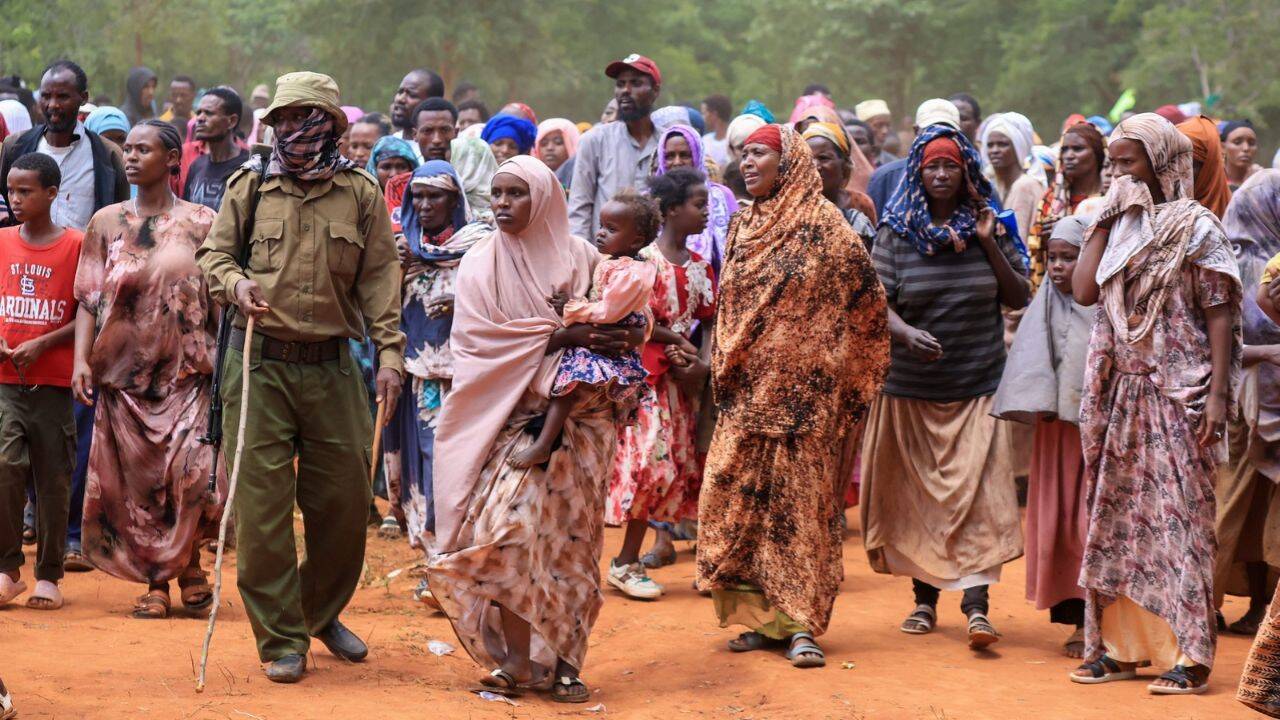
Around 50,000 people have crossed out of Ethiopia's Moyale area into northern Kenya after deadly clashes flared up. Families arrived with almost nothing. Meanwhile, ordinary Kenyan residents are opening their doors while running out of food, cash, and patience.
Look closely at what happens in a border town like Moyale when violence erupts next door. Political disputes over local authority and identity don't stay neatly on one side of a frontier. Tensions escalated around October 18 over the raising of the Somali regional flag in the disputed Moyale area, turning long-running friction into open fighting that sent thousands running for cover.
Most headlines stop at the headcount. Fifty thousand displaced is a massive number on paper. On the ground, though, the real shock absorber isn't a UN warehouse. It's a neighbor's spare room, a shared pot of maize, and a local shopkeeper trying to keep prices from spiraling.
How Border Violence Hits Everyday Life in Moyale
When clashes break out in a divided border town, the disruption is immediate and messy. People don't wait for official travel corridors when gunfire starts or homes burn. They grab children, leave furniture and livestock behind, and walk across whatever path feels safest.
Reports from the ground describe women giving birth during the flight and families arriving without bedding, cooking pots, or clean water. Newborn babies end up sleeping on bare floors. Outbreaks of diarrhea become a serious threat alongside rising fears of malaria as mosquitoes multiply around crowded shelters.
Here's what a lot of outsiders miss about Moyale. This isn't a remote, empty desert stretch miles away from civilization. Moyale is a bustling cross-border hub where families, traders, and clan networks straddle the line between Ethiopia and Kenya. When fighting hits one side, the shockwaves land right on the other.
- Blocked trade routes: Cargo trucks get stuck on the Ethiopian side, cutting off normal commercial flows.
- Currency and banking snags: Bank closures disrupt the circulation of the Ethiopian birr, complicating everyday buying and selling for local merchants.
- Rising prices: Traders report price increases of roughly 20 percent as goods get harder to move and demand jumps.
- Spillover anxiety: Kenyan residents worry that armed clashes could cross over into their own neighborhoods.
Why Host Families Are Reaching a Breaking Point
In emergencies like this, host families usually get praised for generosity and then quietly left to carry the weight. That's happening again in Moyale.
As residents put it in interviews with Al Jazeera, a town built to supply one community suddenly finds itself trying to stretch resources across two. You can share a room for a few days. Sharing food, water, and latrines for weeks when your own pantry is thin is a different story altogether.
Let's be honest about what happens when host households get squeezed this hard. Goodwill isn't an unlimited resource. When local families see prices climb by a fifth while clinics and water points strain under double the load, resentment can quietly build even among people who share close cultural ties.
Relief agencies like UNHCR, the International Organization for Migration, and the European Union have stepped in with assessments and emergency aid—including tarpaulins, blankets, sleeping mats, jerrycans, soap, dignity kits, kitchen sets, and solar lamps. Still, logistics in northern Kenya are tough, and early supplies rarely match the scale of a sudden 50,000-person surge. And as UNHCR notes, border communities were already coping with climate pressures like El Niño before the displacement wave hit.
What Aid Groups Get Right and Where Gaps Show Up
Fast distribution of shelter kits, water containers, and hygiene supplies saves lives right away, especially when families arrive with nothing. Supporting host households directly—not just newly arrived camp or informal site residents—is critical because hosts are keeping the system from collapsing on day one.
Where things often fall short is speed and market stability. Truck delays and banking disruptions choke local supply chains just when cash or food assistance is needed most. Also, data on exact displacement numbers and local casualties during active border clashes can shift quickly and remain hard to verify independently in real time.
What This Crisis Means for Kenya and the Region
Commentary from outlets like African Arguments points to a bigger strategic question for Nairobi. Kenya has long walked a careful line along its northern frontier—focusing on security, registration, and humanitarian coordination while avoiding deep diplomatic entanglement in internal Ethiopian disputes.
Wait too long, though, and a localized border flare-up can turn into a chronic regional headache. Unresolved clashes along a porous frontier risk dragging neighboring communities into cycles of reprisal, disrupting trade corridors, and testing county-level services in northern Kenya.
Practical Steps for Following and Supporting the Response
If you're tracking this situation—or looking for ways to help meaningfully—skip the vague outrage and focus on concrete actions:
- Track verified agency updates: Check dispatches from UNHCR and IOM for updated figures on arrivals, shelter gaps, and health risks rather than relying on unverified social media rumors.
- Support established humanitarian funds: If you donate, pick vetted organizations operating in northern Kenya with proven logistics for water, sanitation, emergency shelter, and maternal/child health.
- Watch market and health indicators: Pay attention to food price shifts, clean water access, and disease alerts like acute diarrhea or malaria—those day-to-day pressures tell you whether conditions on the ground are stabilizing or worsening.
- Push for diplomatic and local mediation: Real relief requires more than tents and jerrycans; lasting calm depends on de-escalating local disputes in Moyale before displacement becomes permanent.
50,000 Flee Ethiopia Violence Into Kenya As UN Warns Of Food, Water & Shelter Shortages provides a quick visual overview of how the displacement surge at Moyale is straining food, water, and shelter supplies across the border.