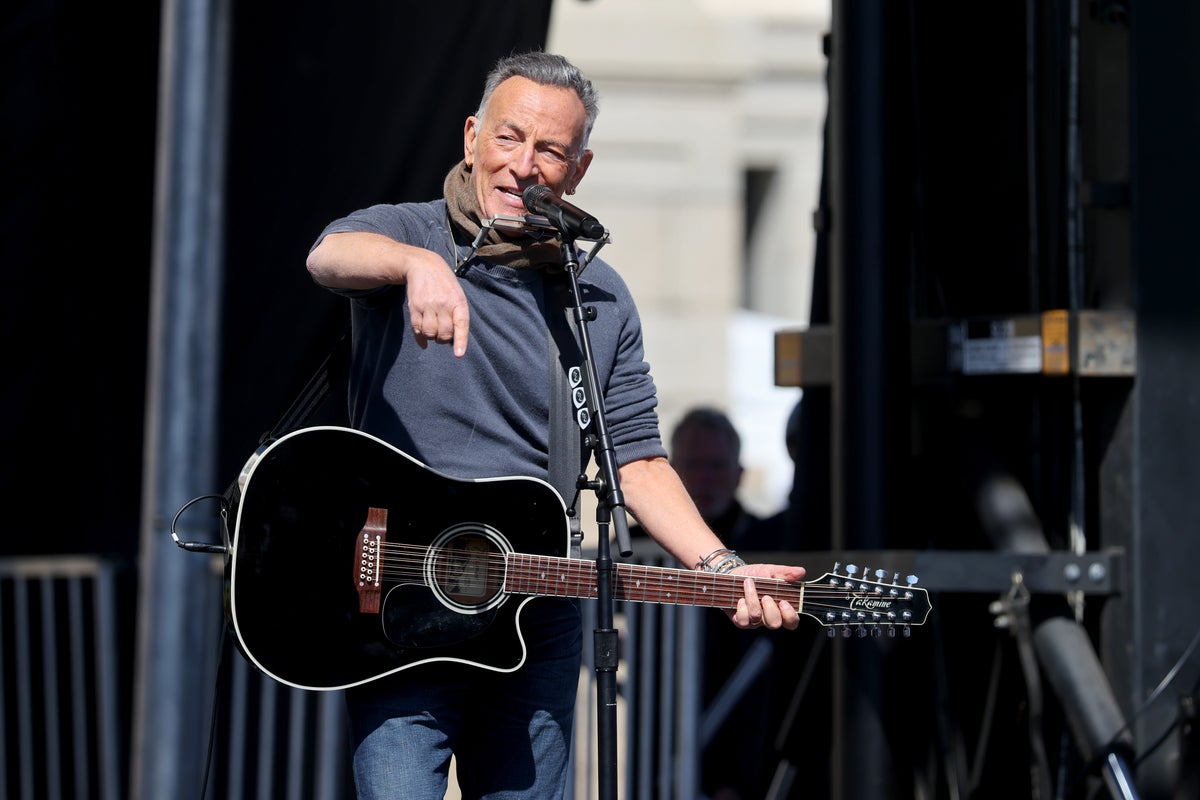
Bruce Springsteen and Tom Morello organizing a star-studded protest festival to target Donald Trump is not the radical act of resistance the media wants you to believe it is. It is a highly optimized corporate machine operating exactly as intended.
Every single time a group of ultra-wealthy musicians gathers to "speak truth to power" from a stage backed by Live Nation and corporate sponsors, the culture industry enters a collective state of self-congratulatory amnesia. The mainstream press swallows the narrative whole, framing these events as historical cultural flashpoints. They are not. They are calculated brand-maintenance strategies disguised as political rebellion. In other news, take a look at: The Economics of Digital Identity Monetization in Hollywood Production Models.
To understand why the "protest festival" model is fundamentally broken, you have to look past the distorted guitars and the working-class iconography. When you dissect the mechanics of these events, the reality is stark: billionaire-backed stadium rock does absolutely nothing to shift electoral outcomes or change systemic policy. In fact, it reinforces the very structures it claims to fight.
The Myth of the Subversive Stadium
The foundational lie of the modern protest concert is that massive scale equals massive impact. Industry insiders love to propagate this myth because it justifies the exorbitant ticket prices and the massive production budgets. Having spent two decades analyzing tour economics and the business structures behind major music festivals, I have watched promoters repeat the same playbook. They weaponize the audience's genuine political anxieties to sell merchandise and data. GQ has provided coverage on this important issue in extensive detail.
Let us look at the actual mechanics of a stadium-level protest event.
- The Financial Pipeline: Tickets are sold through primary ticketing monopolies. VIP packages are offered to corporate executives. The concession revenue flows directly back to multi-billion-dollar hospitality conglomerates.
- The Demographic Echo Chamber: Because of hyper-targeted digital marketing and surging ticket inflation, the audience for these events is overwhelmingly homogenous. You are not converting the politically undecided; you are charging premium prices to people who already agree with every word being screamed from the microphone.
- The Sanitized Message: True radicalism is bad for quarterly earnings. Therefore, the political messaging of a mainstream protest festival must be flattened into vague, easily digestible slogans. It targets a specific personality—in this case, Donald Trump—rather than the deeper economic systems that allowed that personality to rise to power in the first place.
When Bruce Springsteen sings about the struggles of the American working class while charging hundreds of dollars per seat, the irony is not just a hypocritical footnote. It is the core operational flaw.
The Data Proves Political Concerts Do Not Win Elections
Proponents of these star-studded spectacles always point to legacy events like Woodstock or the Live Aid era as proof of concept. They suffer from severe survivorship bias.
If celebrity-stuffed musical rallies translated directly into electoral success, the political map would look radically different. In 2016, Hillary Clinton closed out her campaign with a massive, star-studded concert featuring Jay-Z, Beyoncé, and Bruce Springsteen. The result was an electoral loss in the very Rust Belt states where those artists supposedly hold cultural capital. In 2020 and 2024, the pattern repeated: massive celebrity endorsements and concert rallies generated millions of views on social media but failed to shift the needle among non-college-educated voters who actually decide tight elections.
Political scientists call this "costly signaling" with zero return. The music industry calls it a successful activation.
Imagine a scenario where the millions of dollars spent on staging, security, lighting rigs, and artist riders for a single weekend festival were instead funneled directly into sustained, localized voter registration drives in overlooked congressional districts. The political yield would be exponentially higher. But grassroots organizing does not look good on an artist's Instagram feed. It does not sell vinyl box sets.
The Co-optation of Rage
Tom Morello’s career is built on the aesthetics of revolution. Harvard-educated and undeniably brilliant, Morello has managed to market anti-capitalist anger while signed to major global record labels for decades. This is the ultimate paradox of the elite protest class: their business model requires the existence of the enemy they claim to despise.
When an artist performs an angry anthem against the political establishment, a complex psychological transaction occurs. The audience experiences a sense of catharsis. By cheering, singing along, and buying a $45 t-shirt with a raised fist on it, the attendee feels they have actively participated in a political movement.
This is a dangerous illusion. It replaces actual political utility—like union organizing, attending local town halls, or sustained mutual aid—with passive consumption. The corporate festival structure takes genuine, volatile political rage and safely grounds it within a controlled environment where it can be monetized. It turns dissent into a lifestyle brand.
The Inherent Failure of Top-Down Resistance
True political movements are built from the bottom up. They are inconvenient, messy, and usually underfunded. The celebrity protest festival is the exact opposite: it is an aristocratic intervention. It operates on the flawed premise that the working class needs wealthy cultural elites to tell them how to vote and what to think.
Let us break down the standard "People Also Ask" assumptions regarding these events to see just how deep the misconception goes:
Do celebrity protest concerts raise awareness for important causes?
No. They raise awareness for the artists participating in the cause. In the digital age, nobody attending a Bruce Springsteen concert is unaware of Donald Trump's political platform. The "awareness" argument is a relic of the 1980s before the internet existed. Today, it is simply a shield against critics who point out the lack of tangible outcomes.
Does the money raised at these festivals make a difference?
Rarely in proportion to the total revenue generated. While a portion of ticket sales might be directed toward non-profits, the vast majority of the cash generated by parking, concessions, hotel bookings, and corporate sponsorships remains within the entertainment ecosystem. The overhead of running a stadium-scale show eats away at the actual charitable margin.
The alternative approach—the one the music industry refuses to back—is decentralization. If these artists truly wanted to disrupt the political landscape, they would refuse to play stadiums. They would show up unannounced at union strike lines. They would perform on flatbed trucks in rural counties without selling tickets. They would completely bypass the corporate gatekeepers who profit off our societal division.
But they won't do that. Because at the end of the day, the spectacle must go on, the brand must be protected, and the shareholders must be satisfied.
Stop looking at the stage for your revolution. The people holding the microphones are holding the bag.