The neon lights of the Eurovision Song Contest have long projected an illusion of borderless harmony, a continental campfire where sequins and synth-pop paper over centuries of geopolitical scars. Yet that fragile varnish is cracking under the weight of real-world casualties. When Ireland's national broadcaster confirmed its decision to sit out the contest for the second consecutive year, citing the ongoing humanitarian catastrophe in Gaza, it marked more than a routine diplomatic snub. It signaled a profound structural crisis within public service broadcasting across Europe.
For decades, the organizers operating behind the scenes in Geneva insisted that music transcended politics. That stance is no longer tenable. When bombs level neighborhoods and hospitals collapse in real time on smartphone screens across Dublin, Berlin, and Stockholm, asking artists to glitter their way through a three-minute pop track while maintaining strict institutional neutrality looks less like diplomacy and more like complicity to a growing segment of the viewing public.
The Sound of Silence in Dublin
To understand how RTÉ reached this point, you have to look past the glitz of the grand final and examine the mechanics of contemporary public trust. Public broadcasters exist on borrowed legitimacy. Funded directly or indirectly by licence fees extracted from citizens, they are legally bound to reflect the conscience and values of the populations they serve. When civil society protests outside broadcasting headquarters month after month, demanding institutional accountability, station executives face an impossible calculation. Continuing business as usual risks a fatal erosion of domestic credibility. Staying home carries its own heavy penalty, including financial write-offs and cultural isolation, but it offers a clean line of moral defense.
Public Broadcasting at a Crossroads
The pressure on national broadcasters extends far beyond Ireland. Across Western Europe, editorial boards find themselves caught in a vice between international contractual obligations and domestic civic dissent. Licence fee payers are asking uncomfortable questions about why their money supports an organization that enforces a strict firewall between entertainment and ethics. When public institutions lose their moral authority at home, participating in international pageantry becomes a liability rather than an asset. The traditional argument that cultural events promote unity through shared artistic expression rings hollow when millions of viewers see active humanitarian devastation ignored by the very stage celebrating continental solidarity.
The European Broadcasting Union on Trial
The European Broadcasting Union, known simply as the EBU, relies on a strict interpretation of its rulebook to maintain order among dozens of sovereign member organizations. Article 1.8 of its governing statutes explicitly prohibits political interference, framing the competition as a non-political event designed to promote cultural unity. But this doctrine was forged in an entirely different media ecosystem. It was designed to manage minor diplomatic squabbles over voting blocs or minor lyrical disputes, not active military sieges televised in high definition to millions of voters every single day.
By treating the humanitarian situation in Gaza as a localized foreign policy issue outside the remit of a pop music competition, the EBU has systematically underestimated the changing priorities of younger European demographics. For Gen Z and millennial audiences, culture and politics are inextricably linked. Consumption is a moral choice. Watching a television spectacle while ignoring the devastation of civilian infrastructure in the Middle East is viewed not as escapism, but as a moral failure. The EBU's institutional inertia has turned what should have been a manageable diplomatic negotiation into an existential fracture.
The Economics of Cultural Neutrality
The financial and operational consequences for the contest are severe, even if the organization attempts to put up a brave face during press briefings. When legacy participants like Ireland and the Netherlands pull their entries, the broadcast footprint shrinks. More importantly, the cultural authority of the event diminishes. Eurovision relies entirely on its status as a shared continental moment. If major cultural contributors begin viewing participation as morally compromising, the contest risks sliding down the prestige ladder from a premier international showcase to a compromised regional vanity project.
Behind closed doors, network executives across multiple capitals are wrestling with parallel dilemmas. Publicly, many maintain solidarity with the EBU's official positions to avoid regulatory retaliation or contractual penalties. Privately, programming directors admit that the public relations cost of participation has never been higher. Social media monitoring teams track millions of angry comments whenever the contest airs, pointing out the stark contrast between carefree choreography and mass casualties. This ambient friction creates an exhausting environment for everyone involved, from delegation heads to the performers thrust onto a politically toxic stage.
The defense mounted by the EBU often centers on the idea of inclusivity. The organization argues that excluding specific nations sets a dangerous precedent, turning a song contest into a tribunal for international law. Proponents of this view warn that once you open the door to political disqualifications, there is no logical stopping point. Every military conflict, territorial dispute, and human rights violation across the globe would become a metric for participation. The contest would dissolve into endless bureaucratic warfare over who deserves to sing and who does not.
This slippery-slope argument holds tactical merit, but it ignores a critical distinction. The current wave of boycotts is not being driven by obscure state-level lobbying or secretive diplomatic pressure. It is being driven by grassroots revulsion among ordinary licence-fee payers and artists who refuse to lend their creative labor to an institution that looks away from mass suffering. When musicians publicly decline to submit songs, or when national selection shows face massive viewer walkouts, the pressure shifts from theoretical slippery slopes to immediate operational realities.
Consider the position of the artists themselves. A generation ago, representing one's country on the Eurovision stage was universally regarded as the ultimate career accelerator. Today, it has become a professional minefield. Performers are immediately interrogated about foreign policy positions during press junkets, forced to answer for government actions over which they have zero control. Social media feeds transform into battlegrounds. Artists find themselves caught between loyal fans demanding moral stands and broadcasters demanding polite neutrality. Many talented acts are simply deciding that the personal and professional toll is no longer worth the neon-lit payoff.
The institutional response from Geneva has frequently relied on procedural delays and tightly scripted PR statements designed to run out the clock. Months pass between national announcements and official rule reviews. This bureaucratic drag gives the impression of a leadership out of touch with the velocity of modern public opinion. While corporate sponsors and commercial partners push for stability and predictable viewing metrics, the ground beneath their feet is shifting rapidly.
To trace the history of Eurovision controversies is to trace the shifting fault lines of European identity. The contest survived the Cold War, the dissolution of Yugoslavia, and numerous regional trade disputes precisely because it possessed a chameleon-like ability to absorb political tension and turn it into camp spectacle. But the current crisis hits differently. It touches on questions of complicity and human rights in a hyper-connected era where every citizen carries a window into active conflict zones in their pocket. You cannot sparkle your way past dead children when the audience can watch the aftermath on their phones during the commercial break.
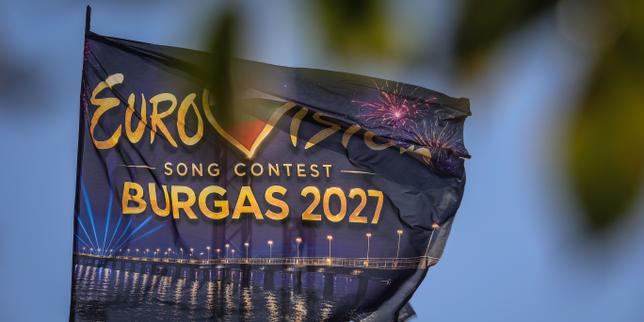
As the planning cycle for the 2027 contest gathers momentum in boardrooms across Europe, the silence from Dublin speaks volumes. There are no secret back-channel negotiations producing miraculous compromises. There is simply a firm, stubborn divergence of values. RTÉ has calculated that the cost of absence is far lower than the cost of presence. Other national broadcasters are quietly running the same numbers, watching the fallout, and wondering if they will be next to drop out of the rotation.
The EBU faces a stark choice. It can continue to enforce its rigid interpretation of political neutrality, hoping that public fatigue will eventually set in and allow the contest to return to business as usual. Or it can fundamentally rethink its governance, acknowledging that culture can never truly be isolated from conscience. Double-down strategies rarely work when public trust has eroded this deeply.
Until leadership in Geneva confronts this reality, the contest will remain haunted by empty green rooms and missing delegations. The music may still play on Eurovision night, but for a growing slice of Europe, the song has lost its meaning.