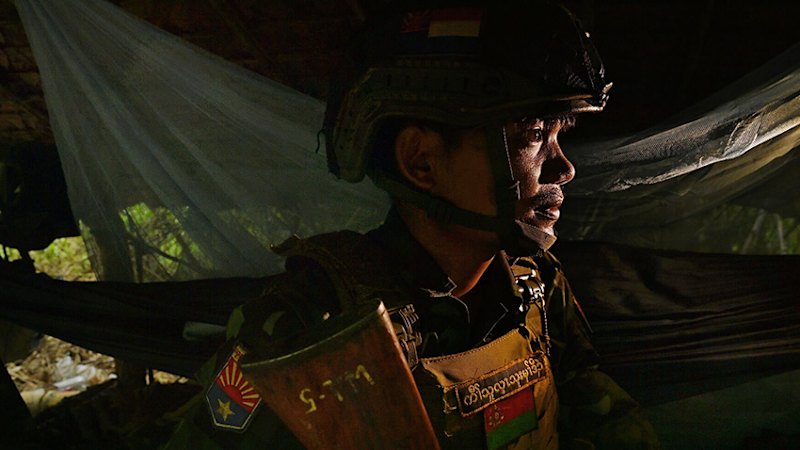
Most global news feeds ignore a massive war burning right now in Southeast Asia. Since the military junta seized power in February 2021, Myanmar has transformed into a brutal, fragmented battlefield. Yet, foreign headlines rarely linger on the daily airstrikes, the collapsed economy, or the millions forced from their homes. You might wonder why this crisis remains a blind spot for international media.
The silence isn't accidental. It's a combination of diplomatic fatigue, closed borders, and a complex web of local factions that defy easy storytelling. But ignoring the conflict doesn't mean it's standing still. Millions of people are caught in the crossfire of a war that dictates the geopolitical stability of the entire region.
The Reality Behind The Closed Borders
Getting accurate information out of Myanmar is an uphill battle. The military regime, known as the State Administration Council, tightly controls telecommunications, restricts independent journalism, and targets reporters. Foreign correspondents face extreme risks or outright entry bans.
What leaks past the digital blockade paints a grim picture. According to human rights investigators and monitoring groups like the UN's Independent Investigative Mechanism for Myanmar, the military relies heavily on targeted airstrikes against civilian infrastructure. Schools, hospitals, and displacement camps take direct hits. The junta's reliance on drones and motor-powered gliders means communities often have mere seconds to scatter before bombs drop.
You won't see breaking updates on nightly cable news about how the junta's conscription laws have forced young people to flee across borders en masse. The human drain is staggering, bleeding the country of the very generation needed to rebuild it.
Splintered Power And The Resistance Movement
The narrative that this is a simple coup versus civilian protest died years ago. Today, Myanmar is a mosaic of shifting frontlines. A loose coalition of Ethnic Armed Organizations and People's Defence Forces now challenge the military's monopoly on violence across vast swaths of territory.
Resistance fighters have captured dozens of towns and critical regional command headquarters that military generals once thought impregnable. The junta's grip has shrunk significantly, leaving them cornered in urban centers and relying on brute aerial force rather than ground control.
Yet, opposition groups face their own internal hurdles. Coordinating a unified federal democracy among dozens of distinct ethnic groups with historical grievances against one another is messy. It's not a Hollywood movie with clear heroes and villains. It's a grinding, multi-sided conflict where every faction scrambles for resources, funding, and survival.
A Humanitarian Collapse With Global Spillover
Numbers lose their shock value when they climb too high, but the scale of suffering in Myanmar demands attention. Over three million people are internally displaced. Millions more require urgent humanitarian aid just to survive. Add natural disasters, like major earthquakes disrupting fragile infrastructure, and you get a layered catastrophe.
Neighboring countries feel the strain directly. Refugees stream across borders into Thailand and India, while regional powers like China walk a tightrope of managing border stability, protecting investments, and brokering fragile ceasefires that rarely hold.
The international community issues statements, but concrete action remains paralyzed by geopolitical deadlock at the UN Security Council. Economic sanctions pinch the regime, but the junta finds workarounds through illicit trade, resource extraction, and arms imports.
The war in Myanmar is not a distant localized skirmish. It's a glaring test case for how authoritarian regimes can cling to power through relentless violence while the rest of the world looks away. Pay attention to what's happening there, because the fallout from this forgotten war will shape regional security for decades.