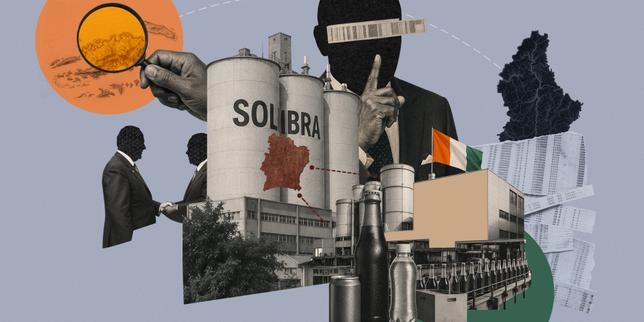
The lazy consensus loves a classic post-colonial ghost story. Whenever a major Western multinational thrives in a developing market, the commentariat rushes to uncover the "secret handshakes" and backroom deals. A prime example is the hyper-fixation on the relationship between the late Ivorian President Henri Konan Bédié and the French beverage titan Castel. Critics look at the decades-long dominance of Castel’s Solibra in Côte d’Ivoire and shout "crony capitalism."
They are asking the wrong question. They want to know how political favoritism built a beer empire. The brutal reality is far less conspiratorial and far more uncomfortable for critics of African corporate history: Castel didn't win because of secret political ties. They won because they understood scale, logistics, and capital expenditure better than anyone else on the continent. Political alignment wasn't the engine of their success; it was just a standard risk-mitigation strategy used by every major infrastructure player on earth. If you enjoyed this post, you might want to look at: this related article.
To understand the beverage market in West Africa, you have to stop looking at it through the lens of a political thriller and start looking at it through the lens of cold, hard supply chain economics.
The Infrastructure Illusion
The standard narrative suggests that Bédié’s personal and political ties to Pierre Castel granted the French group an unfair monopoly, stifling local competition. This argument completely misunderstands how the consumer packaged goods market operates in a developing economy. For another angle on this story, see the recent update from Business Insider.
I have spent years analyzing corporate expansions into emerging markets, and I have seen companies throw tens of millions of dollars at political lobbying only to watch their operations collapse within twenty-four months. Why? Because a politician cannot pave roads, stabilize the electrical grid, or manufacture glass bottles out of thin air.
When Castel entered the Ivorian market via Solibra, they didn't just build breweries. They built an entire ecosystem. They invested heavily in vertical integration:
- Establishing local bottling plants to bypass ruinous import tariffs.
- Creating proprietary distribution networks that could navigate compromised transport infrastructure.
- Securing direct agricultural supply chains for raw materials like maize and sorghum.
If a competitor wanted to challenge Solibra, their barrier to entry wasn't a lack of a presidential phone number. The barrier was the fact that they would need to spend hundreds of millions of dollars building a logistics network from scratch. In a market where capital is expensive and risks are high, Castel’s real advantage was its willingness to absorb massive, long-term capital expenditures that no local entrepreneur or risk-averse Western competitor wanted to touch.
Dismantling the Cronyism Premise
Let’s tackle the "People Also Ask" assumption head-on: Did Henri Konan Bédié protect Castel from foreign competition?
The short answer is no, because he couldn't have even if he wanted to. The global beverage market is cutthroat. Giants like Heineken and AB InBev have legal teams and war chests larger than the GDP of entire nations. If these conglomerates saw a highly profitable, friction-free market in Côte d’Ivoire, an endorsement from the presidency wouldn't have kept them out.
In fact, when competitors did enter the market, they failed not because of government intervention, but because they tried to import a Western playbook into a West African reality. They focused on premium branding and high-margin products. Castel, meanwhile, focused on volume. They kept prices low enough to ensure that their products were accessible to the mass market, effectively pricing out any competitor who couldn't match their operational scale.
The relationship between Bédié and Castel was symbiotic, certainly, but it was driven by state necessity. For any developing nation, a massive, tax-paying multinational that employs thousands of citizens and stabilizes local agriculture is a pillar of economic continuity. Treating this relationship as a dark secret misses the point entirely. It was standard economic pragmatism.
The True Cost of Capital
There is a downside to the contrarian reality. The sheer scale required to survive in these markets means that true competition is exceptionally rare. This isn't unique to Côte d’Ivoire or the beer industry; it is the natural equilibrium of heavy industry across the continent.
When the cost of capital is 15% to 20% for local businesses, compared to the single-digit rates international groups can secure on European markets, the playing field is inherently uneven from day one. Critics waste their breath demanding antitrust investigations into historical political figures. If you want to change the dynamics of African consumer markets, you don't do it by rewriting history books or hunting for ghosts in presidential archives. You do it by fixing the structural cost of capital that prevents local industries from scaling.
Stop looking for the secret treaties. Look at the balance sheets.


