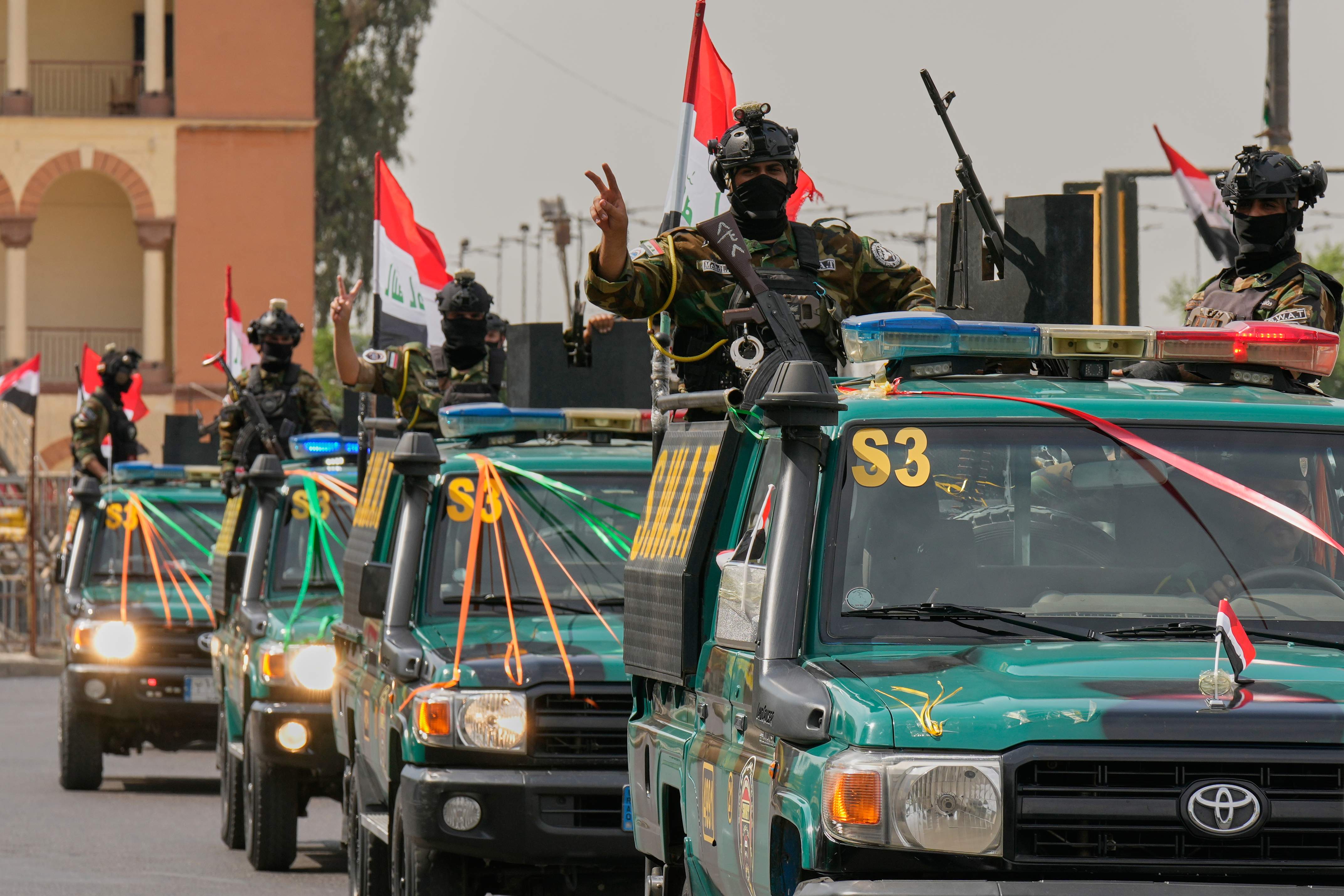
The U.S. military has announced that the last of its troops in Iraq have withdrawn, closing a chapter that began with the 2003 invasion and stretched through decades of counterinsurgency, civil strife, and shifting security mandates. Yet declarations of a final departure in Iraq have repeatedly collided with political reality, regional friction, and the quiet persistence of American security footprints. Even when uniformed combat battalions cross a border or consolidate elsewhere, intelligence coordination, diplomatic security, advisory roles, and over-the-horizon capabilities mean the end of a mission rarely looks like a clean zero.
I have watched press releases from Baghdad and Washington announce endings for more than twenty years. Every time a headline claims the exit is total, seasoned observers look past the ribbon-cutting and check the fine print. Troop numbers are a blunt instrument. They tell you how many boots sit on a given base on a Tuesday morning, not who holds leverage when militias test a border or a government struggles to pay its civil servants. Don't miss our earlier article on this related article.
Why Exit Announcements Rarely Tell the Whole Story
Exit headlines trade in neat binaries. Either American forces are in Iraq, or they are out. Real-world security operations rarely conform to that tidy split. A military command can draw down its most visible formations while leaving behind security cooperation offices, embassy protection personnel, logistics contractors, or regional air and naval assets positioned nearby to respond when conditions deteriorate.
Consider a hypothetical example of how a drawdown works on paper versus on the ground. Suppose a command announces the departure of its remaining ground advisory elements from central and northern bases. On a briefing slide, the line drops to zero. In practice, air surveillance, cyber support, intelligence sharing, and rapid-reaction staging in neighboring countries may still shape operations inside Iraqi airspace and territory. Calling that a complete severance of military ties misleads readers about how modern power projection actually operates. If you want more about the context here, NPR offers an excellent breakdown.
A flag coming down over a compound is a ritual for cameras, not proof that the underlying security equation has been rewritten.
History reinforces that skepticism. In 2011, the United States completed a high-profile withdrawal of its combat forces, only to return in force in 2014 as the Islamic State seized vast swaths of territory across Iraq and Syria. That reversal was not a fluke of bad luck. It grew out of unresolved political fractures in Baghdad, fragile state institutions, and regional rivalries that did not vanish simply because foreign troops boarded transport planes.
The Leverage Vacuum Inside Iraqi Politics
Every troop departure changes the internal math in Baghdad. Iraqi politicians operate inside a crowded, fiercely competitive system where sovereignty claims, sectarian bargaining, and cross-border pressure collide daily. For years, the presence of U.S. troops functioned as both a security backstop and a convenient political target. Factions aligned with Tehran could demand American departures to rally nationalist and anti-Western sentiment, while other leaders quietly valued Washington's training, equipment, and intelligence as a counterweight to armed groups operating outside state control.
When U.S. troops withdraw, that political lightning rod shifts. Without a visible foreign military presence to blame for every security lapse or sovereignty grievance, Baghdad's governing coalition faces a harder test. It must answer more directly for internal order, border enforcement, and the monopoly on legitimate force.
That shift carries real risk. Armed factions and militias in Iraq have long justified their existence through resistance narratives and regional patronage. If a troop withdrawal is framed domestically as a victory for armed pressure rather than a result of bilateral state-to-state agreement, those groups gain prestige and bargaining power. Weakening the state's security institutions while empowering non-state actors is a recipe for chronic instability, not durable calm.
At the same time, Iraq's government has its own legitimate interest in asserting full control over its territory and avoiding being dragged into wider regional conflicts. Sovereignty is not an abstract slogan for Iraqi leaders trying to manage oil revenues, electricity shortages, and neighbors with competing agendas. A mature security relationship requires adjusting to Iraqi political realities rather than clinging to open-ended deployments that domestic politics can no longer sustain.
Regional Rivals and the Shadow of Escalation
Iraq has never existed in a vacuum. It sits at the crossroads of Persian Gulf energy routes, Iranian influence networks, Turkish cross-border security concerns, and the broader Middle East conflict cycle. Every adjustment to U.S. troop levels in Iraq ripples outward into those competing spheres of influence.
Iran has spent years cultivating political allies, economic ties, and armed proxies inside Iraq to secure its western flank and project power toward the Levant. A U.S. troop withdrawal removes immediate American targets inside Iraqi bases, which can reduce direct tit-for-tat strikes on Iraqi soil in the short term. Yet it also alters deterrence. Regional adversaries constantly test where red lines actually sit when physical tripwires are pulled back.
What Over-the-Horizon Means in Practice
Policymakers frequently invoke "over-the-horizon" capabilities as the answer to post-withdrawal security. The phrase sounds reassuring. It implies you can leave the ground while keeping a watchful eye and a long arm from afar.
In reality, distance imposes costs. Flying aircraft, moving supplies, or gathering timely human and signals intelligence from outside a country takes longer, depends on regional transit permissions, and often offers lower situational awareness than being on site. When a crisis erupts fast—such as a sudden militant surge, a breakdown in local command, or an attack on diplomatic facilities—remote support can arrive late or operate with incomplete information.
Over-the-horizon posture works best when local forces are cohesive, well-led, and politically backed. Where local security forces remain divided by factional loyalty, remote airpower or intelligence cannot substitute for competent infantry, logistics, and governance on the ground.
What Comes Next for Baghdad and Washington
The end of a troop presence does not end strategic interdependence. Iraq still relies on international markets, financial systems, diplomatic backing, and technical cooperation to stabilize its economy and modernize its institutions. The United States still has an interest in preventing a slide back into large-scale conflict, protecting diplomatic personnel, and keeping regional escalation in check.
Four Hard Realities Observers Should Track
- Civil-military command in Baghdad: Watch whether the Iraqi prime minister and defense establishment exercise real authority over all armed formations or continue negotiating around entrenched militia networks.
- Diplomatic and advisory footprints: Look past troop counts to see how embassy security, security cooperation missions, and contractor support are structured and funded.
- Cross-border pressure: Track actions along Iraq's borders with Iran, Syria, and Turkey, where sovereignty disputes and militant movement frequently flare.
- Economic and institutional resilience: Pay attention to budget stability, public service delivery, and anti-corruption efforts, since economic rot fuels recruitment faster than foreign slogans ever do.
None of these indicators offers an easy soundbite. A clean exit makes for a tidy headline, but messy transitions are the norm in post-war states. Anyone reading about the last U.S. troops leaving Iraq should keep one eye on the departure manifest and the other on who moves into the space left behind.