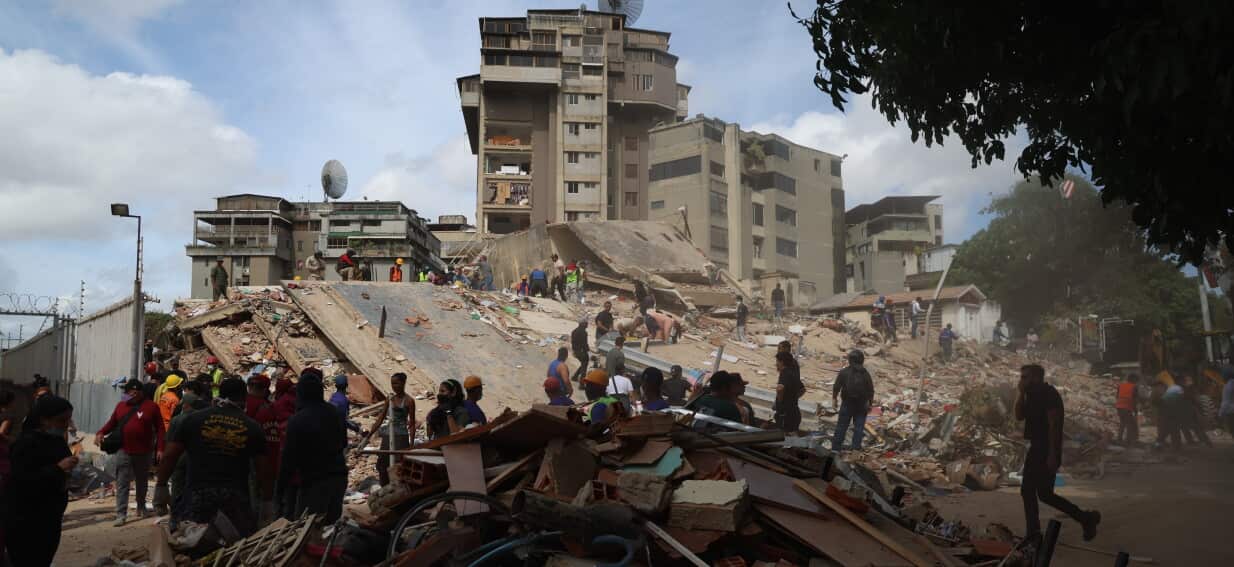
The media is addicted to the choreography of the endless conflict. Open any major news outlet right now and you will see the exact same headline: "Iran war live: Israel attacks Lebanon as Netanyahu says troops to stay." They want you to believe we are witnessing an unprecedented, chaotic spiral toward a regional apocalypse. They want you focused on the troop deployments, the reactive airstrikes, and the boilerplate political rhetoric broadcasted from Jerusalem.
They are selling you a narrative of frantic crisis management. It is a lie. Building on this idea, you can also read: Two Hundred and Fifty Years of Salt and Sea.
What the mainstream analysis misses entirely is that this is not a breakdown of strategy; it is the execution of one. The media frames every escalation as a sudden, unpredictable lurch toward total war. In reality, the theater of conflict between Israel, Lebanon, and Iran is functioning exactly as intended by its political architects. The "live blog" format itself creates a false sense of urgency that obscures the structural, economic, and geopolitical incentives driving these decisions.
Stop looking at the daily casualty counts and the recycled press releases. If you want to understand what is actually happening, you have to look at the cold calculus of political survival and regional containment that the talking heads refuse to touch. Analysts at BBC News have provided expertise on this trend.
The Illusion of the Reluctant Occupation
The standard consensus insists that Israeli troops are staying in southern Lebanon out of sheer military necessity to neutralize immediate border threats. This perspective is laughably naive.
I have spent years analyzing Middle Eastern security architecture, and if there is one undeniable truth, it is that prolonged military occupations are rarely about the stated tactical objective. They are about shifting the baseline of normalcy.
Benjamin Netanyahu’s declaration that troops will remain in Lebanon is not a temporary defensive posture. It is a calculated move to create a permanent buffer state within a state. By keeping boots on the ground, the Israeli administration achieves two crucial internal goals:
- Political Immunization: A nation at war rarely changes its leadership. For a prime minister facing severe domestic opposition and ongoing legal battles, a stabilized, low-intensity conflict is a political life support system.
- The Sunk Cost Lever: Once troops are entrenched, any political opponent suggesting a withdrawal can be branded as soft on national security. It effectively paralyzes domestic opposition.
The downside to this strategy is obvious, and it is a risk the current administration is willing to take: it guarantees a steady, predictable drip of military casualties and deepens international isolation. But from a purely cynical survival standpoint, the benefits outweigh the costs. The media reports this as a volatile crisis; in reality, it is a highly controlled, institutionalized status quo.
Why regional escalation is a calculated bluff
Every time a rocket crosses the Lebanese border or an airstrike hits Beirut, pundits scream that we are five minutes away from a total regional conflagration involving direct, sustained warfare between Israel and Iran. This reveals a fundamental misunderstanding of how deterrence actually works.
Neither Jerusalem nor Tehran wants a total war. A full-scale kinetic conflict would mean the immediate destruction of critical infrastructure, catastrophic economic collapse for both nations, and unpredictable domestic uprisings. Instead, what we are witnessing is a highly choreographed dance of asymmetric deterrence.
The Proxy Economy
Iran does not fund Hezbollah to trigger a world war; it funds them to possess a geopolitical insurance policy. If Israel launches a catastrophic strike on Iran's nuclear or economic infrastructure, Hezbollah is the retributive gun held to northern Israel's head.
[Iran's Core Strategy]
       │
       ▼
[Maintain Hezbollah Proxy] ──(Deterrent Threat)──► [Israel]
       ▲                                              │
       │                                              ▼
(Avoid Total War) ◄──────(Managed Escalation)─────── [Border Operations]
When Israel attacks Lebanon, it is not trying to trigger a war with Iran; it is systematically testing the boundaries of that insurance policy, clipping the edges of Hezbollah’s capabilities without crossing the invisible red line that would force Tehran's hand into a catastrophic response.
Both sides are operating within a brutal, logical framework. The escalations are calibrated. The rhetoric is maximum volume, but the military actions are deeply calculated. The mainstream media mistakes the theatrical smoke for a raging fire.
Dismantling the De-escalation Fallacy
If you look at the questions frequently asked by the public, they almost always center around diplomatic interventions: Can the UN broker a ceasefire? Will US diplomatic pressure force a withdrawal?
These questions are fundamentally flawed because they assume all parties involved actually want the same outcome: peace.
Let’s be brutally honest. Diplomacy in its current iteration is a performance piece designed for domestic audiences in the West. The UN interim forces in Lebanon (UNIFIL) have been structurally toothless for decades. Expecting international diplomacy to resolve a conflict where the core actors have existential incentives to keep the friction alive is a fool's errand.
The Western foreign policy establishment has blown billions of dollars and decades of diplomatic capital trying to "foster" regional stability through conventional peace frameworks. They fail because they treat the conflict as a misunderstanding that can be cleared up with a well-drafted treaty. It isn't a misunderstanding. It is a clash of irreconcilable geopolitical ambitions. Israel requires absolute security margins that necessitate the fragmentation of its neighbors; Iran requires regional instability to project power and counter Western influence.
The Economic Reality No One Mentions
While live blogs focus on the military hardware, the real decider of this conflict is the economic endurance of the states involved.
Israel’s tech-driven economy cannot sustain a high-intensity mobilized war indefinitely without severe long-term degradation. Ratings agencies have already issued warnings, and the cost of capital is rising. On the flip side, Iran’s economy, battered by years of sanctions, operates on a war-footing by default. It has optimized for misery.
This economic asymmetry means Israel must rely on short, high-impact operations or transition to the exact low-intensity, entrenched posture we are seeing now in Lebanon. By keeping troops stationed across the border, Israel attempts to externalize the security cost, turning southern Lebanon into a militarized zone while trying to insulate its domestic economy from the shocks of a full mobilization.
It is a high-wire act. If the domestic economy begins to fracture under the weight of prolonged reserve call-ups, the political calculus changes instantly. That is the real metric to watch—not the speeches at the Knesset, and certainly not the live updates on your phone.
Stop consuming the narrative of perpetual chaos. The chaos is the strategy.