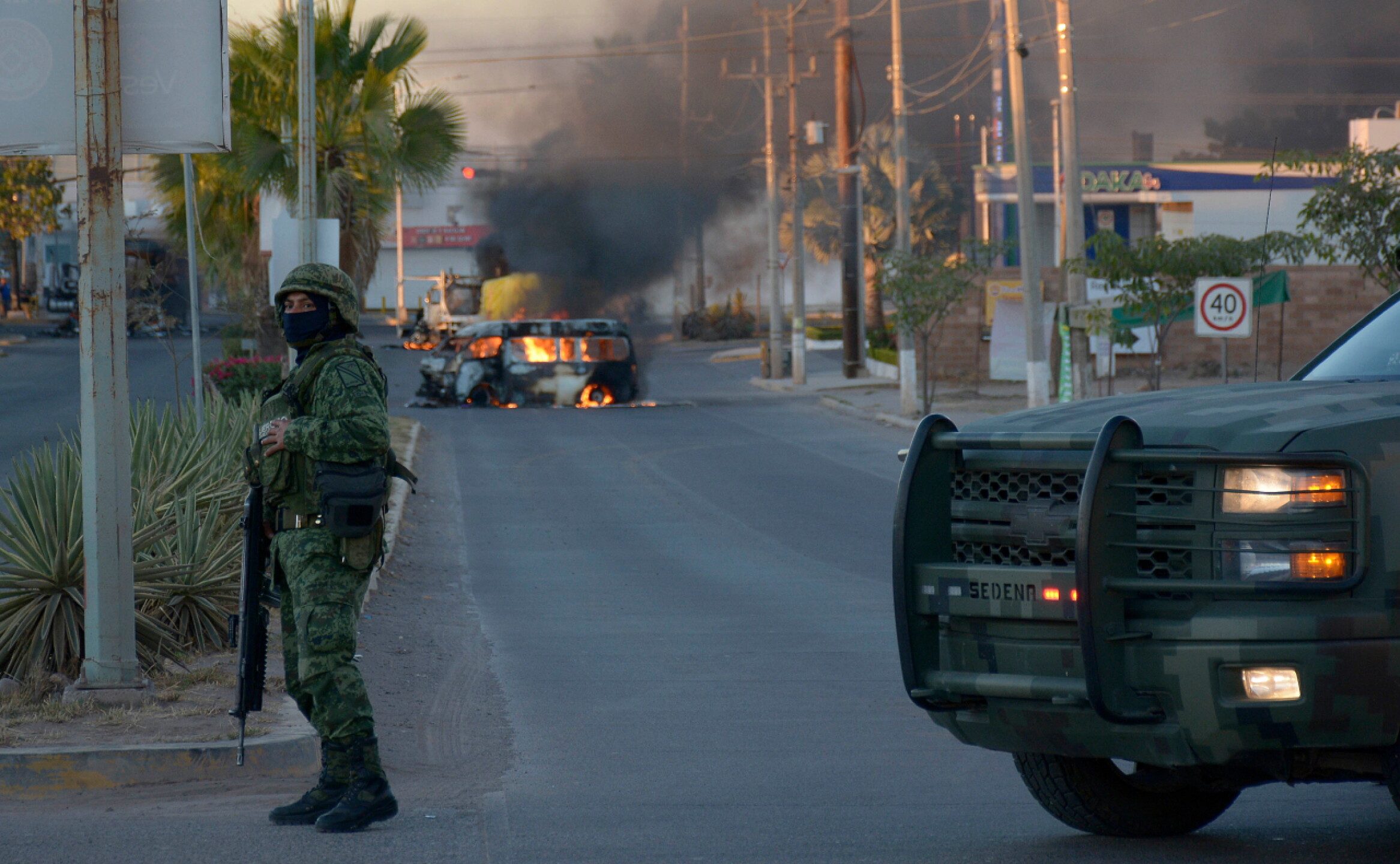
War reporting has become a stenography of death and a spreadsheet of static gains. The headlines scream about a "Russian front-line progress" while simultaneously mourning a "drone strike on a minibus" in Kherson. It is a tragic, repetitive loop that ignores the fundamental shift in modern combat. The consensus is that every kilometer gained is a step toward victory and every drone kill is a tactical triumph.
That consensus is wrong.
What we are witnessing isn't progress. It is the industrialization of the stalemate. When media outlets report on Russia’s "incremental gains," they are validating a 19th-century metric for a 21st-century war. Land is no longer the ultimate currency when every square inch of it is under constant, high-definition surveillance and 24-hour loitering munitions. The strike in Kherson, which claimed the lives of two civilians in a minibus, isn't just a human tragedy—it is the ultimate proof that the "front line" is a nostalgic fiction.
The Geography of Nowhere
Traditional military doctrine suggests that capturing territory leads to the collapse of the enemy's ability to resist. In Ukraine, territory has become a liability. When Russia claims it is "moving forward," it is often moving into a kill zone that has been pre-zeroed by FPV (First-Person View) drones.
The capture of a ruined village or a scorched treeline is framed as a strategic win. In reality, it is often a "positional trap." I have watched analysts obsess over maps, drawing red and blue lines as if this were a game of Risk. They miss the nuance of attrition. If you lose 40 armored vehicles and 500 men to capture a hamlet that offers no high-ground advantage and no logistics hub, you haven't made progress. You have committed strategic suicide.
Russia's current offensive strategy relies on "meat waves" supported by massive glide bombs. While the bombs (KABs) are effective at leveling fortifications, the subsequent ground advances are agonizingly slow. This isn't a blitzkrieg. It’s a grinder. Calling this "progress" is like saying a man is winning a race because he’s crawling toward a cliff.
The Drone Delusion
The strike on the Kherson minibus highlights the darkest reality of this conflict: the democratization of precision. In previous wars, hitting a moving vehicle miles behind the contact point required expensive cruise missiles or risky air sorties. Today, it requires a $500 plastic quadcopter and a teenager with a headset.
The "lazy consensus" suggests that drones have revolutionized the battlefield. They haven't just revolutionized it; they have paralyzed it.
- Visibility is Lethality: If you can be seen, you can be hit.
- Cost Asymmetry: A $500 drone can mission-kill a $5 million Leopard tank or a $10 million Tor air defense system.
- The Persistence Gap: Unlike artillery, which fires and stops, drones loiter. They hunt.
The Kherson strike proves that there is no "rear" anymore. The "front line" is now 20 miles deep on both sides. When Russia claims progress on the line of contact, they ignore the fact that their supply lines, their command posts, and even their civilian-occupied logistics hubs are being systematically dismantled by cheap, scalable tech.
The Logistics of the Grave
Let’s dismantle the premise of "winning" through territorial occupation. In the Donbas, Russia is occupying land that is economically dead. The infrastructure is gone. The population has fled. The mines are flooded.
Holding this land requires a massive footprint of manpower. That footprint creates a target-rich environment for the very drones mentioned in the Kherson reports. By "advancing," Russia is simply stretching its neck further into the noose of Ukrainian drone operators.
The counter-intuitive truth? The most "progressive" thing a military can do in this environment is often to retreat to better-defended, higher-ground positions and let the enemy "advance" into the open. Ukraine’s withdrawal from certain sectors isn't always a defeat; it’s an invitation for the Russian military to enter a logistical nightmare where they must defend new, exposed positions with dwindling resources.
The Civilian Cost of Tactical Incompetence
The strike on a minibus is often dismissed as "collateral damage" or "terrorism." From a cold, insider perspective, it is a sign of tactical desperation and intelligence failure. When a drone operator targets a civilian vehicle, it usually means one of two things:
- Faulty Intelligence: The operator believed the vehicle was carrying military personnel or supplies.
- Psychological Attrition: The goal is to make the "rear" so terrifying that the local administration collapses.
Both scenarios show that "front-line progress" is failing to achieve its actual goal: the submission of the enemy. If you have to strike a bus in Kherson to prove you have "fire control," you haven't won the battle. You’ve admitted that your ground troops can’t actually secure the area.
Why the "Front Line" Metric Is Obsolete
We need to stop asking "Who took more land today?" and start asking "Who lost more capability?"
Military strength is no longer measured in hectares. It is measured in the density of electronic warfare (EW) bubbles, the availability of trained drone pilots, and the depth of the sensor-to-shooter loop.
Imagine a scenario where Russia "takes" the entire Donbas but loses 80% of its remaining professional NCOs and 60% of its stored Soviet-era armor to do it. Is that a victory? Or is that a catastrophic defeat masquerading as a map update?
The current Russian "progress" is a depletion exercise. They are trading their future geopolitical relevance for a few miles of dirt. This isn't a trade any sane strategist would make. They are buying a graveyard and calling it an empire.
The Actionable Truth for the Observer
If you want to understand what is actually happening in Ukraine, ignore the daily territory updates. They are noise. Instead, look at:
- Refinery and Infrastructure Strikes: The "deep battle" matters more than the "close battle." If Russia can't refine fuel or move trains, the front line will collapse on its own.
- Loss Ratios in Armor: Tanks are the soul of offensive maneuvers. When the "winning" side is losing tanks at a 3:1 or 4:1 ratio, the "progress" is a mirage.
- The EW Race: The moment one side gains a 10% advantage in frequency-hopping for their drones, the front line shifts. Not because of a heroic charge, but because the other side’s eyes go dark.
The tragedy in Kherson is a symptom of a war that has no "back" and no "front." It is a 360-degree theater of attrition. Russia isn't winning; they are simply spending more than their opponent to stay in the game. In a war of endurance, "moving forward" is often just a faster way to reach the end of your rope.
Stop looking at the maps. Start looking at the inventory.