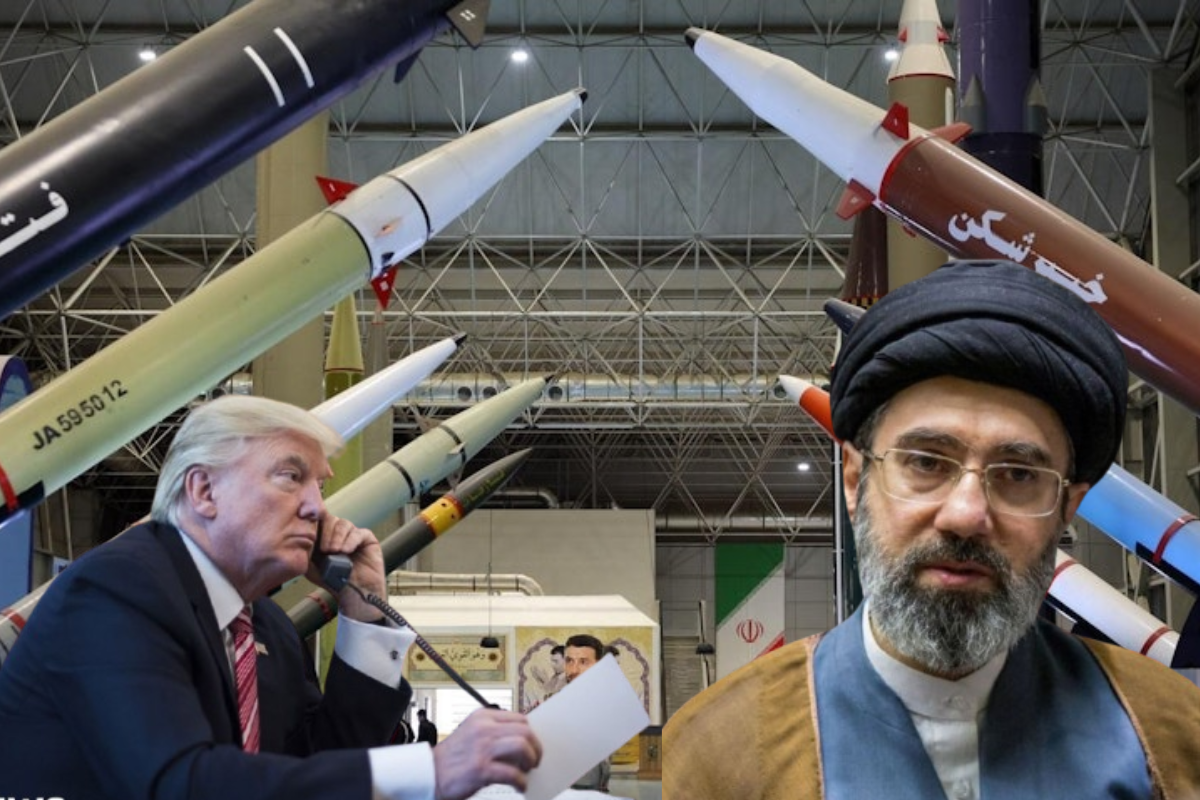
Geopolitical analysts love a good apocalypse. Every time an Iranian military commander steps up to a microphone and warns that conflict will "spread beyond West Asia," mainstream newsrooms run the exact same headline. They paint a picture of a seamless, interconnected domino effect that will inevitably drag the entire world into a global conflagration.
It is a comforting narrative for defense contractors and cable news ratings. It is also completely wrong.
The lazy consensus dominating international coverage treats these warnings as credible military forecasts. They are not. They are desperate psychological operations designed to mask severe conventional weakness. The reality is far more nuanced, far more transactional, and far less explosive than the talking heads want you to believe. War is not going global, because nobody who matters can afford it to.
The Geography of Empty Threats
When the Islamic Revolutionary Guard Corps (IRGC) issues statements about regional contagion, they are playing to a specific audience: Western voters terrified of rising gas prices. The threat relies on the assumption that Iran possesses the logistical capacity and the strategic alliances to ignite a multi-theater war at will.
I have spent years analyzing troop movements, supply chains, and proxy funding in the Middle East. The gap between rhetoric and reality is vast.
Look at the mechanics of modern warfare. To wage a war that spreads beyond West Asia, a state requires deep blue-water naval capabilities, sustained strategic airlift, and a network of allies willing to commit economic suicide. Iran has none of these.
- The Naval Illusion: The IRGC Navy excels at asymmetric, littoral warfare in the Persian Gulf. Fast attack craft and sea mines can disrupt traffic in the Strait of Hormuz. But disruption is not expansion. A localized blockade is a tactical headache, not a global war. The moment Iranian assets attempt to project power into the wider Indian Ocean or the Mediterranean, they run into the hard reality of Allied carrier strike groups.
- The Proxy Ceiling: Hezbollah, the Houthis, and various Iraqi militias are highly effective insurgent forces. However, they are fundamentally localized actors. Hezbollah is constrained by Lebanon's fragile domestic politics; they cannot march on Europe. The Houthis can fire missiles at shipping lanes, but they cannot hold territory beyond their immediate geography.
The idea of a synchronized, border-defying conflict assumes these proxies are a single, monolithic army. They are fragmented, self-interested, and acutely aware that total war means their own destruction.
Dismantling the Supply Chain Panic
The core argument for global contagion almost always centers on energy markets. The narrative claims that a strike on Iranian infrastructure will cause oil to hit $200 a barrel, triggering a global economic collapse.
Let us look at the data. The global energy market of today is fundamentally different from the market of 1973 or even 2003.
Global Oil Production Resilience Factors
+-------------------------+----------------------------------------------------+
| Factor                  | Impact on Market Stability                         |
+-------------------------+----------------------------------------------------+
| US Shale Capacity       | Acts as a swing producer, ramping up within weeks  |
| OPEC+ Spare Capacity    | Saudi Arabia and UAE hold millions of barrels/day  |
| Strategic Reserves      | OECD nations maintain deep emergency stockpiles   |
| Dispersed Refining      | Shift away from heavy reliance on Gulf facilities  |
Imagine a scenario where the Strait of Hormuz is completely closed for thirty days. Yes, global oil prices spike immediately on speculation. But the economic shockwaves are self-limiting. The United States is now a net exporter of crude oil. Non-OPEC production is at historic highs.
Furthermore, the country most damaged by a total shutdown of Gulf shipping is not the United States or France; it is China. Beijing buys roughly 90% of Iran’s exported oil. Do you honestly believe the IRGC will permanently choke off the economic lifeline of its only major superpower patron? Of course not. The threat is a bluff, and the Western media falls for it every single time.
The Real Danger is Internal, Not External
People often ask: "If Iran is so weak, why doesn't the West just remove the regime?"
This question misses the point entirely. The danger of the Iranian state is not its ability to conquer external territory, but its capacity for spectacular, localized self-destruction.
When a state realizes its conventional military deterrent is a paper tiger, it turns inward and downward. It invests in cyber warfare, state-sponsored sabotage, and asymmetric gray-zone provocations. These actions are designed to irritate, not to conquer.
The contrarian truth is that the current regime is deeply risk-averse. They watched the invasion of Iraq in 2003. They watched the fall of Libya. They know exactly where the red line sits. They will push the envelope with proxy strikes and drone sales, but they will always stop short of provoking a direct, regime-ending conventional response from a superpower.
By treating their hyperbolic press releases as serious strategic doctrine, Western media outlets give Tehran exactly what it wants: the illusion of peer-level power.
The Cost of the Escalation Myth
There is a distinct downside to my perspective. By acknowledging that Iran's threats are mostly bluster, policymakers can become complacent. They might assume they can push sanctions or targeted assassinations indefinitely without consequence.
That is a dangerous miscalculation. Just because a war won't spread to Europe or East Asia doesn't mean the local cost won't be catastrophic. A localized war in West Asia would still devastate civilian populations in Lebanon, Israel, and the Gulf states. It would destroy trillions of dollars of infrastructure.
But words matter. Precision matters. Calling a regional crisis a "global war" changes how domestic audiences vote, how markets price risk, and how generals allocate resources.
Stop reading the headlines that use Iran's official statements as objective truth. The IRGC warns of a global war because they know they cannot win a local one. Their rhetoric is a confession of weakness, packaged as a threat. Treat it accordingly.