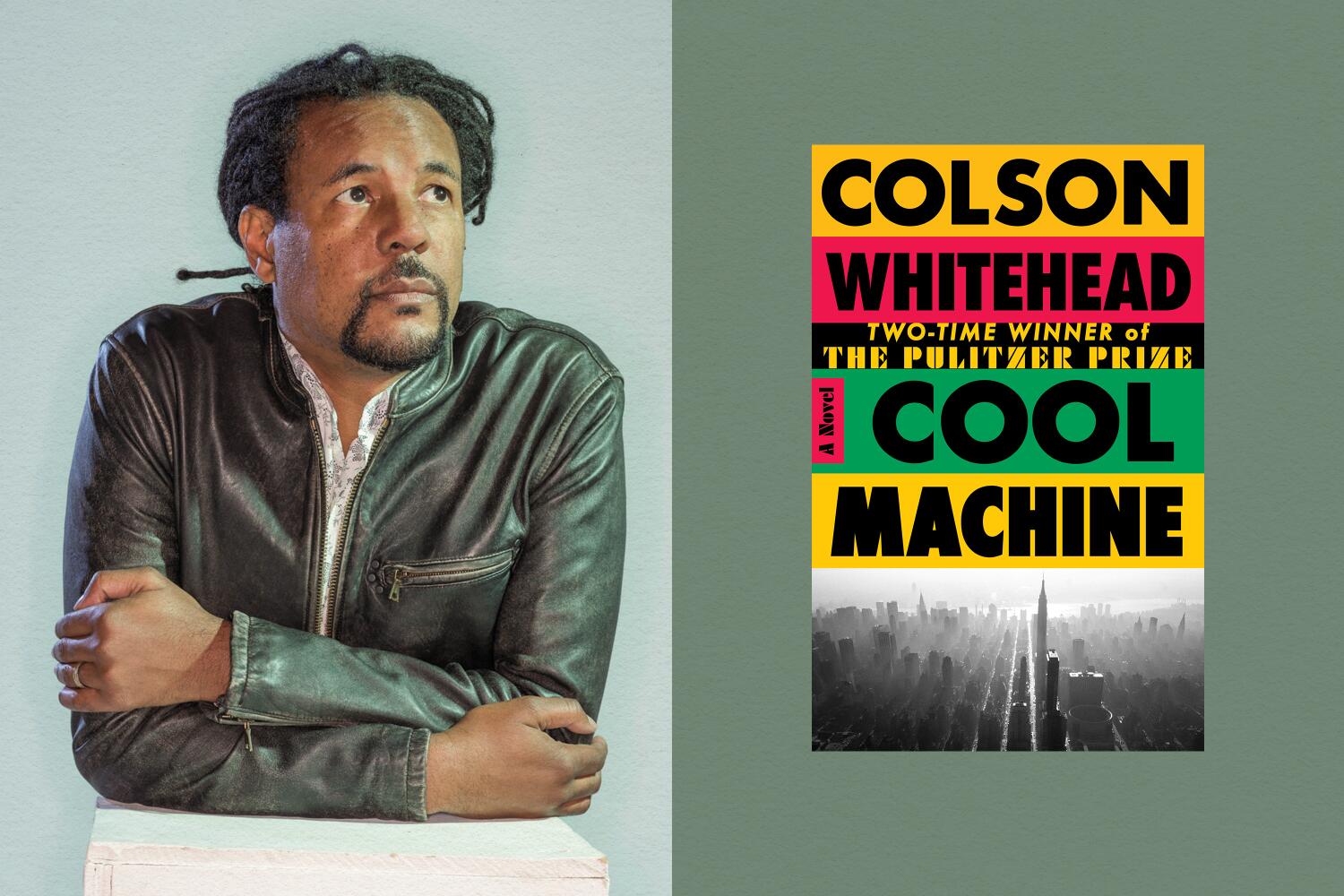
The cultural elite has a predictable playbook. When a two-time Pulitzer winner completes a trilogy, the review machines churn out immediate, breathless praise. "Book of the year." "A perfect, gritty end." They did it for Colson Whitehead’s Crook Manifesto, and they are doing it again as the dust settles on his Harlem trilogy.
But the mainstream critical consensus is lazy. It mistakes historical decoration for narrative depth.
The truth is uncomfortable: the hyper-packaging of Whitehead’s recent work as a "gritty masterpiece" exposes a massive flaw in how we evaluate contemporary fiction. By forcing a brilliant, genre-bending satirist into the narrow box of prestige crime fiction, critics are applauding the dilution of his actual talent. We are being told we are reading a definitive historical epic, when in reality, we are watching an elite writer run on stylistic autopilot to satisfy the publishing industry's obsession with digestible IP.
The Illusion of Grit
Critics love to use "gritty" as a shorthand for authentic. It is a cheap trick. In the case of Whitehead’s Harlem sequence—following Carney through the evolving decades of New York—the grit is largely cosmetic.
I have spent two decades analyzing literary trends and tracking how major publishing houses manufacture prestige. The formula is transparent: take a turbulent era, layer it with meticulously researched period details (the specific brand of record players, the exact names of defunct radical groups), and inject a slow-burning crime plot.
But research is not resonance.
- The Checkbox Trap: The narrative too often reads like a curated museum exhibit of 1970s New York rather than a living, breathing story.
- The Protagonist Problem: Carney, our supposed emotional anchor, is increasingly hollowed out to serve as a passive observer of historical set-pieces rather than a driving force.
- The Pacing Crisis: By stretching what should have been a tight, singular narrative into an episodic trilogy, the tension is completely drained.
When you strip away the atmospheric prose, the mechanics of the plot are shockingly thin. The "lazy consensus" argues that the slow, sprawling pace reflects the messy reality of the era. That is an excuse for poor narrative architecture. True literary crime fiction—think Chester Himes or Richard Price—uses the genre to expose the raw nerve endings of society. Whitehead's trilogy uses the genre as a scenic backdrop.
Dismantling the "Book of the Year" Premise
Look at the questions the literary establishment asks. "Is this the book of the year?" "How does this cement Whitehead's legacy?"
These are the wrong questions. They focus on the horse race of awards and legacy rather than the actual text. If you ask a flawed question, you get a marketing slogan masquerading as a critique. Let us dismantle the premise entirely by answering the questions people should be asking.
Does a trilogy inherently elevate a crime story?
No. In fact, it usually ruins it. The multi-book arc in literary fiction has become a commercial mandate disguised as artistic ambition. By extending Carney’s saga across multiple decades, the immediate, claustrophobic stakes of his criminal double-life are replaced by a soft, nostalgic historical overview. The urgency is gone.
Is Whitehead actually suited for the noir genre?
Whitehead is an undeniable genius, but his greatest strength lies in surrealism, razor-sharp irony, and high-concept satire—think The Intuitionist or The Underground Railroad. Noir requires a specific kind of structural discipline and psychological fatalism. By trying to play it straight in a gritty crime lane, he suppresses the very eccentricities that make him a singular voice in American letters. It is like watching a virtuoso jazz pianist try to play a rigid classical sonata; it is competent, but it is a waste of their specific genius.
The Cost of the Prestige Pass
There is a dangerous trend in cultural criticism known as the "Prestige Pass." Once an author reaches a certain level of institutional validation, their work is insulated from rigorous critique. They are no longer judged on the merits of the specific book, but on the momentum of their career.
This does a massive disservice to the writer and the reader.
When The Underground Railroad redefined how fiction could tackle the horrors of American history, it earned every shred of its praise. It was reckless, inventive, and devastating. The Harlem trilogy, by contrast, feels safe. It is a prestige procedural designed not to challenge the reader, but to comfort the literary establishment with a familiar, well-executed genre exercise.
Admitting this doesn't mean denying Whitehead's immense skill. The sentences are still beautiful. The dialogue still crackles. But we have to separate execution from ambition. Accepting a well-upholstered historical crime novel as the pinnacle of contemporary literature shows how low our standards for structural innovation have fallen.
Stop Reading for the Atmosphere
If you want to actually understand the trajectory of modern fiction, you have to look past the atmospheric set-pieces. Stop letting critics tell you a book is profound just because it tackles a heavy historical era with a somber tone.
The mechanics of great storytelling require a brutal alignment of character motivation and plot consequence. When a book replaces that alignment with an accumulation of period-accurate details, it isn't "gritty." It is decorative.
The literary industry wants you to buy into the myth of the perfect trilogy because it secures a predictable shelf-life and a streamlined awards campaign. Reject the packaging. Demand the radical innovation that writers like Whitehead are capable of, instead of settling for the polished, comfortable historical tours they are currently being praised for delivering.
Turn the page on the consensus. The real work of criticizing literature requires looking at the skeleton of the book, not just admiring the velvet coat it is wearing.