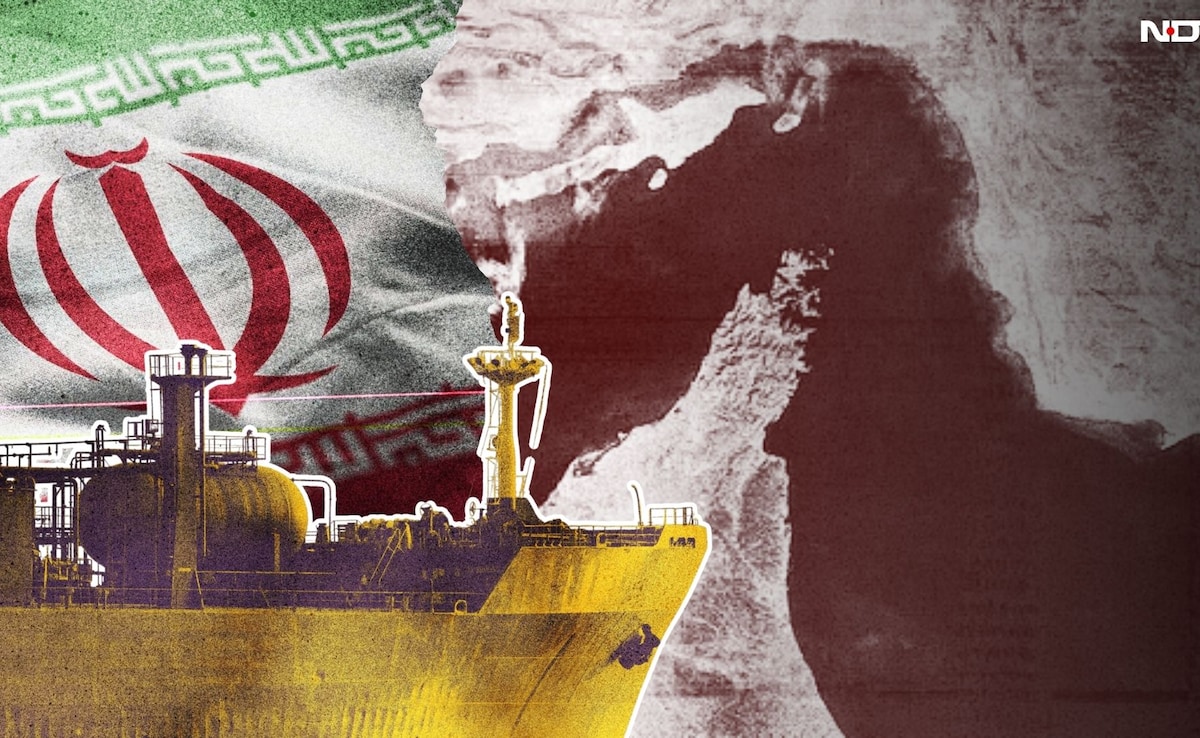
The United States Navy recently declared a total blockade of Iranian ports, a move designed to sever the financial arteries of the Islamic Republic. Yet, even as the ink dried on the executive order, satellite imagery and transponder data told a different story. Two massive tankers, the Rich Starry and the Murlikishan, didn't just drift through the Strait of Hormuz; they sailed through it with the confidence of ships that knew exactly where the holes in the American net were located.
This isn't just a failure of maritime policing. It is a calculated demonstration of the "Ghost Fleet" in action—a network of aging tankers, shell companies, and flags of convenience that has spent the last decade perfecting the art of the invisible transit. While the White House issues warnings of "lethal prosecution" for any vessel paying tolls to Tehran, the reality on the water is far more porous.
The Mechanical Failure of Interdiction
A naval blockade sounds absolute in a briefing room. In the water, it is a logistical nightmare. The Strait of Hormuz is not a single gateway; it is a complex web of shipping lanes, trial anchorages, and territorial overlaps. When the Rich Starry, a vessel already under U.S. sanctions and linked to Shanghai-based owners, exited the Gulf, it didn't use the standard deep-water channels. It utilized a series of maneuvers that have become the hallmark of the Iranian export strategy: turning off its Automatic Identification System (AIS), blending with regional coastal traffic, and potentially utilizing a "Hormuz Passage trial anchorage" that skirts around Iranian-controlled islands like Larak.
The U.S. Navy's current posture relies on "contested boarding" operations—sending elite units onto the decks of moving ships to seize cargo. It is a high-stakes gamble. If the Navy boards a Chinese-owned tanker in international waters, it risks a direct military escalation with Beijing. If it lets the ship pass, the blockade becomes a paper tiger. Currently, the latter is happening.
The China Factor
The blockade is arguably aimed more at Beijing than Tehran. China buys nearly 95% of Iran’s crude. For years, this trade has functioned through a "dark fleet" that operates outside the reach of Western banking and insurance. By announcing a physical blockade, the U.S. is attempting to force China to choose between its energy security and a direct confrontation with the American fleet.
China isn't flinching. The Rich Starry reportedly loaded its cargo at Hamriyah in the UAE before navigating the chokepoint. This suggests a level of regional complicity that Washington is loath to admit. If neighboring ports are serving as staging grounds for sanctioned Iranian oil or facilitating the blending of "off-book" crude, then a blockade of Iranian ports alone is mathematically insufficient.
The Leverage Paradox
There is a bitter irony in the timing of this escalation. For the past six weeks of conflict, Iran has actually seen a revenue windfall. As global oil prices surged past $100 per barrel, the reduced volume of Iranian exports was offset by the sheer price of every barrel that managed to slip through. The U.S. strategy was to keep prices stable by allowing some Iranian oil to flow, but that leniency has backfired. It provided Tehran with the cash reserves necessary to weather a total shutdown.
Now, the U.S. is playing catch-up. The move to block all transit is an admission that the previous "maximum pressure" campaign failed to stop the flow of capital. But a physical blockade is a blunt instrument. It requires a permanent, dense presence of warships that are already stretched thin by mine-clearing operations and the protection of non-Iranian commercial traffic.
Shadows in the Water
The Murlikishan, the second vessel to test the blockade, carries a history that reads like a manual on sanctions evasion. Formerly known as the MKA, it has spent years moving both Russian and Iranian oil. These vessels are the "zombies" of the sea—technically non-existent in the world of legal shipping, yet very much real when they offload millions of barrels at Chinese refineries.
The U.S. Central Command claims it will eliminate any vessel that pays tolls to Iran. However, the legal definition of a "toll" is murky when the payments are handled through crypto-assets or barter systems in Islamabad or Geneva. The "Ghost Fleet" doesn't use the dollar, and it doesn't use New York-based banks.
The Logistics of Enforcement
To truly close the Strait, the Navy would need to stop and search every VLCC (Very Large Crude Carrier) exiting the Gulf. There are dozens of these ships loitering on both sides of the Strait at any given time. A single boarding operation can take hours, if not days, to verify cargo origins and ownership structures.
- Congestion: The "loitering" effect is already creating a massive traffic jam.
- Identification: Tankers frequently change their names and flags mid-voyage.
- Legal Gray Zones: Interdicting a ship in the Gulf of Oman is a different legal beast than doing so inside the Strait.
The U.S. is currently trying to police a desert by watching only two or three of its oases.
The Diplomatic Off-Ramp
While the destroyers patrol the horizon, the real movement is happening in backchannels. Reports suggest a second round of talks in Islamabad is imminent. The blockade, then, might not be a permanent military strategy but a desperate attempt to gain leverage before the ceasefire expires. If the U.S. cannot prove it can actually stop the ships, its seat at the negotiating table gets a lot colder.
The passage of those two tankers wasn't a fluke. It was a signal from Tehran and Beijing that they have mapped the gaps in the American blockade. For the U.S. to regain control, it will have to do more than just circle the waters; it will have to risk the very "shooting war" it has been trying to avoid since February.
The blockade is only as strong as its weakest link. Right now, that link is a 300-meter-long tanker named the Rich Starry, currently sailing toward the Indian Ocean with its holds full and its transponder off.