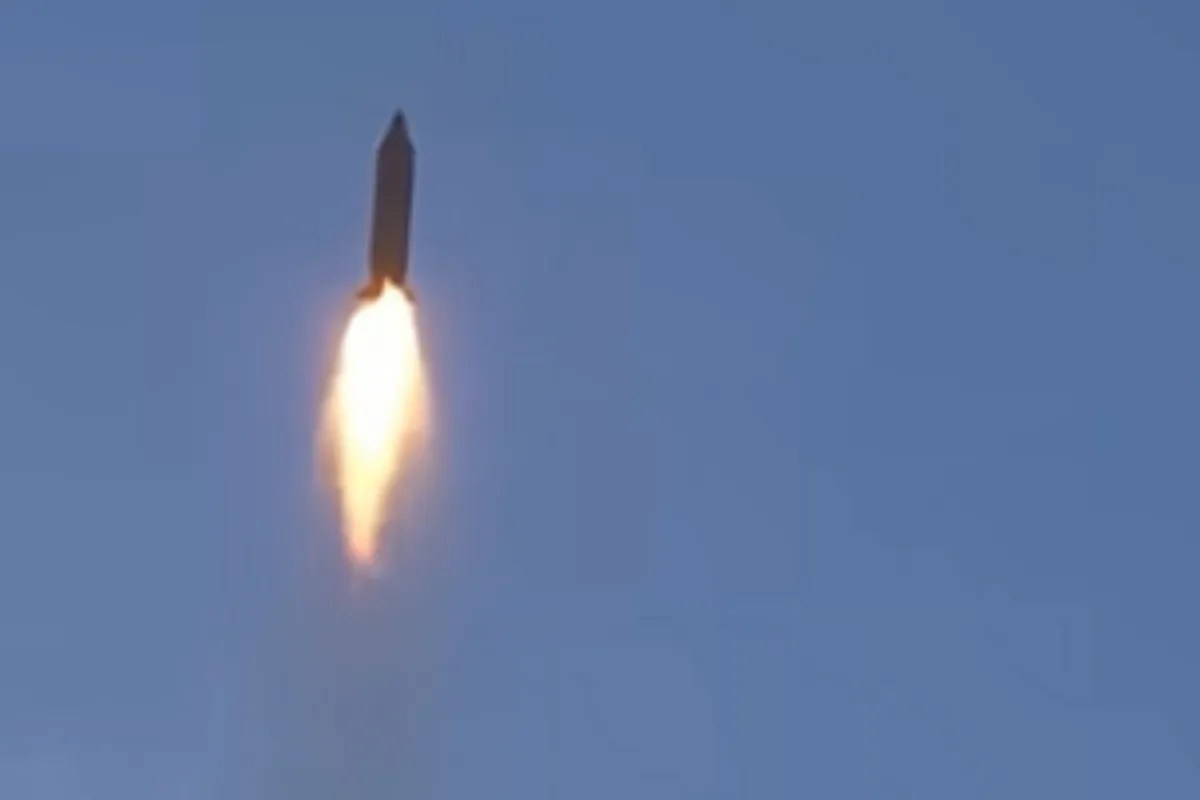
The headlines are screaming about a "massive attack" on an Iranian nuclear facility and the death of a guard. The UN is issuing its standard, hand-wringing statements about radiation risks. The media wants you to believe we are one stray missile away from a second Chernobyl in the Middle East.
They are lying to you.
Not because the explosion didn't happen, but because they don't understand the engineering of modern nuclear containment or the cold calculus of 21st-century kinetic warfare. The "disaster" narrative is a lazy relic of the 1980s. If you’re waiting for a mushroom cloud or a regional fallout zone, you’re stuck in a cinematic trope that has no basis in the physics of hardened infrastructure.
The Radiation Bogeyman is a Distraction
Every time a drone or a cruise missile hits a sensitive site, the "nuclear panic" industry goes into overdrive. Here is the reality that nuclear engineers know but pundits ignore: hitting a power plant is not the same as detonating a dirty bomb.
Modern reactors—including the Bushehr plant often cited in these reports—are built with reinforced concrete containment domes designed to withstand direct hits from commercial aircraft. A localized strike on an auxiliary building or a cooling system, while lethal to the staff on-site, does not magically unzip the reactor core.
- Containment isn't a suggestion. It’s meters of lead and steel-reinforced concrete.
- Physics doesn't care about headlines. You cannot cause a "meltdown" from the outside without a sustained, multi-day failure of all backup power and cooling systems.
- The "Death" is tragic but localized. One casualty in a massive industrial complex is a security failure, not a planetary threat.
Stop asking if the world is about to end. Start asking why the air defenses failed so spectacularly. That is the real story.
Why "Proportionality" is a Failed Concept
The UN and various diplomatic bodies love the word "proportionality." It’s a comfort blanket for bureaucrats. They argue that attacking energy infrastructure is a "disproportionate" escalation.
They are wrong. In the theater of Middle Eastern geopolitics, the only thing that prevents a full-scale regional war is the targeted, surgical dismantling of high-value assets.
If you want to prevent a nuclear-armed conflict, you don't send a strongly worded letter. You take out the switchgear. You disable the turbines. You make the cost of maintaining a rogue program higher than the benefit of the program itself.
I have watched analysts for a decade argue that "one strike will set the region on fire." It hasn't. It didn't in 1981 when Israel hit Osirak. It didn't in 2007 during Operation Orchard in Syria. Each time, the "experts" predicted a global oil crisis and World War III. Each time, the result was a decade of relative quiet because the aggressor was forced back to the drawing board.
The Hidden Logistics of Nuclear Sabotage
When you see reports of a "strike," don't look at the explosion. Look at the supply chain.
An attack on a nuclear facility isn't just about blowing things up; it’s about making the site uninsurable and unserviceable. Iran relies on foreign parts and aging Soviet-era or specialized Russian designs. When a precision munition hits a specific transformer or a pump room, it doesn't just stop the reactor. It creates a logistical nightmare that takes years to fix because the parts are sanctioned and the technicians are scared.
This isn't "terrorism." It's high-stakes industrial engineering performed with explosives.
The Problem With "International Concern"
The IAEA (International Atomic Energy Agency) issues statements because it has to. It is their job to be worried. But if you read between the lines of their technical briefs, the "risk of radiation" is almost always described as "potential" or "theoretical."
Why? Because they know the site data. They know that unless the pressure vessel itself is breached—an act that requires specific, bunker-busting ordnance used in a sustained campaign—the radioactive material stays exactly where it is.
The media focuses on the "UN Warning" because it generates clicks. The real news is the failure of the S-300 or S-400 missile batteries that were supposed to make these sites "impenetrable."
Stop Asking if it’s Safe and Start Asking if it’s Effective
People also ask: "Is it safe to live near a targeted nuclear plant?"
The honest, brutal answer: It's safer than living near a chemical plant or a munitions factory. If a chemical plant goes up, the plume is immediate and lethal. If a nuclear plant is hit, the safety protocols are layers deep.
The question is flawed. You shouldn't be worried about the isotopes. You should be worried about the precedent.
If a nation can’t protect its most prized, most "dangerous" asset, it has lost the deterrent game. The strike on Iran's facility isn't a sign of an impending apocalypse; it’s a demonstration of absolute transparency. It says: "We see you, we can reach you, and your 'impregnable' shields are made of paper."
The Hard Truth About Regional Stability
We are told that these strikes make the world more dangerous.
The opposite is true.
Unchecked nuclear ambition in a volatile region is the true danger. A localized, kinetic "intervention" that resets the clock on enrichment or power generation is a pressure-release valve. It prevents the need for a full-scale invasion. It prevents the need for actual nuclear exchange.
- Economic Impact: Short-term volatility in oil markets is a small price to pay for preventing a nuclear-armed hegemony.
- Human Cost: The loss of life is a tragedy, but comparing one guard to the potential casualties of a regional nuclear exchange is a failure of basic math.
- Diplomatic Failure: These strikes only happen when diplomacy has already died. Don't blame the missile; blame the decade of failed negotiations that preceded it.
The Technical Reality of the "Attack"
Let’s talk about the hardware. The reports mention a "loud explosion." In the world of modern precision strikes, the size of the bang is often irrelevant.
If I wanted to cause a meltdown, I wouldn't hit the dome. I would hit the external power lines. A reactor needs constant electricity to stay cool. This is the "Fukushima Scenario," but even that requires a complete, catastrophic failure of multiple backup systems simultaneously.
Most of these "attacks" are actually aimed at the electronic brains of the facility. They are kinetic extensions of Stuxnet. They are designed to cause the machines to destroy themselves from the inside, or to simply stop working.
The death reported is likely a byproduct of a security breach, not the primary objective. No state actor wants a radioactive cloud drifting over their own borders. They want a dead facility that costs five billion dollars and ten years to rebuild.
Your Fear is Being Monetized
Every time you read an article about "UN radiation warnings," you are being fed a diet of manufactured anxiety. The risk isn't the radiation. The risk is the escalating shadow war that nobody wants to admit is already a reality.
Iran isn't "on the brink" of a nuclear disaster because of a drone strike. It is in the middle of a sophisticated, multi-layered dismantling of its strategic depth.
If you want to understand the modern world, stop listening to the "experts" who still think it’s 1945. We are in an era of surgical disruption. The dome is intact. The reactor is fine. But the program is bleeding out.
The silence after the explosion is the sound of the status quo being rewritten. Get used to it.