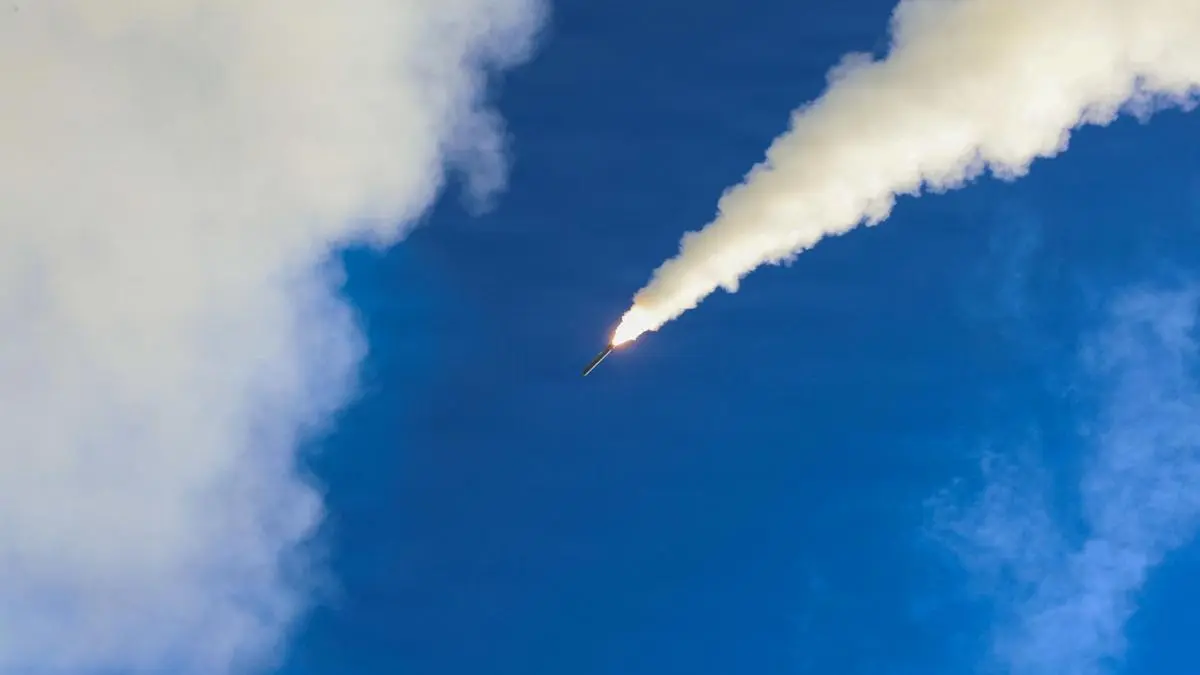
Seven missiles intercepted. Zero casualties. Energy facilities unscathed.
That is the press release. That is the "consensus" narrative being fed to every desk from Riyadh to London. The mainstream media treats an interception like a victory on a scoreboard, as if war were a game of pong where blocking the ball means you are winning.
They are lying to you by omission.
If you believe that shooting down seven missiles over Saudi airspace is a win for the Kingdom, you don’t understand the math of modern attrition. You are looking at the shield and ignoring the fact that the shield is made of gold, while the sword is made of scrap metal. Every time a Patriot missile battery fires to neutralize a "threat," the defender loses.
The math is broken. The strategy is archaic.
The $3 Million Sunk Cost Fallacy
Let’s talk about the cost of "safety."
A standard MIM-104 Patriot interceptor costs roughly $3 million to $4 million per shot. When the Royal Saudi Air Defense Forces (RSADF) "successfully" intercept seven incoming projectiles, they are vaporizing $21 million to $28 million in a matter of seconds.
Now, look at the other side. The drones and ballistic missiles launched by regional actors—often built using 1970s Soviet blueprints or off-the-shelf civilian tech—cost anywhere from $20,000 to $150,000.
- Defender Cost: $21,000,000+
- Attacker Cost: $700,000 (at most)
This is not a defense strategy; it is a wealth transfer. The attacker isn’t trying to blow up a refinery—though that would be a nice bonus for them. They are trying to bankrupt the defender’s air defense inventory. They are forcing the Kingdom to trade a limited supply of high-end, slow-to-manufacture interceptors for an infinite supply of cheap, mass-produced junk.
When debris falls near energy facilities, the media freaks out about the "near miss." They should be freaking out about the "direct hit" to the national treasury. Every "successful" interception is a victory for the attacker’s balance sheet.
The Debris Delusion
The headline says "debris falls near energy facilities" as if it’s a stroke of luck that nothing exploded.
This reveals a fundamental misunderstanding of physics. When an interceptor hits a ballistic missile, the energy isn't deleted from the universe. You are turning a guided, singular threat into a massive, unguided cloud of kinetic shrapnel.
I’ve spent years analyzing the aftermath of theater ballistic missile engagements. The "success" of an interception is often measured by whether the warhead was neutralized. But at terminal speeds, even a "neutralized" missile is several tons of metal falling at Mach 3.
If that debris hits a sensitive cooling tower or a pressurized gas line at an Aramco site, the result is the same as a direct hit: a shutdown. "Intercepting" a missile over a critical infrastructure hub is like shooting a burglar while he’s standing in your china shop. You might kill the burglar, but your plates are still smashed.
True strategic defense requires moving the engagement zone hundreds of miles away from the assets. If you are intercepting over the target, you have already failed the first three stages of defense.
The Patriot’s Dirty Little Secret
We need to stop pretending that missile defense is 100% reliable. It isn't. It’s a game of probabilities.
In 1991, during the Gulf War, the Patriot was hailed as a miracle. Later, independent audits by the GAO and MIT professors like Theodore Postol suggested the actual success rate against Scuds was abysmally low—possibly even zero. While the tech has improved drastically with the PAC-3 MSE variants, the fundamental problem remains: sensor saturation.
If an adversary fires 50 cheap drones and 7 actual missiles, the radar system has to track every single one. It has to prioritize. If the system glitches for a millisecond, or if the "debris" from the first interception masks the signature of the second incoming bird, the game is over.
By celebrating "seven for seven," the media creates a false sense of invulnerability. This prevents the public—and the markets—from demanding the only thing that actually works: Offensive deterrence.
Stop Fixing the Shield and Sharpen the Sword
The "People Also Ask" sections on search engines are filled with questions like, "How effective is Saudi Arabia's missile defense?"
The question itself is a trap. It assumes that defense is the goal.
If you are a CEO and your company is under a constant DDoS attack, you don't just keep buying more bandwidth forever. You find the guy with the laptop and you shut him down.
Saudi Arabia’s reliance on the Patriot and the upcoming THAAD (Terminal High Altitude Area Defense) systems is a reactive posture that cedes the initiative to the enemy. It is a "Maginot Line" in the sky. History tells us that every wall, no matter how expensive, eventually gets bypassed or overwhelmed.
The unconventional reality? The Kingdom would be safer if it stopped bragging about interceptions and started highlighting the astronomical cost of the defense. Make it clear that the current model is unsustainable.
The Industrial Base Bottleneck
Here is something the "experts" won't tell you on cable news: We are running out of interceptors.
The war in Ukraine and tensions in the Pacific have stripped the Western military-industrial complex bare. Lockheed Martin and Raytheon cannot just "turn up the dial" to produce thousands of interceptors overnight. The lead time for a Patriot battery is measured in years, not months.
When Saudi Arabia burns through seven missiles to stop seven pieces of junk, they are depleting a global stockpile that cannot be easily replenished. The attackers know this. They aren't trying to win the battle of today; they are winning the war of 2027. They are emptying the magazine.
The Actionable Pivot
If you are an investor or a policy analyst looking at these "interceptions," stop looking at the oil prices. Oil is a lagging indicator. Look at the interceptor-to-threat ratio.
If the ratio of cost-per-engagement continues to favor the attacker by 100:1, the "successful" defense is actually a slow-motion surrender.
To actually secure the region's energy future, the strategy must shift from Interception to Interdiction. This means:
- Ditching the PAC-3 for Directed Energy: If you aren't spending every available R&D dollar on high-energy lasers (where the cost per shot is the price of a gallon of diesel), you are throwing money into a black hole.
- Asymmetric Retaliation: The cost of launching a missile must be higher for the attacker than the cost of the missile itself. Currently, there is zero "skin in the game" for the launch crews.
- Hardened Decentralization: Instead of building bigger shields over concentrated targets, the energy infrastructure must be decentralized so that no single "falling debris" event can cripple the global supply.
The next time you see a headline about "successful interceptions," don't cheer.
Ask yourself how much longer the Kingdom can afford to "win" like this. In the world of high-stakes geopolitics, a perfect defense is just a precursor to a total collapse.
The shield is cracking, not because it isn't strong, but because it’s too expensive to hold up.