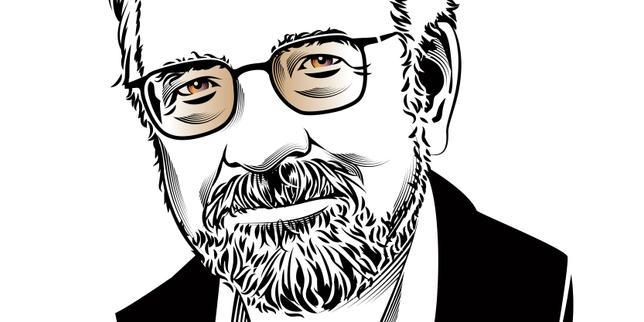
Omer Bartov looks at the Israeli public and sees a void. He sees "resignation" and "indifference." He sees a society that has turned its back on the reality of Gaza because it is too uncomfortable to look. It is a classic intellectual trap: assuming that because a population isn't reacting the way a Western academic wants them to, they must be catatonic or complicit in their silence.
Bartov is wrong. The Israeli public isn't indifferent. They are hyper-focused. The "tacit acceptance" he describes isn't a lack of feeling; it’s a hardened, conscious shift in the hierarchy of survival. When you frame a nation's response as "apathy," you miss the brutal, logical machinery working beneath the surface. You mistake a defensive perimeter for a blank stare.
The Cognitive Dissonance of Survival
Critics love to cite the lack of massive internal protests against the humanitarian situation in Gaza as proof of a moral collapse. They point to the television screens in Tel Aviv that focus on fallen soldiers and kidnapped grandmothers rather than the ruins of Khan Younis. This isn't "ignorance." It is a psychological closing of the ranks that occurs in every society facing an existential threat.
Imagine a scenario where a nation is told for twenty years that its neighbor’s sole objective is its total erasure. Then, imagine that threat manifests in the most graphic, intimate way possible. In that environment, "empathy" for the opposing side's population isn't just difficult; it is viewed by the collective as a luxury that costs lives.
Bartov suggests that Israelis are "looking away." I argue they are looking exactly where they feel they must: at the 101 hostages still in tunnels and the northern border currently on fire. To call this indifference is to fundamentally misunderstand how trauma reshapes a national psyche. You cannot ask a person to mourn for their attacker's house while their own is still smoldering.
The Data of Disillusionment
Let’s look at the numbers Bartov avoids. Before October 7, the Israeli "Center-Left" was a viable, if struggling, political force that still clung to the ghost of the Oslo Accords. Post-October 7, data from the Israel Democracy Institute shows a massive rightward shift in security perspectives across almost all demographics.
This isn't a move toward "indifference." It’s a move toward a grim, transactional view of war. The Israeli public has reached a point where they no longer believe in "win-win" scenarios. They believe in "us or them." This is a terrifying development, yes, but it is a coherent one. It is not the result of a society falling asleep; it is the result of a society waking up to a reality that academics find too ugly to acknowledge.
- Pre-2023: A belief that economic stability in Gaza would buy peace.
- Post-2023: The conviction that any concession is a platform for the next massacre.
When the premise of your world changes, your behavior changes. Bartov interprets the lack of civilian outcry as a moral failure. I interpret it as the logical byproduct of a failed peace paradigm.
The "Silent Majority" is Actually Shouting
There is a frequent "People Also Ask" query: "Why aren't there more anti-war protests in Israel?"
The premise of the question is flawed because it assumes the protests should look like Berkeley or Berlin. In reality, the most significant protests in Israel right now are about the hostages. These are inherently "anti-government" but they are not "anti-war" in the sense that the West understands. The families of the hostages aren't demanding a ceasefire because they’ve become pacifists; they are demanding a deal because they want their children back.
The distinction is vital. The "indifference" Bartov sees is actually a prioritization of tribal survival over universalist ideals.
I’ve seen this before in high-stakes corporate turnarounds and geopolitical flashpoints. When the ship is sinking, the crew doesn't debate the ethics of the lifeboat capacity. They grab the oars. Outsiders standing on the shore call that "ruthless." The people on the boat call it "tuesday."
The Intellectual Laziness of the "Genocide" Label
Bartov, a scholar of the Holocaust, has notably moved toward using the term "genocide" or "potential genocide." By doing so, he attempts to shock the Israeli conscience. But here is the contrarian truth: the more the international community and domestic critics use the "G-word," the more the Israeli public retreats into a siege mentality.
When you use the ultimate moral nuclear weapon against a population that sees itself as the victim of a genocidal attempt, you don't spark a "come to Jesus" moment. You spark a total shutdown of dialogue. You validate the hardline argument that "the whole world is against us anyway, so why bother trying to please them?"
The "acceptance" Bartov laments is actually a hardening caused by what Israelis perceive as a double standard. They see a world that didn't blink during the battle for Mosul or the Saudi intervention in Yemen, but which now holds them to a standard of "surgical warfare" that has never existed in history.
The Myth of the "Informed Outsider"
We often hear that Israelis are "shielded" from the images of Gaza by their media. This is a patronizing view that suggests Israelis are too stupid or too sheltered to find a Telegram channel or open a foreign news site. They aren't shielded. They are choosing a different narrative.
They see the same images. They just interpret them through a lens of cause and effect.
- Cause: A massive breach of sovereignty and a massacre.
- Effect: A total war to ensure it never happens again.
Bartov wants a society that weighs these two things with equal emotional gravity. That society doesn't exist. Not in Israel, not in the US after 9/11, and not in any nation that feels it is fighting for its life.
The Fallacy of the "Moderate Middle"
The most dangerous thing an analyst can do is wait for the "moderates" to return to the table. In the current Israeli climate, the "moderate" position has been redefined. A moderate in Tel Aviv today is someone who wants the hostages back and then wants a 20-foot wall with no gate.
The idea that there is a dormant well of liberal empathy just waiting to be tapped if only the media would show more photos of Gaza is a fantasy. It ignores the fact that many of the people who lived in the Gaza envelope—the kibbutzim that were attacked—were the most vocal peace activists in the country. Their disillusionment didn't create "indifference." It created a specific, targeted rage that the Left refuses to categorize correctly.
The Cost of the "Indifference" Narrative
Labeling a society as "indifferent" is a way of giving up on understanding them. It’s a shortcut for intellectuals who are frustrated that their theories aren't manifesting on the ground.
If you want to understand why Israel looks the way it does today, stop looking for "apathy." Start looking for "resolve." It is a dark, heavy, and often violent resolve, but it is the opposite of being asleep. It is the wide-eyed, sleepless stare of a nation that believes it is standing on the edge of a cliff.
The real tragedy isn't that Israelis don't know what is happening in Gaza. It’s that they know, and they have decided that their own survival justifies it. That is a much harder problem to solve than "indifference."
Stop waiting for a moral awakening. Start dealing with a nation that has consciously decided to prioritize its own security over its international reputation. The "tacit acceptance" isn't a symptom of a sick society; it's the armor of a wounded one. If you want to change the outcome, you have to address the fear, not insult the response.
The world keeps asking why Israel isn't crying. Israel is too busy reloading.