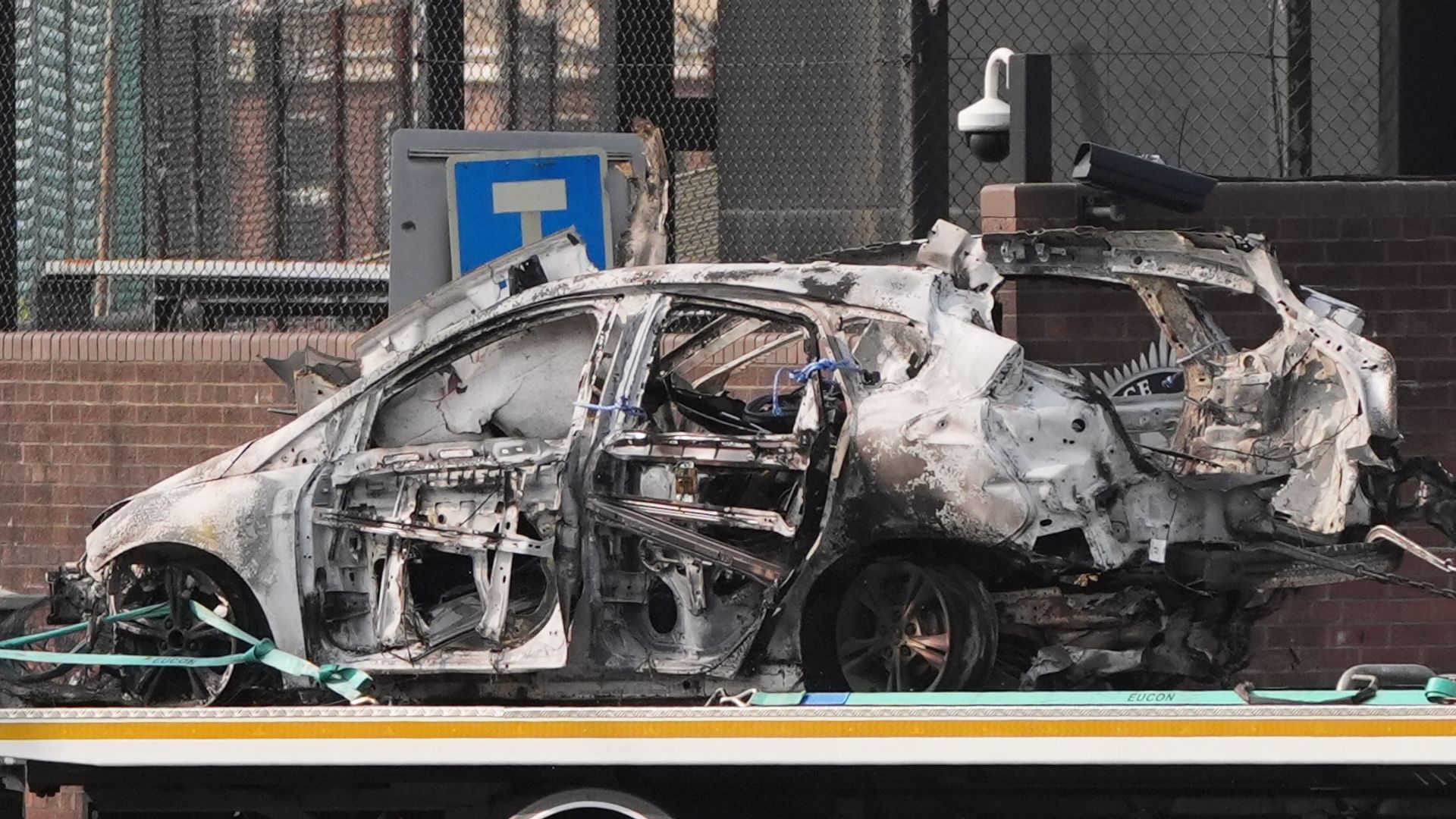
The headlines are predictable. A 66-year-old man is charged after a car bomb attack outside a police station in Northern Ireland. The media paints a picture of a relic from a bygone era, a "lone wolf" or a desperate individual clinging to the ghost of a dead conflict. This narrative is not just lazy—it is a catastrophic failure of intelligence analysis that puts lives at risk.
When a device goes off outside a station in Derry or Fermanagh, the establishment reflex is to treat it as a criminal anomaly. They want to believe the peace process is a finished product, a museum piece under glass. But security insiders know the truth: these events are not isolated outbursts of geriatric rage. They are systemic tests of a fraying border and a hollowed-out security infrastructure. If you enjoyed this post, you might want to check out: this related article.
The Fallacy of the Aging Extremist
The focus on the age of the accused is a classic red herring. The media fixates on a 66-year-old because it fits the "old guard" trope. It suggests the threat is literally dying out. This is a dangerous comfort.
In reality, the logistics of a car bomb—from the procurement of commercial-grade explosives to the engineering of a reliable detonator—require a network. You don’t bake a viable IED in a vacuum. By framing this as the act of a single "charged man," we ignore the recruitment pipelines that utilize the "clean skins"—individuals without recent records—to move hardware. The age of the operative is a tactical choice, not a sign of a movement’s extinction. Older individuals often attract less immediate heat from mobile patrol units and can move through checkpoints with a degree of invisibility that a twenty-year-old in a tracksuit simply cannot. For another perspective on this development, see the recent coverage from NPR.
The Intelligence Vacuum
The PSNI and MI5 have spent the last decade shifting resources toward cyber-terrorism and international threats, leaving a gaping hole in human intelligence (HUMINT) within local communities. We’ve traded "boots on the ground" for "eyes in the clouds," and the results are showing.
Electronic surveillance is useless against a cell that doesn't use encrypted apps. If your operational security relies on face-to-face meetings in rural pubs and hand-delivered notes, you are invisible to the GCHQ dragnet. The recent surge in activity isn't a sign that these groups are getting bolder; it’s a sign that they have realized the state has forgotten how to watch them.
The "lazy consensus" suggests that the threat level is "substantial" but manageable. I’ve seen this complacency before. It’s the same institutional arrogance that preceded the Omagh bombing. When you stop infiltrating the fringe because you think the fringe is irrelevant, you lose the ability to stop the blast before the car is parked.
Brexit and the Oxygen of Grievance
We need to stop pretending that the geopolitical shifts of the last five years haven't fundamentally altered the chemistry of Northern Irish militancy. The Protocol and the subsequent Windsor Framework didn't just create trade friction; they created a symbolic vacuum.
Dissident groups don't need a majority to be effective. They only need a grievance that resonates with a small, radicalized percentage of the population. The perceived "betrayal" of the unionist or nationalist identity by London provides the perfect recruitment narrative. The bomb outside the police station is a physical manifestation of a political stalemate.
The Mechanics of Modern Dissidence
Let’s dismantle the idea that these are "amateur" devices. While some attempts are indeed crude, the successful deployment of a car bomb requires a specific set of technical skills:
- Chemical Precursors: Sourcing enough fertilizer or commercial explosives without triggering the "Suspicious Activity" alarms at hardware stores.
- Circuitry: Building a tilt-switch or a remote-detonator that doesn't blow the user up prematurely.
- Logistics: Scouting the target, timing the police rotations, and securing a "clean" getaway vehicle.
This is a professionalized workflow. When the state treats these as "lone actor" crimes, they fail to map the supply chain. Who provided the vehicle? Who wired the secondary charge? Who wrote the statement of responsibility? By focusing on the 66-year-old in the dock, the state allows the engineers and the financiers to remain in the shadows, ready to build the next one.
The Policing Trap
The response to these attacks is almost always more armored patrols and more static checkpoints. This is exactly what the attackers want. They are baiting the PSNI into a "security-first" posture that alienates the very communities they need to win over.
Every time a street is locked down or a "stop and search" is performed on a teenager in a republican heartland, the dissidents win a marketing victory. They want to prove that the "new" Northern Ireland is just the "old" Northern Ireland with better PR. The police are playing a game where the rules were written in 1972, and they are losing.
Why the "Peace Process" is a Shield for Extremists
The greatest asset these groups have is the political class's desperation to prove that the Good Friday Agreement worked. No one in Stormont or Westminster wants to admit that the underlying tensions were never resolved—only suppressed.
This desperation leads to a policy of "managed instability." The authorities downplay the severity of attacks to avoid "spooking the markets" or "derailing the executive." This silence is interpreted by militants as weakness. They see a state that is too afraid of its own shadow to crack down effectively.
The Brutal Reality of the Border
The border isn't a line on a map; it's a psychological fault line. As long as there is ambiguity about the constitutional status of Northern Ireland, there will be a market for violence.
Stop asking if the 66-year-old acted alone. He didn't. Start asking why the infrastructure that allows him to operate is still intact after twenty-five years of "peace." The car bomb isn't a ghost from the past. It’s a signal from a very active, very dangerous present.
The authorities are patting themselves on the back for an arrest while the workshop that built the bomb is already sourcing parts for the next one. This isn't a victory. It’s a delay.
Stop looking at the man in the handcuffs. Look at the shadows behind him.