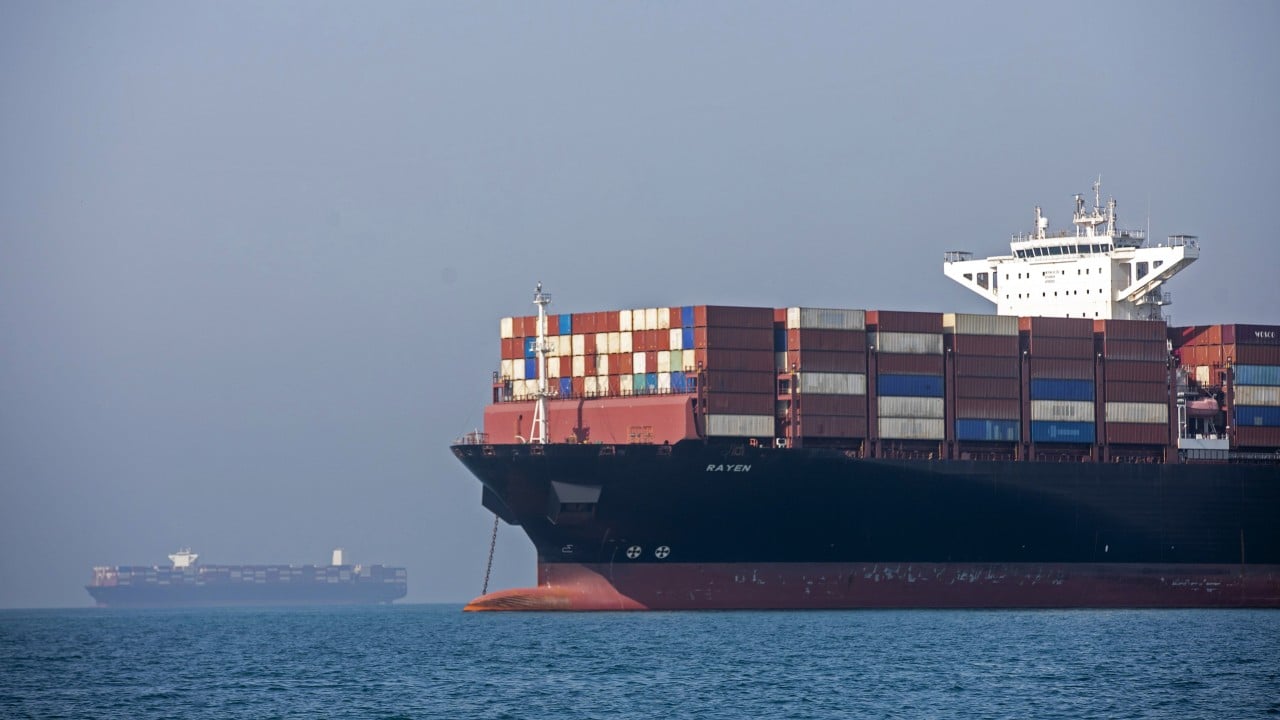
The signing of the Islamabad Memorandum of Understanding on June 17, 2026, alongside the issuance of General License X by the United States Department of the Treasury, has prompted premature celebrations across Western financial markets. On paper, the 60-day temporary framework lifts the naval blockade on Iranian ports, reopens the Strait of Hormuz, and allows more than 120 million barrels of stranded floating crude to re-enter global distribution channels. Yet, inside the operational headquarters of East Asian mega-freight forwarders and container lines, the consensus is one of profound skepticism.
The structural disconnect between diplomatic breakthroughs and maritime reality stems from a fundamental misunderstanding of supply chain physics. Geopolitical treaties do not instantly reallocate capital, compress war-risk insurance premiums, or re-engineer maritime routes that have been fundamentally disrupted for months. For Chinese exporters and global shipping conglomerates, the temporary US-Iran detente does not solve the structural variables driving high container rates, route volatility, and maritime insecurity.
The 60 Day Structural Bottleneck and Capital Reallocation
Maritime trade operates on multi-month planning horizons. The core limitation of the current US-Iran framework is its temporal configuration: a fixed 60-day negotiation window. In international logistics, a 60-day horizon is too narrow to justify the complex structural adjustments required to reintroduce vessels into previously blocked corridors.
The capital allocation functions of major ocean carriers rely on predictability. Re-routing a Ultra Large Container Vessel (ULCV) from the Cape of Good Hope back to transit lines passing through the Middle East requires substantial upfront expenditures. These include renegotiating bunkering contracts, adjusting crew rotations, and committing to fixed arrival windows at destination ports.
[Vessel Reallocation Decision Model]
  │
  ├── 60-Day Arbitrage Window ──► High Risk of Sanction Snapback ──► Maintain Cape Route
  │
  └── Multi-Year Legal Clarity ──► Recalibrate Insurance & Fuel ──► Resume Middle East Transit
A short-term ceasefire creates a high risk of operational stranding. If a shipping firm shifts its assets back to regional chokepoints and negotiations collapse on day 61, the resulting snapback of sanctions or sudden closure of water passages exposes the firm to immediate asset detention or severe insurance defaults. The operational friction of switching routes twice outweighs the marginal fuel savings of a short-term shortcut. Commercial fleets are maintaining longer, less efficient journeys around Africa because consistency in route planning is more profitable than highly volatile, short-term diplomatic experiments.
The Bifurcation of Chokepoints: Hormuz vs. the Red Sea
The diplomatic breakthrough erroneously conflates the reopening of the Strait of Hormuz with the stabilization of the broader Middle Eastern maritime network. This oversight fails to account for the operational separation between the Persian Gulf and the Red Sea corridor.
While the Islamabad MoU has allowed a slow resumption of tanker traffic through the Strait of Hormuz, it has failed to pacify the Red Sea transit zone. The threat of localized asymmetric warfare from non-state actors, such as the Yemen-based Houthis, remains active. This operational divergence creates an asymmetric logistics environment.
- The Persian Gulf Dynamic: Bulk tankers loading crude at terminals like Ras Tanura or Kharg Island benefit from the lifting of the naval blockade, causing a localized surge in tanker activity.
- The Red Sea Dynamic: Container ships moving consumer goods from manufacturing hubs in Ningbo or Shanghai toward European markets face an unchanged threat profile. The Suez Canal remains functionally restricted for major container lines due to the persistence of anti-ship missile risks.
This structural disconnect caused spot freight rates on major East-West trade lanes to spike by 30% immediately following the peace announcement. The reopening of Hormuz has triggered a rapid mobilization of empty Very Large Crude Carriers (VLCCs) entering the Gulf to capture freed oil volumes. This localized surge has consumed available maritime capacity, draining crews and secondary vessel reserves away from standard container trade lanes. The result is an acute shortage of standard container vessels, which drives spot freight prices upward despite the theoretical reduction in regional tensions.
The Erosion of the Shadow Fleet Arbitrage
For Chinese independent refiners and exporters, the formalization of trade relations presents a distinct commercial disadvantage: the elimination of the gray-market pricing structure.
Prior to the June 2026 agreement, international sanctions forced a significant percentage of Iranian oil into a parallel logistical ecosystem. This "shadow fleet" utilized older, unflagged, or flag-of-convenience vessels operating without traditional Western hull and machinery insurance. To clear these barrels, sellers provided massive discounts to captive buyers, primarily localized Chinese operations.
$$\text{Net Refinery Margin} = \text{Refined Product Revenue} - (\text{Brent Crude Price} - \text{Shadow Discount}) - \text{Gray Transport Cost}$$
The introduction of General License X transitions these barrels into the formal, transparent market. As Iranian crude migrates to declared, bankable, and insurable channels, the steep shadow discount narrows rapidly. The normalization of Iranian oil sales eliminates the artificial margin buffer that Chinese domestic refiners used to offset rising logistical costs elsewhere. The sudden transition from an opaque, deeply discounted gray market to an open, standardized market inflates the baseline procurement costs for these institutions, dampening their enthusiasm for the diplomatic outcome.
Insurance Risk Pools and the Failure of Legal Reciprocity
The primary transmission mechanism between a diplomatic treaty and actual maritime traffic is the maritime insurance underwriting market. Treaties do not compel insurers to lower their risk ratings.
The international P&I Clubs (Protection and Indemnity Clubs), which provide liability cover for roughly 90% of global ocean-going tonnage, operate on historical loss data and long-term risk models rather than temporary political agreements. The reality that Iran temporarily closed access to the Strait of Hormuz for a 48-hour period immediately following the signed memorandum proves to underwriters that the regional security framework is highly unstable.
[Insurance Underwriting Logic Chain]
  Diplomatic Agreement Signed
         │
         ▼
  Localized Armed Incidents / Sudden Closures Continue
         │
         ▼
  Historical Loss Models Prioritized Over Treaties
         │
         ▼
  War-Risk Premium Maintained at Elevated Levels
The maintenance of high war-risk premiums acts as a financial barrier. Even if a vessel is legally permitted to enter the Gulf under General License X, the additional hull and cargo premiums applied by London-based underwriters make the journey economically non-viable for non-state-backed shipping entities. Chinese state-owned enterprises may occasionally rely on national sovereign indemnity funds to bypass Western insurance pools, but smaller independent operators cannot absorb this financial exposure.
The Strategic Playbook for Global Logistics Operators
Relying on the immediate normalization of Middle Eastern trade routes is an operational mistake. Shippers and exporters must position their asset networks to withstand a multi-layered, protracted transition phase.
The first priority is the formal transition from dynamic spot-rate booking to multi-layered, extended volume commitment contracts. Relying on spot markets during localized capacity surges—such as the current drain of vessels into the Persian Gulf—exposes margins to sudden, non-linear tariff spikes. Securing fixed-capacity space allocations along the Cape of Good Hope route ensures operational continuity, treating any potential Red Sea or Hormuz transit optimization as a windfall rather than a foundational assumption.
The second priority requires the reconfiguration of inventory management systems from a strict Just-In-Time (JIT) blueprint to a high-buffer Just-In-Case (JIC) architecture. This shift demands that firms increase their Days of Inventory Regional Buffer (DIRB) by a factor of 1.5 to 2.0 at primary distribution hubs.
By building regional inventory reserves outside the immediate zone of geopolitical volatility, enterprises isolate their end-consumer supply chains from the structural friction of sudden maritime closures. The era of low-cost, friction-free maritime routing has been replaced by a systemic environment where geopolitical volatility must be treated as a fixed operational cost.