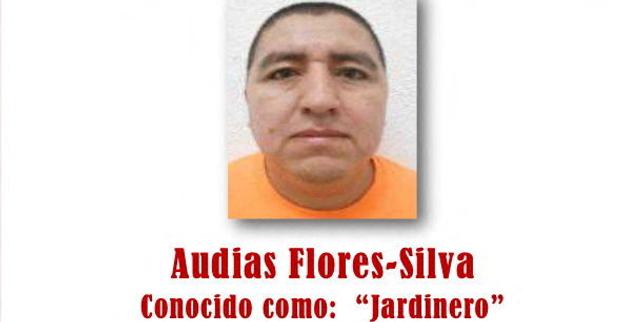
The headlines are predictable. They read like a victory lap for a race that never actually ends. "Major Blow to CJNG," they scream. "Successor to El Mencho Captured." The mainstream media treats the arrest of high-ranking cartel figures like the closing chapter of a spy novel. They want you to believe that removing a "kingpin" creates a power vacuum that leads to the eventual collapse of the organization.
They are wrong. Dead wrong.
In reality, these high-profile takedowns are the equivalent of trying to cure a viral infection by popping a single pimple. It looks like progress on camera, but underneath the surface, the systemic rot is only accelerating. The obsession with the "Kingpin Strategy"—the tactical focus on decapitating the leadership of criminal organizations—is not just an ineffective policy; it is a primary driver of the escalating violence in Mexico.
When you take out a CEO in the legitimate business world, the board of directors meets, and a transition plan kicks in. When you take out a "boss" in the world of decentralized narco-trafficking, you aren't dismantling a company. You are shattering a fragile peace treaty.
The Corporate Fallacy of the Cartel
The biggest mistake analysts make is viewing the Jalisco New Generation Cartel (CJNG) or the Sinaloa Cartel as monolithic, top-down corporations. They aren't. They are fluid, horizontal franchises.
Think of them more like a fast-food chain than a centralized bank. El Mencho doesn't sign every paycheck or approve every local extortion racket. He provides the brand, the heavy weaponry, and the high-level political connections. The actual "work" is done by local cells that pay for the privilege of using the name.
When the authorities arrest a "successor" or a top lieutenant, they aren't stopping the flow of product. They are simply removing the person responsible for keeping the local franchise owners from killing each other.
The data is clear: every time a major leader is captured or killed, violence spikes. Why? Because the "Kingpin Strategy" triggers a Darwinian struggle for survival.
- Internal Fracturing: Mid-level enforcers realize they no longer have a boss to answer to. They break away to start their own mini-cartels.
- External Predation: Rival cartels sense weakness and move in to seize territory, leading to bloody turf wars.
- Hyper-Violence: New, younger leaders lack the "old school" discipline of their predecessors. They use extreme brutality to establish dominance quickly.
We aren't seeing the end of the CJNG. We are seeing its mitosis. One large, somewhat predictable threat is being replaced by a dozen smaller, more erratic, and more violent splinter groups.
The Economics of the Infinite Supply
The media loves the drama of the "bust." They show the tables piled high with cash and bricks of cocaine. It makes for great television. But if you look at the price of narcotics on the streets of Chicago, Los Angeles, or Paris after these "major blows," the price almost never moves.
Basic economics tells us that if a significant portion of the supply chain were actually disrupted, prices would skyrocket. They don't. This is because the infrastructure—the tunnels, the labs, the corrupt port officials, the chemical suppliers—remains intact.
I’ve spent years analyzing the logistics of illicit trade, and the one constant is that the talent is replaceable. The narco-economy is a labor market with a 100% replacement rate. For every lieutenant arrested, there are three hungry twenty-somethings in the highlands of Michoacán or the slums of Guadalajara ready to take his place. To them, the "boss" isn't a villain; he’s a case study in upward mobility.
By focusing on the individuals, the government is playing a perpetual game of Whac-A-Mole. They are treating a supply-and-demand problem as a personnel problem. You cannot arrest your way out of a multi-billion dollar market reality.
The Brutal Truth About Stability
Here is the take that makes people uncomfortable: a strong, dominant cartel is actually "safer" for the civilian population than a weakened, fragmented one.
When one group has a monopoly on a territory, they don't need to hang bodies from bridges. They have already won. They can focus on the business of moving product. It is during the "succession crises" touted as victories by the DEA and the Mexican government that the civilian casualty count goes through the roof.
The arrest of a "possible successor" doesn't mean the drugs stop moving. It means the local shopkeeper now has three different groups demanding "protection" money instead of one. It means the frequency of checkpoints increases. It means the rules of engagement change overnight, and anyone caught in the middle is collateral damage.
Stop Asking "Who is Next?"
The public and the press are obsessed with the "who." Who is the new boss? Who is El Mencho's son? Who is the secret financier?
These are the wrong questions. The right question is: Why does the system remain so resilient despite decades of high-level arrests?
The answer lies in the "Shadow State"—the overlap between legitimate finance, local politics, and the criminal underworld. Arresting a cartel leader is easy. Disruption of the money laundering networks that move the profits through the global banking system is hard. Dismantling the local political machines that trade votes for cartel protection is even harder.
Governments prefer the "Kingpin Strategy" because it provides a clear metric for success. They can count the number of high-value targets captured. They can't easily quantify the "reduction in systemic corruption" or "improvement in judicial integrity."
The Actionable Pivot
If we actually wanted to dismantle these organizations, we would stop chasing ghosts in the mountains and start chasing the ledger in the skyscrapers.
- Target the Logistics, Not the Legends: A cartel can survive without a leader, but it cannot survive without its chemical precursors or its specialized chemists.
- Follow the Money, Not the Man: The global financial system is the lungs through which these groups breathe. Stop focusing on the guy with the gold-plated AK-47 and start focusing on the accountant in London or Miami moving the wire transfers.
- Legalize and Regulate: As long as there is a prohibition-driven profit margin of $1,000$%, someone will be willing to kill for it. You don't see Heineken and Budweiser fighting turf wars with machine guns because they have a legal framework to resolve disputes.
The arrest of two "major heads" is a PR win for a failing policy. It is a sedative for a public that wants to believe the government is winning. But for the people living in the "plazas," this isn't a victory. It’s a signal to hunker down, because the real war is about to start.
The king is dead. Long live the chaos.