Western foreign policy circles love a good tragedy. For two decades, the consensus narrative on Pakistan's internal security has been copy-pasted across every major think tank report: a weak state trapped in a perpetual, chaotic war against its own tribal fringes, bleeding cash and stability because it cannot police its own map. They look at the Durand Line, see smoke, and diagnose a terminal illness.
They are completely misreading the board. You might also find this connected coverage interesting: The Heavy Metal Symphony in the Indian Ocean.
The mainstream media analyzes Pakistan’s border friction as a series of failures. It is not a failure. It is a feature. What the casual observer labels a "never-ending war within its own borders" is actually a highly calibrated, structural strategy of managed instability. The Pakistani security apparatus is not trying to "win" a decisive victory in the way an American general, obsessed with clear-hold-build doctrines, would define it. They are maintaining a dynamic equilibrium.
When you look past the sensationalist headlines of endless conflict, the math changes. This is not a story of a helpless state losing control. It is a story of a state using controlled friction to secure its regional leverage, extract international rent, and maintain domestic cohesion. As reported in latest articles by Reuters, the implications are worth noting.
The Fallacy of the Absolute Victory
The first mistake external analysts make is assuming that total peace along the western border is Rawalpindi’s ultimate objective. It is not.
To understand why, you have to look at the mechanics of state survival in South Asia. A completely pacified, economically integrated, and politically autonomous border region removes the primary justification for the military’s outsized role in the state's budget and political architecture. If the threat is eliminated, the budget shrinks.
I have watched international development agencies dump hundreds of millions of dollars into infrastructure projects in the former Federally Administered Tribal Areas (FATA), operating under the naive assumption that building a few roads and schools will magically erase centuries of geopolitical realities. It does not work because it ignores the structural incentives.
Consider the data on military aid and domestic resource allocation. Whenever the border regions simmer down too much, external funding dries up. When the threat spikes, Washington or Beijing re-engages. Instability is currency.
Let's break down the actual mechanics of this strategy:
- The Threat Inflation Premium: By maintaining a credible, active threat on the periphery, the central state justifies its dominance over civilian institutions.
- Geopolitical Rent-Seeking: A volatile border makes Pakistan the indispensable gatekeeper for regional stability. You cannot bypass a gatekeeper who holds the keys to a powder keg.
- Strategic Depth Redefined: The traditional view of "strategic depth" meant occupying Afghan territory. The modern reality is different. It means managing a fluid buffer zone that prevents any hostile regime in Kabul from consolidating power or partnering effectively with New Delhi.
Dismantling the Counter-Insurgency Playbook
The standard "People Also Ask" query regarding this region is simple: Why can't a nuclear-armed military defeat a few thousand tribal militants?
The question itself is flawed. It assumes the military is treating this as a conventional counter-insurgency with a definitive end date.
If you apply standard military metrics—territory seized, insurgents neutralized—the Pakistani state has already "won" multiple times. Operations like Zarb-e-Azb and Radd-ul-Fasaad systematically cleared out established safe havens, demolished physical infrastructure, and displaced militant command networks. The state proved it can project overwhelming force whenever a red line is crossed.
The real objective is not total elimination; it is containment and selective utilization.
Imagine a scenario where the border is perfectly sealed and every dissident group is eradicated. Suddenly, Kabul has no internal leverage to worry about. A unified, stable Afghanistan invariably revives the old Pashtunistan issue—the historical refusal to recognize the Durand Line as a permanent border. By keeping the borderlands fluid, Islamabad ensures that Kabul remains too weak, fragmented, and internally distracted to ever pose a serious irredentist threat to Pakistani territory.
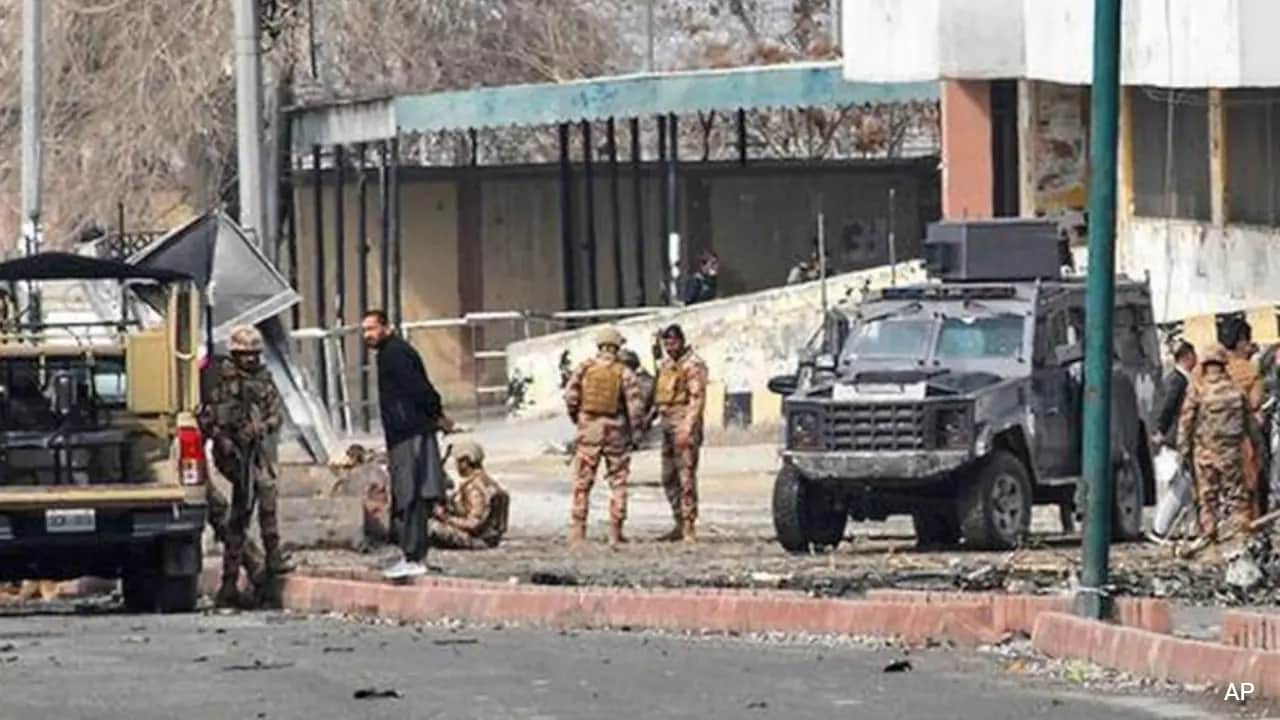
The downside to this approach is obvious, and it is a brutal trade-off: domestic blowback. The state accepts a baseline level of domestic terrorism—attacks on security checkpoints, localized instability—as the acceptable cost of maintaining its broader strategic posture. It is a cold, mathematical calculation that horrifies Western humanitarians but aligns perfectly with realpolitik.
The China Factor and the Security Tax
The loudest critics point to Beijing’s massive investments in the China-Pakistan Economic Corridor (CPEC) as proof that Pakistan needs absolute internal peace. They argue that China will not tolerate a chaotic border.
This is another superficial reading. Beijing does not require a pristine democracy or a peaceful countryside; it requires a secure corridor. There is a massive difference.
Pakistan has successfully turned security itself into a commoditized service. The creation of the Special Security Division—a dedicated military wing explicitly tasked with protecting Chinese assets and personnel—is proof of this. The state has essentially institutionalized the conflict, charging a "security tax" that is baked directly into the cost of regional infrastructure development.
- Fact: CPEC projects have continued to progress despite periodic high-profile attacks.
- Fact: The threat of militancy gives Islamabad leverage to demand greater financial concessions and security funding from Chinese state-backed enterprises.
Peace does not pay the bills. Managed friction does.
Stop Asking for a Solution
The international community needs to stop asking how to "fix" Pakistan’s border war. You cannot fix a system that is operating exactly as intended by its architects.
The Western obsession with borders that look like neat lines on a European map ignores the historical reality of the subcontinent. The frontier has always been a zone of negotiation, a porous buffer where sovereignty is conditional and violence is a form of political currency.
The current status quo will not collapse into a chaotic failed state, nor will it blossom into a peaceful trading hub. It will continue to simmer, precisely calibrated, serving as the ultimate tool for domestic control and regional leverage. The war isn't never-ending because the state is weak; it's never-ending because the state needs it to be.



