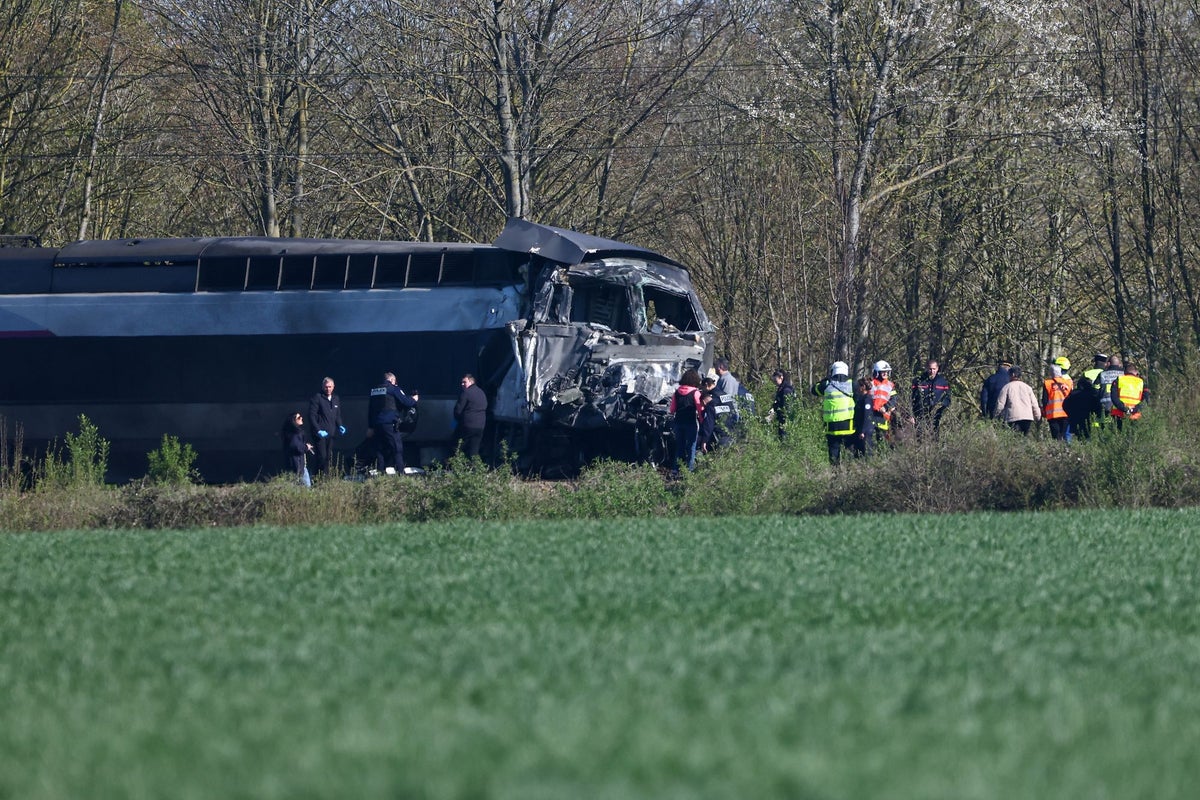
The headlines are predictable. They scream about "tragedy" and "unforeseeable accidents" whenever a high-speed train collides with a vehicle at a level crossing. This week, as reports trickle out of France regarding a TGV strike against a military truck, the media is doing what it always does: focusing on the gore and the logistics of the delay rather than the systemic incompetence that allows these kinetic nightmares to exist in the first place.
Stop calling these events accidents. They are mathematical certainties born from a refusal to prioritize physical infrastructure over digital theater.
The "lazy consensus" suggests that we just need better sensors or smarter drivers. The truth is much colder. We are running 300-ton projectiles at 300 km/h on legacy networks that still intersect with gravel roads. It is a Victorian design choice masquerading as modern transit.
The Fatal Flaw of the Level Crossing
The media treats a level crossing like a neutral piece of the scenery. It isn't. It is a design failure. Every single point where a railway line intersects with a road at the same grade is a ticking clock.
High-speed rail—the pride of European engineering—is often built on "dedicated" lines, but the reality is a patchwork. Trains frequently transition onto conventional tracks to reach urban centers or navigate difficult terrain. This is where the carnage happens.
- Kinetic Energy is Non-Negotiable: A TGV traveling at even half its top speed possesses enough energy to liquefy a standard passenger car and significantly deform a heavy military transport.
- The Braking Illusion: People think train drivers can "slam on the brakes." If a driver sees an obstruction on the tracks, the physics of steel-on-steel friction dictates that the impact is already a historical fact. The train will travel kilometers before coming to a halt.
- The Signaling Gap: Most level crossing sensors are binary. They know if a gate is up or down. They rarely integrate real-time spatial data into the train's automated braking systems fast enough to matter.
We keep trying to "fix" the driver's behavior. We install cameras to fine people for weaving through gates. We put up signs. But human error is a constant. If your system depends on a tired truck driver or a confused tourist never making a mistake, your system is broken.
The Military Truck Problem
The specific involvement of a military vehicle in the French incident highlights a niche but recurring nightmare: heavy, low-clearance transport.
I have seen logistics chains fail because someone didn't account for the "hump" of a crossing. Low-loader trailers—the kind used to haul tanks, APCs, or heavy engineering equipment—are notorious for getting "high-centered." The trailer hits the apex of the tracks, the wheels lift, and the vehicle is pinned.
At that point, the driver has roughly 30 to 90 seconds to trigger an emergency protocol that often relies on manual phone calls to a dispatch center. It is a analog solution to a digital-speed problem.
The High Cost of Cheap Solutions
Why don't we just build bridges? Money.
State-run rail agencies like SNCF or Germany’s Deutsche Bahn are trapped in a cycle of austerity and optics. It is cheaper to pay out insurance claims for the occasional "unavoidable" death than it is to undergo the massive civil engineering project of grade separation for every rural crossing.
They prioritize "smart" signaling—digital upgrades that look great in a boardroom—because they cost a fraction of a concrete overpass. But software doesn't stop a stalled truck.
The Industry’s Dirty Little Secret
Railways are sold to the public as the safest way to travel. Statistically, per kilometer, they are. But this statistic hides the "Externalized Risk." The risk isn't to the passengers in the armored cocoon of the TGV; the risk is to the surrounding community.
We’ve built a high-speed backbone and left the skin of the infrastructure vulnerable.
- Grade Separation is the Only Metric: If a line carries trains faster than 160 km/h, there should be zero—zero—physical contact points with road traffic. Anything less is negligence.
- Automated Emergency Stop (AES) Integration: We have the tech to link GPS-monitored heavy vehicles directly to rail signaling. If a truck stops for more than 5 seconds on a geofenced crossing, every train within a 10km radius should receive an autonomous braking command. We don't do it because of "interoperability hurdles." That's code for "it's too expensive to make different systems talk to each other."
Stop Asking the Wrong Questions
The "People Also Ask" sections of the internet will focus on: Was the driver at fault? or How fast was the train going?
These are the wrong questions. They focus on the specific actors in a single tragedy while ignoring the script. The right question is: Why is a high-speed locomotive permitted to share a plane of existence with a 40-ton truck?
We are obsessed with "smart" tech when we need "dumb" infrastructure. A bridge doesn't need a software update. A tunnel doesn't have a "user error" or a "sensor glitch."
The Brutal Reality of Reform
The contrarian view is that we should stop subsidizing the expansion of high-speed rail until the existing lines are physically isolated from the public.
Politicians love cutting ribbons on new "bullet train" routes. No one gets a photo op for replacing a level crossing with a boring concrete underpass in a rural village. But until that happens, these "accidents" are actually just the cost of doing business.
We accept a certain number of deaths as a trade-off for not spending the capital required to fix the ground beneath our feet. We call it "high-speed," but the infrastructure is still dragging its feet in the 19th century.
Tear up the crossings or stop the trains. There is no middle ground that isn't stained with blood.