Dolly Parton died at the age of eighty in Nashville, Tennessee, bringing a definitive close to a career spanning six decades that redefined global entertainment, songwriting, and rural philanthropy.
The collective grief rolling across cultural lines following her passing on August 25, 2026, reveals a deeper societal truth. People are not merely mourning a singer of country standards. They are mourning the loss of a rare public figure who managed to weaponize radical kindness without ever appearing weak, weaponizing authenticity in an era built entirely on artifice. Her nephew, Bryan Seaver, confirmed the news in a carefully orchestrated video message, fulfilling a promise made years prior. Yet the shock waves felt from Los Angeles to London expose an uncomfortable dependency. We relied on her to be an eternal, bulletproof shield against a cynical world. In related updates, we also covered: Prince Harry and Meghan Return to Britain The High Stakes Behind the Closed Doors.
The Architecture of an Unshakable Brand
Long before modern influencers realized that personal branding requires absolute control over one's narrative, Parton mastered the blueprint. She weaponized self-deprecation. By joking relentlessly about her own cosmetic surgery and manufactured appearance, she completely disarmed her critics.
"It costs a lot of money to look this cheap," she famously quipped. Reuters has analyzed this critical issue in great detail.
This maneuver was a brilliant defense mechanism. It allowed her to control the punchline before anyone else could. Beneath the wigs, rhinestones, and theatrical excess sat one of the most disciplined business minds in American media.
She refused to sell her publishing catalog to major conglomerates, maintaining total ownership of her master recordings and thousands of original songs. When Elvis Presley wanted to record "I Will Always Love You," she turned him down because Colonel Tom Parker demanded half the publishing rights. That single business decision cost her an immediate windfall but secured a multi-million-dollar empire that she retained until her dying day. She treated country music as a blue-collar trade, comparing her songwriting to her father farming the soil. That operational clarity separates her from artists who burn through fortunes because they fail to understand the mechanics of intellectual property.
Philanthropy as Infrastructure
Most celebrity charity work functions as public relations camouflage. Red carpets, photo opportunities, and check-passing galas usually serve the ego of the donor more than the needs of the recipient. Parton operated differently.
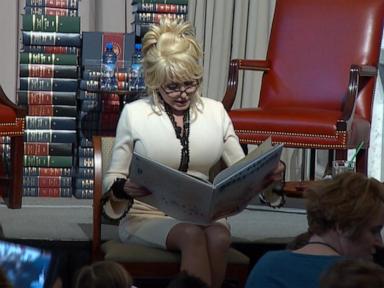
Her Imagination Library, which began as a localized tribute to her illiterate father, quietly expanded into a global juggernaut shipping millions of free books every month to children across multiple countries. She did not wait for government grants or committee approvals. She built a private supply chain for literacy.
When the 2016 wildfires devastated her home region in East Tennessee, she didn't just record a public service announcement. She launched the My People Fund on the spot, distributing immediate cash grants directly to displaced families to cover basic survival needs before bureaucratic aid could even mobilize. This was operational empathy. She understood that poverty and trauma require immediate liquidity, not distant sympathy. Her donations were structural interventions designed to outlive her.
The Loneliness at the Top
Her passing leaves a massive structural vacuum in American culture, particularly because her generation of self-made monoliths is nearly extinct. She navigated the treacherous waters of the music industry starting in the late nineteen-sixties, a brutal boys' club dominated by traditional gatekeepers like Porter Wagoner. She fought public legal battles to break free from restrictive contracts, absorbing professional hits that would have shattered lesser artists.
Her marriage to Carl Dean, a man who famously avoided the spotlight for over half a century, provided an anchor that kept her grounded in reality. With Dean's passing in the preceding year and her own health declining—ultimately leading to the cancellation of her planned Las Vegas residency earlier in the year—the final chapters of her life carried an unavoidable weight of isolation.
The grief we see today is loud because the culture realizes it is losing its last unifying bridge. She connected blue-collar conservatives, urban liberals, country traditionalists, and modern pop audiences without ever compromising her core identity. She never took partisan political bait, choosing instead to focus her influence where it could tangibly help people read, heal, and work.
As the estate battles begin and the tributes slow down, the true test of her legacy will not be how many records sell this week. It will be whether anyone in modern entertainment possesses the discipline, grace, and business acumen to step into the vast, rhinestone-studded space she leaves behind.