When Harare abruptly halted the export of all raw mineral ores and lithium concentrates, global resource markets scrambled to interpret the shockwave. The official narrative was clean, patriotic, and cinematic: Zimbabwe, holding Africa’s largest lithium reserves, was standing up to Beijing, shattering a near-monopoly, and seizing its economic destiny. In reality, the bold decree is not a divorce from Chinese capital. It is a forced marriage extension.
By pulling forward a planned 2027 export ban to an emergency enforcement, Mines Minister Polite Kambamura sought to plug massive revenue leakages, halt under-reporting, and end the illicit stockpiling of raw materials across the border in Mozambique. Yet, far from chasing Chinese state-backed corporations out of the country, this aggressive wave of resource nationalism has locked them into the bedrock of Zimbabwe’s economy for the next generation.
The Illusion of Separation
Geopolitical commentators love a David-and-Goliath story. They watched Zimbabwe’s Minerals Marketing Corporation report a stunning 106% year-on-year surge in first-quarter lithium revenues—reaching $178.64 million on virtually flat volume growth—and assumed Harare had successfully cornered its dominant buyers.
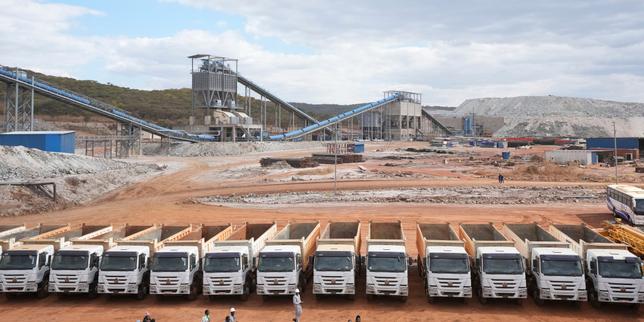
The mechanism behind that revenue surge tells a completely different story. It was not driven by Western buyers swooping in to rescue Zimbabwe from a monopoly. It was the direct result of Chinese mining giants completing massive, capital-intensive infrastructure upgrades on Zimbabwean soil.
When you ban raw rock and unrefined concentrate, only the operators with deep enough pockets to build immediate domestic processing capacity survive. In Zimbabwe, those pockets belong exclusively to Beijing.
- Zhejiang Huayou Cobalt has pumped $400 million into its Arcadia lithium sulfate refinery.
- Sinomine Resource Group poured $500 million into upgrading the historic Bikita Minerals site.
- Sichuan Yahua Industrial Group has rapidly broken ground on a third chemical processing facility at the Kamativi mine.
This is not a decoupling. It is deep, permanent structural integration. By forcing companies to shift from exporting raw spodumene to exporting value-added lithium sulfate salts, Zimbabwe has successfully kept processing jobs and taxes within its borders. But the owners of those processing facilities remain unchanged. Zimbabwe did not break the Chinese monopoly; it simply forced Chinese companies to build factories instead of just digging holes.
The Price of Speed
The rapid transition from an ad hoc export ban to the comprehensive Mineral Classification and Declaration—which extends this strict local-processing mandate to 13 other critical minerals—has exposed a fractured domestic reality. The policy is economically sound in theory. In practice, it operates on a razor's edge.
Mining operations require immense, unwavering baseload electricity. Zimbabwe’s national grid, plagued by years of underinvestment and generation deficits, cannot reliably power the heavy industrial flotation circuits and chemical baking kilns required to produce battery-grade lithium compounds.
To bypass this bottleneck, Chinese firms are building their own captive coal-fired and solar power stations. While this keeps the refineries running, it creates a parallel industrial infrastructure independent of the Zimbabwean state, offering little relief to the surrounding communities facing chronic power blackouts.
"The era of shipping raw rock for marginal returns is over," the Ministry of Mines declared.
But the rush to enforce this era has created a distinct investment chill outside of China. Western mining houses, bound by strict ESG mandates and risk-averse boards, look at Zimbabwe's sudden policy shifts and see a massive red flag. When a sovereign government can freeze shipments overnight, halt transit cargo at border posts without a transition period, and demand state equity through special-purpose vehicles, Western capital retreats.
Chinese state-linked enterprises, uniquely insulated by Beijing’s long-term strategic horizon, see this exact same volatility as a competitive moat. They do not walk away when the rules change overnight; they negotiate custom exemptions, buy up distressed assets from fleeing juniors, and tighten their grip.
The Exploitation Gap
The most jarring disconnect between Harare’s rhetoric and the reality on the ground lies in the mining communities of Buhera, Shurugwi, and Bikita. The government promotes the lithium boom as a triumph of national sovereignty. Local residents describe it as a governance disaster.
The House Select Committee on China recently detailed systemic regulatory failures across Zimbabwe’s lithium corridor. Because the state lacks the independent institutional capacity to police these remote, highly secure industrial zones, environmental and labor abuses go largely unchecked.
- Water Contamination: Toxic chemical run-off and heavy metal silt have repeatedly choked the Mutevekwi River, destroying local biodiversity and poisoning livestock water sources.
- Air Pollution: Unchecked open-pit blasting fills agricultural valleys with hazardous crystalline dust, sparking widespread respiratory issues among villagers who receive zero medical compensation.
- Labor Degradation: Local workers report grueling shifts, sub-minimum wages, and severe physical retaliation from foreign managers when they attempt to protest unsafe working conditions.
When local communities petitioned Parliament for intervention earlier this year, they were met with a wall of bureaucratic inertia. The hard truth is that Zimbabwe cannot afford to strictly penalize its primary source of foreign direct investment. The state is structurally dependent on the very companies it claims to be disciplining.
The Indonesian Mirage
Harare openly admits it is copying Indonesia’s nickel playbook. Jakarta successfully banned raw nickel ore exports, forced global stainless-steel and battery giants to build local smelters, and transformed its economy from a raw material exporter into an industrial powerhouse.
Zimbabwe faces a much steeper climb. Indonesia sits at the heart of maritime Southeast Asia, possesses robust domestic shipping infrastructure, and enjoys a highly diversified industrial base. Zimbabwe is landlocked. Every single ton of processed lithium sulfate must travel via truck through neighboring territories to reach the ports of Beira in Mozambique or Durban in South Africa.
Logistical friction eats away at the premium earned from local refining. When regional transport corridors clog or border posts experience systemic delays, the financial viability of these local processing plants begins to warp.
Furthermore, the global lithium market is notoriously volatile. While nickel enjoys stable, diversified industrial demand from the steel sector, lithium is tethered directly to the cyclical swings of the global electric vehicle market. By forcing a hyper-accelerated industrialization strategy during a period of global market consolidation, Zimbabwe has tied its entire economic outlook to a single tech-sector supply chain completely controlled by downstream buyers in Shanghai and Ningbo.
The policy experiment has yielded immediate fiscal results, bringing total quarterly mineral sales close to the $1 billion mark and proving that local value capture is lucrative. If Zimbabwe continues to mistake Chinese compliance for Chinese defeat, it will fail to build the independent regulatory state required to protect its own people. Beijing did not lose its grip on Africa's richest lithium fields; it simply upgraded its equipment.