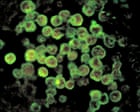
Primary amebic meningoencephalitis represents a pathological anomaly where ecological environmental factors intersect with human anatomical vulnerability to produce a near-certain mortality event. Driven by the organism Naegleria fowleri, infections follow a rigid mechanistic pathway rather than random chance. Evaluating this risk requires stripping away sensationalism to examine thermal thresholds, vector dynamics, and neuro-inflammatory destruction parameters.
The Thermal Ecology and Habitat Parameters
Naegleria fowleri functions as a thermophilic free-living amoeba. The organism thrives in environments where thermal energy drives metabolic rates skyward. Water bodies registering temperatures above 30 degrees Celsius provide optimal breeding conditions, and the organism can withstand thermal spikes up to 45 degrees Celsius.
Shallow lake beds, slow-moving river margins, and unchlorinated geothermal pools form primary reservoirs. Prolonged summer heatwaves elevate surface water temperatures while simultaneously lowering water volume, concentrating the organism within benthic sediment layers. When human activity disturbs this sediment, suspended amoebic loads spike exponentially in the water column.
Geographic expansion correlates directly with baseline environmental warming. Historical incidence data restricted the organism primarily to southern tier states, but incremental shifts in seasonal temperature averages have widened the thermal envelope. Northern latitudes now record sporadic positive detections as aquatic ecosystems cross baseline temperature requirements during peak summer months.
The Anatomical Vector and Neurological Invasion
Contraction of primary amebic meningoencephalitis depends entirely on a precise vector mechanic. Ingestion of contaminated water presents zero risk, as gastric acid neutralizes the organism. Infection demands mechanical force: water must be driven violently up the nasal passage.
Activities involving high-impact entry into water, such as diving, water-skiing, or aggressive cannonballs, generate the necessary hydraulic pressure. This force drives water past the nasal vestibule into the superior nasal cavity, reaching the cribriform plate.
Upon contacting the olfactory mucosa, the amoeba transforms from its flagellate or cyst phase into its active trophozoite stage. The organism exploits the olfactory nerve pathways, destroying receptor cells and migrating upward through the cribriform plate directly into the cranial vault. This direct neural conduit bypasses the blood-brain barrier entirely, granting the pathogen unhindered access to cerebral tissue.
Pathology and Clinical Progression Kinetics
Once inside the central nervous system, the organism initiates a rapid destructive cascade known clinically as primary amebic meningoencephalitis. The disease timeline follows an aggressive mathematical progression with a compressed incubation period ranging from one to twelve days, averaging five days post-exposure.
The physiological response to trophozoite proliferation triggers acute hemorrhagic necrotizing meningoencephalitis. The immune system mounts an overwhelming neutrophil response, which ironically accelerates cerebral edema through collateral tissue damage.
Clinical staging moves through distinct temporal markers:
- Phase one manifests as localized frontal headaches, low-grade fever, olfactory distortion, and mild nausea.
- Phase two accelerates into systemic toxicity characterized by intractable vomiting, projectile headaches, and photophobia.
- Phase three features neurological collapse, marked by a stiff neck, focal neurological deficits, seizures, altered mental status, and rapid descent into coma.
Mortality rates exceed 97 percent, with fewer than five documented survivors in the United States over recent decades out of more than 160 historical cases. Death typically results from uncal herniation driven by severe intracranial pressure within seventy-two to one hundred and twenty hours of symptom onset.
Diagnostic and Therapeutic Bottlenecks
Clinical intervention fails in the vast majority of cases due to structural delays in differential diagnosis. Symptoms mimic acute bacterial meningitis, leading clinicians down standard antibiotic pathways that possess zero efficacy against protozoan pathogens.
Confirmation requires lumbar puncture revealing elevated opening pressure, purulent cerebrospinal fluid with neutrophilic pleocytosis, elevated protein levels, and low glucose. Definitive identification demands wet mount microscopy observing motile trophozoites, or polymerase chain reaction assays, which remain unavailable in immediate point-of-care emergency settings.
Therapeutic protocols rely on aggressive multi-drug regimens combining amphotericin B, azithromycin, miltefosine, fluconazole, and dexamethasone, paired with targeted temperature management to control cerebral edema. Miltefosine, originally developed as an anti-leishmanial drug, offers the primary pharmacological hope by disrupting amoebic cell membranes. However, therapeutic windows close rapidly once vegetative destruction of the frontal lobes is underway.
Risk Mitigation Protocols
Eliminating Naegleria fowleri from natural aquatic ecosystems remains impossible due to its ubiquitous presence in benthic sediment. Risk reduction therefore relies entirely on behavioral modification protocols designed to disrupt the vector pathway.
Swimmers operating in warm freshwater during peak summer months must deploy mechanical barriers. Nose clips or manual occlusion of the nostrils during water entry prevent hydraulic pressure from forcing contaminated water across the cribriform plate. Avoiding thermal springs, shallow stagnant shorelines, and sediment-stirring activities during high-temperature periods reduces direct exposure to elevated organism densities. Public health strategy must pivot toward aggressive educational campaigns targeting demographic groups at highest statistical risk, specifically adolescent males aged five to fourteen, who display the highest frequency of high-impact aquatic behaviors in untreated water.
Central NC teen infected with 'brain-eating' amoeba
This video provides local news coverage regarding the identification of Naegleria fowleri in North Carolina, highlighting the regional public health response and environmental context surrounding recent infections.