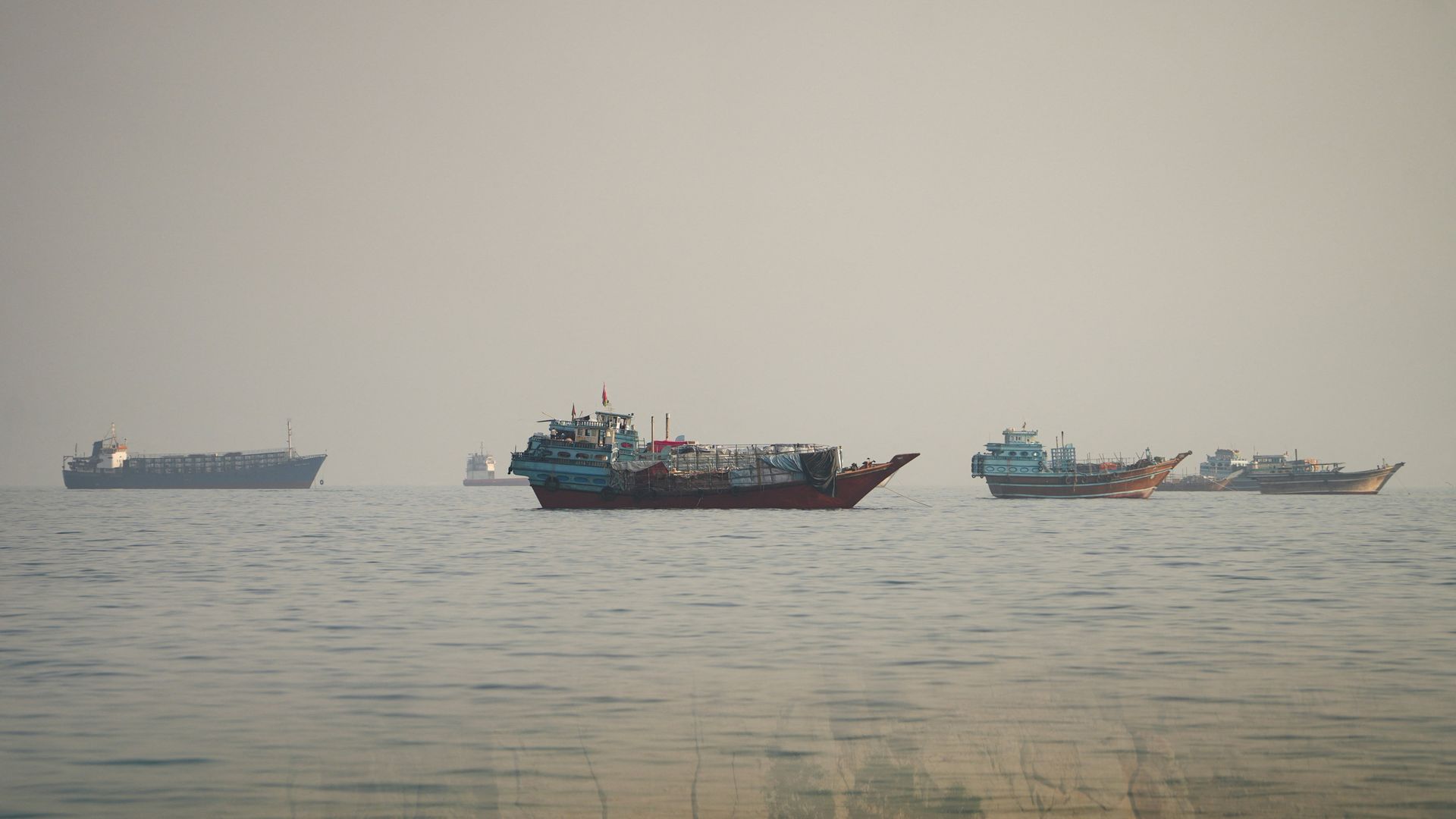
Salt cakes on the rusted guardrails of a container ship idling thirty miles off the coast of Oman. Below deck, the engines thrum in a low, agonizing crawl—a mechanical heartbeat reduced to a stutter. Up on the bridge, Captain Thomas grips a lukewarm mug of instant coffee and stares at a digital horizon that refuses to clear. He is not thinking about geopolitics in the abstract. He is thinking about fuel reserves, contract penalties, and the twenty-four crew members whose families are waiting for remittances in Manila and Mumbai.
Right now, Thomas and thousands of mariners like him are trapped in the psychological shadow of a geographical bottleneck. Twenty-one miles wide at its narrowest point, the Strait of Hormuz is the world’s most consequential choke point. A fifth of all petroleum consumed on the planet passes through this watery corridor. When the diplomatic air turns toxic here, the friction is felt immediately at gas pumps in Chicago, manufacturing plants in Osaka, and heating grids in Berlin.
For months, the atmosphere over these waters has been charged with static. Threats have been whispered and shouted across radio frequencies. Patrol boats have shadowed cargo haulers with aggressive, white-knuckle precision. The global economy held its breath, waiting for the spark that would turn a war of words into a kinetic catastrophe.
Then came the paper.
Through backchannels that bypassed the public theater of social media and televised posturing, a message crossed the desk of American negotiators. It was not a vague promise of de-escalation or a set of impossible preconditions. It was a structured, seven-day operational blueprint delivered by Iranian officials—a concrete sequence of steps designed to reopen the strait and pull the region back from the edge of the abyss.
To understand why this document matters, you have to look past the sanitized headlines and examine the sheer fragility of modern infrastructure. We live in an era that worships the illusion of infinite abundance. We tap a screen, and goods arrive at our doorsteps. We turn a key, and combustion engines roar to life. We rarely stop to consider that this entire civilization is tethered to a few narrow maritime highways, vulnerable to the whims of sovereign friction.
When the strait effectively closes—whether through physical blockages, maritime harassment, or the terrifying spike in insurance premiums that keeps ships docked—the effect is immediate. Supply chains do not break cleanly; they buckle, bruise, and bleed money. Every extra day a tanker spends anchored outside the Persian Gulf adds hundreds of thousands of dollars in operating costs. Those costs do not vanish into the ether; they cascade down the line until a loaf of bread in a small-town grocery store costs a few cents more, until an airline cancels a route, until a factory halts production because its chemical feedstock is sitting on a stationary hull in the Gulf of Oman.
This is why the arrival of a concrete plan changes the emotional tenor of the crisis. It replaces the infinite terror of the unknown with a timeline.
A seven-day plan is a peculiar psychological instrument. It breaks a mountain of hostility down into manageable stones. Day one is rarely about grand peace treaties; it is about communication channels opening, safety frequencies being re-established, and the immediate cessation of hostile targeting rhetoric. Day two and three involve naval de-confliction—moving warships back from the razor-thin median lines, establishing safe corridors for commercial transit, and allowing insurance underwriters to recalculate risk downward. Days four through six require technical verifications, mine-sweeping clearances where necessary, and the gradual resumption of normal convoy movements. By day seven, the choke point breathes again.
Of course, peace by spreadsheet is rarely clean. Trust between Washington and Tehran is not something you can measure in liters or tons; it is a ghost story built on decades of broken promises, covert operations, and mutual suspicion. When an American official reads a seven-day proposal from Tehran, every sentence is scanned for hidden traps. Is this a genuine off-ramp, or is it a tactical pause designed to buy time for military repositioning? Is it an olive branch or a propaganda stunt crafted to make the sender look reasonable while placing the burden of refusal on the other side?
The skepticism is justified. History is littered with agreements that dissolved before the ink could dry. Yet, there is a distinct desperation driving both sides toward pragmatism. No major power wants a wider conflagration in the Gulf. An all-out conflict would devastate Iranian infrastructure and economy far beyond what current sanctions have achieved, while plunging global markets into a depression-level shockwave just as fragile post-pandemic recoveries attempt to stabilize.
Consider what happens inside the negotiation rooms when these documents are evaluated. It is a quiet, claustrophobic theater. Analysts pore over every verb choice. Does "gradual reduction" mean forty-eight hours or five days? Does "security guarantees" imply a cessation of inspections or standard verification protocols? The diplomats do not smoke cigars in smoke-filled rooms anymore, but they drink cold water, rub tired eyes under fluorescent lights, and weigh the lives of thousands against the stubborn pride of states.
For the captain standing on the bridge of his idling tanker, none of these bureaucratic semantics are visible. He only knows that his company has given him a tentative green light to prep the engines. The engineers down below are already wiping grease from fittings that have sat motionless for weeks. There is a cautious murmuring among the crew—not celebration, but the quiet relief of people who can finally see an end to their floating purgatory.
The seven-day plan reminds us that even in the most hardened geopolitical standoffs, human beings retain the capacity to construct bridges over troubled water. It proves that crises rarely end with a sudden, blinding flash of total harmony; they end in incremental, tedious, bureaucratic steps. They end when someone sits down, draws a timeline, and says: Here is how we step back.
As the sun dips below the horizon, painting the oily swells of the gulf in shades of bruised purple and amber, the silhouette of a distant patrol boat shifts on the radar screen. It does not accelerate. It holds its station, watching, waiting for the first official nod from the capital cities thousands of miles away. The water remains narrow. The stakes remain impossibly high. But for the first time in months, the clock is ticking forward instead of standing still.