The standard media narrative on a potential naval blockade against Iran is as thin as the paper it’s printed on. You’ve read the headlines: a bold move by a returning Trump administration, a stranglehold on the Islamic Republic, and a "surgical" strike on their primary revenue stream. It sounds clean. It sounds decisive.
It’s also a complete delusion.
Most analysts treating a blockade as a simple "on/off" switch for the global economy have never stepped foot on a bridge or analyzed a maritime insurance manifest. They see a map and think a few gray hulls in the Persian Gulf can rewrite the laws of physics and supply chains. They’re wrong. A naval blockade in the modern era isn't a strategy; it’s a high-stakes gamble that ignores the reality of 21st-century warfare and the cynical mechanics of the global oil trade.
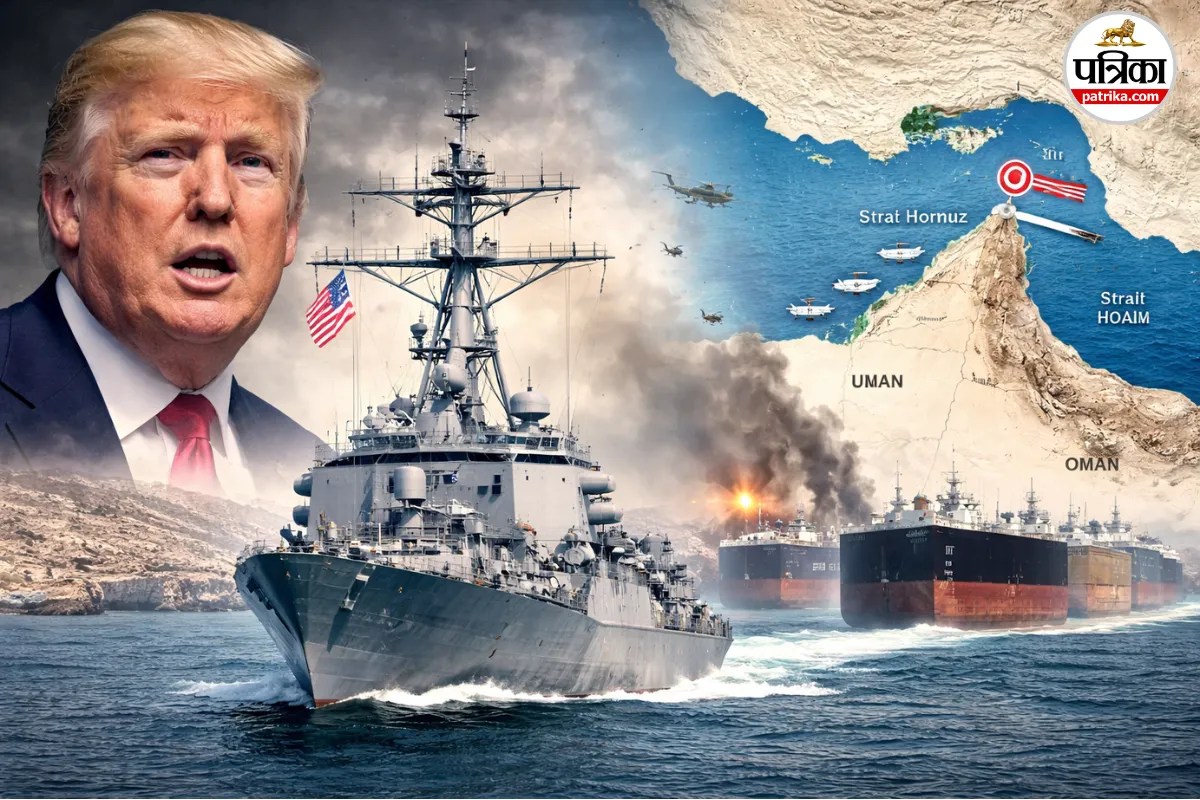
The Strait of Hormuz Is Not A Chokepoint You Can Own
Mainstream explainers love to point at the Strait of Hormuz and call it a "jugular vein." That’s cute imagery, but it ignores the tactical reality. You don't "blockade" the Strait of Hormuz without inviting a catastrophic asymmetric response that makes the 1980s Tanker War look like a bathtub scuffle.
Iran doesn't need a conventional navy to break a blockade. They have spent three decades perfecting the art of "swarming" tactics. We are talking about hundreds of fast-attack craft, anti-ship cruise missiles tucked into coastal caves, and smart mines that don't care about the flag on your hull.
If the U.S. attempts to physically stop Iranian tankers, Tehran doesn't just stop sending oil. They stop everyone from sending oil. The moment the first boarding party hits an Iranian deck, the insurance premiums for every vessel in the Gulf go parabolic. Lloyd’s of London doesn't care about political posturing; they care about risk. When the "War Risk" surcharges kick in, the blockade isn't just hurting Iran. It’s a self-inflicted wound on the global economy that would send Brent crude past $150 in a single afternoon.
The China Factor: The Ghost Fleet Is Real
The biggest flaw in the "pressuring Iran" argument is the assumption that Iranian oil flows through channels the West can actually see or control. It doesn't.
I have watched the evolution of the "Ghost Fleet" for years. These are aging tankers—often decades past their scrap date—operating under flags of convenience with their AIS (Automatic Identification System) transponders turned off. They engage in ship-to-ship (STS) transfers in the middle of the night in the South China Sea or the Gulf of Oman.
- Fact: Most Iranian oil isn't going to OECD nations. It’s going to "teapots"—independent refineries in China.
- The Reality: Do you think the U.S. Navy is going to board a Chinese-chartered vessel in international waters?
That isn't a blockade; it’s a declaration of war against the world's second-largest economy. Beijing isn't going to sit by while their energy security is dictated by a U.S. naval maneuver. They will simply facilitate the "dark" trade further, using non-dollar denominations and Russian-backed insurance schemes that are immune to Western pressure.
Why "Maximum Pressure" Usually Results In "Minimum Results"
The lazy consensus says that if you starve the regime of cash, they come to the table. History suggests the exact opposite.
When you implement a blockade, you don't weaken the IRGC (Islamic Revolutionary Guard Corps). You strengthen them. They are the ones who control the black markets. They are the ones who run the smuggling routes. By cutting off official trade, you hand the keys of the entire economy to the most hardline elements of the government.
We saw this in the previous "Maximum Pressure" campaign. Exports dropped, yes, but the regime’s grip on internal dissent tightened, and their regional proxy wars actually accelerated. A blockade is a gift to a dictator because it provides a perfect external scapegoat for every internal failure.
The Mathematical Impossibility Of A Total Blockade
Let’s look at the sheer scale of the task. The Persian Gulf is not a pond. To effectively monitor and intercept every suspicious vessel, you would need a carrier strike group and dozens of support ships dedicated only to interdiction.
$$Total Area \approx 251,000 \text{ km}^2$$
Maintaining a constant presence over this area while dodging land-based missile batteries is a logistical nightmare. Every hour a destroyer spends chasing a 40-year-old rust-bucket tanker is an hour it isn't countering threats in the Red Sea or the Indo-Pacific. It’s a massive drain on resources for a marginal return on "pressure."
The Oil Crisis Is Already Priced In (And It's Not What You Think)
The competitor's article asks if an oil crisis is looming. That’s the wrong question. The real crisis isn't a lack of oil; it’s the fragmentation of the global market.
If a blockade is enforced, we see a two-tier pricing system. China gets discounted "dark" oil from Iran and Russia, while the West pays a premium for "clean" oil from stable sources. We are essentially subsidizing the manufacturing costs of our greatest rivals by trying to play maritime policeman.
The Uncomfortable Truth
A naval blockade is a 19th-century solution to a 21st-century geopolitical problem. It assumes that physical force can override digital finance and clandestine logistics.
If the goal is to stop Iran’s nuclear program or curb their regional influence, a blockade is the most expensive and least effective way to do it. It triggers an immediate spike in global inflation, alienates key trade partners, and risks a hot war that no one—not even the hawks in Washington—is actually prepared to fight to a finish.
Stop looking at the maps and start looking at the manifests. The oil will flow. It will just flow in the dark, and we’ll be the ones paying for the flashlight.
Get used to it.