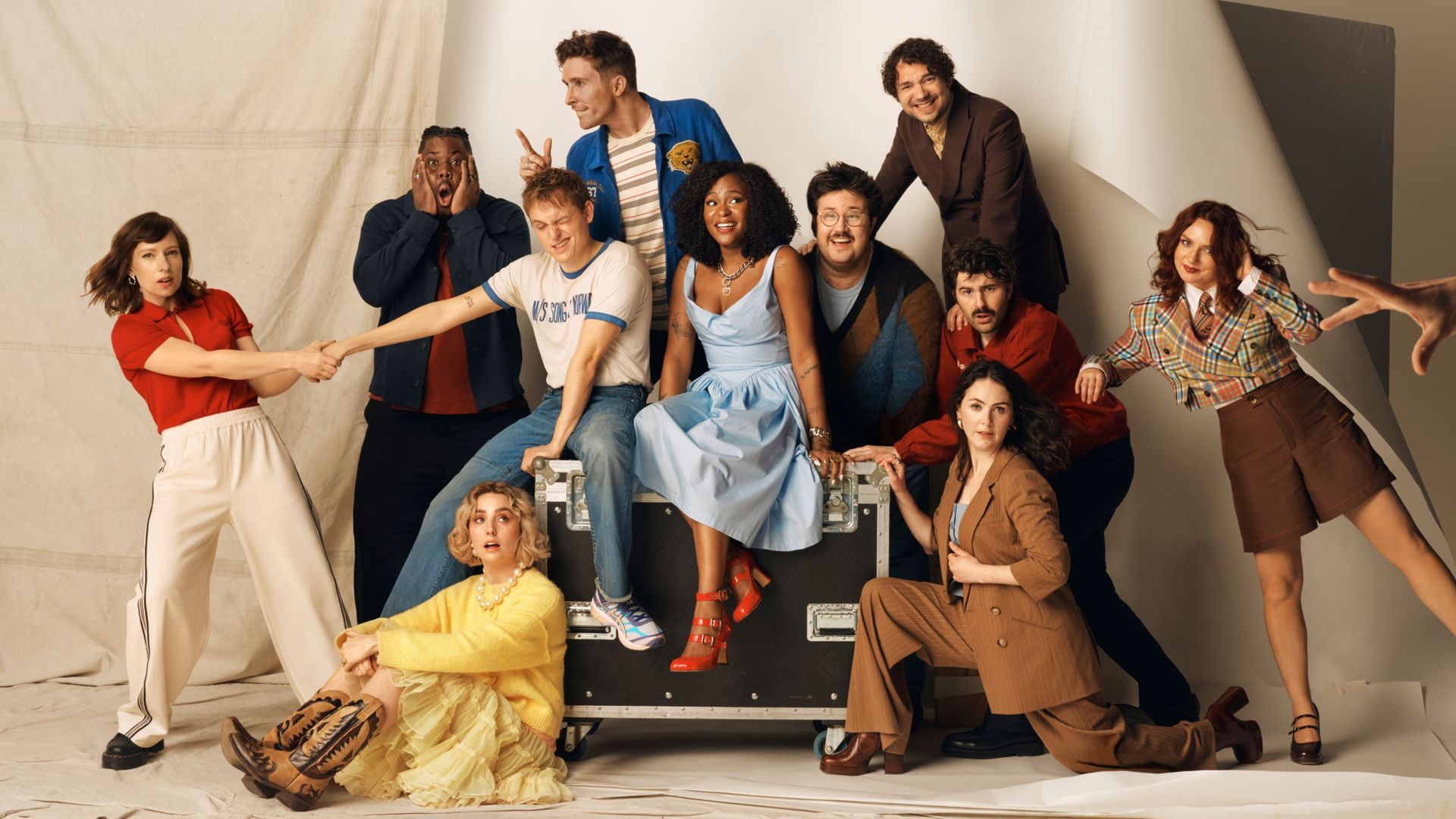
The Silence After the Setup
The red "ON AIR" light is a small, rectangular sun that burns with an unforgiving heat. In New York, that light has signaled the start of a cultural ritual for half a century. But as the first reviews trickle in for the British attempt to capture that same lightning in a bottle, we aren't just looking at television ratings. We are looking at a collision of two distinct national identities, separated by a common language and a very different sense of when to stop joking.
There is a specific kind of silence that happens when a joke fails in a live studio. It isn't the empty silence of a forest. It’s a heavy, pressurized vacuum. You can hear the rustle of a script, the frantic heartbeat of a performer, and the distant hum of a cooling fan that suddenly sounds like a jet engine. This is the tightrope the creators of Saturday Night Live UK decided to walk.
The critics have been sharpening their knives, but to understand why the reception feels so visceral, you have to look past the star ratings. You have to look at the anatomy of the "SNL" format itself and why exporting it is like trying to transplant a heart without a compatible blood type.
A New York State of Mind in London
For decades, Saturday Night Live has been the definitive American comedic institution. It is loud, topical, messy, and unashamedly centered on the pulse of Manhattan. When the announcement came that the format would finally cross the Atlantic for a localized version, the skepticism was immediate.
British comedy has traditionally thrived on the fringe. It’s the home of Monty Python, The Office, and Fleabag—shows that often rely on cringe, subtlety, or surrealism. SNL, by contrast, is a factory. It is a high-volume, sketch-delivery system designed to react to the news cycle with the speed of a tabloid.
Consider a hypothetical writer named Elias. Elias has spent ten years in the London stand-up circuit, honing a set about the quiet desperation of a commute on the Northern Line. Suddenly, he’s dropped into a writers' room where he has six days to produce three minutes of high-energy political satire that must land with a live audience of hundreds and a TV audience of millions. The pressure isn't just to be funny; it’s to be American-style funny.
The early reviews suggest that this friction is visible on screen. Critics have pointed out a "glossy" veneer that feels at odds with the gritty, irreverent spirit of British satire. It’s the difference between a pub brawl and a choreographed wrestling match. One is dangerous; the other is a performance of danger.
The Ghost of the Guest Host
One of the most criticized elements in the initial rollout has been the choice of hosts and the way they integrate—or fail to integrate—into the ensemble. In the US version, the host is the sun around which the episode orbits. In the UK reviews, there is a recurring sense that the hosts are being treated like delicate artifacts rather than members of a comedy troupe.
When a host is uncomfortable, the audience becomes a bodyguard. We stop laughing because we’re too busy worrying if they’re going to trip over their lines. This protective instinct is the death of comedy. Great sketch comedy requires a certain level of cruelty—not toward the performers, but toward the sacred cows of society. If the show feels too "polite," the satire loses its teeth.
The data supports this tension. While social media engagement for individual clips has been high, the "dwell time"—the amount of time a viewer stays tuned in during the live broadcast—has shown significant dips during the middle-act sketches. People are hunting for highlights, but they aren't necessarily buying into the journey.
The Newsroom Tension
Then there is the "Weekend Update" problem. In the American original, this segment is the spine of the show. It’s where the chaos of the week is processed into punchlines. But Britain already has a crowded market for news satire. Between Have I Got News For You and The Last Leg, the British public is already well-fed on political mockery.
To compete, SNL UK had to find a voice that wasn't just "The News, but faster." The reviews suggest they haven't found that frequency yet. There is a "try-hard" energy that permeates the satirical segments, a desperate reach for the viral moment that often results in missing the actual point of the joke.
Imagine a sketch about a failing Prime Minister. In the British tradition, we want to see the pathetic, damp reality of their incompetence. In the SNL format, there is a tendency to turn them into a caricature—a cartoon villain. The former is a mirror; the latter is a distraction.
The Logistics of Laughter
We often forget that comedy is a logistical feat. The sheer scale of producing a 90-minute live show is staggering.
- 12 to 15 sketches written, cast, and built in under a week.
- Dozens of costume changes happening in 30-second windows.
- Live musical performances that require a total shift in sound engineering.
- Real-time editing of camera cuts that can make or break a punchline.
When reviewers call the show "clunky," they are often reacting to these invisible gears grinding. If a camera is three inches off its mark, the physical comedy of a sketch can evaporate. If a cue card is held too low, the actor’s eyes drop, and the connection with the audience is severed.
This is the "invisible stake" of live TV. It is the thrill of potential disaster. The problem, according to the consensus of the first wave of reviews, is that the UK version feels too safe. The producers are so terrified of the disaster that they’ve coached the life out of the performance.
The Cultural Translation Gap
There is a specific rhythm to American English that suits the SNL format. It’s punchy. It’s staccato. It’s built on "the rule of three." British English, with its nuances and its love for the long, rambling payoff, often feels cramped in a four-minute sketch window.
Critics have noted that some of the best-performing sketches so far have been the ones that abandoned the American template entirely. When the show leans into the specific absurdities of British life—the passive-aggressive emails, the obsession with the weather, the weirdness of the class system—it begins to breathe.
But those moments are currently outliers. The majority of the content feels like it’s being translated through a filter. It's like watching a cover band: they know all the notes, but they don't know the soul of the song.
The Weight of the Name
Perhaps the biggest hurdle isn't the talent or the writing, but the three letters on the door: SNL.
By using that brand, the show invited a comparison it was never going to win. It’s like opening a burger joint in London and calling it "In-N-Out." Even if the burger is fantastic, people will complain that the bun isn't exactly the same shade of toasted gold they remember from their trip to Los Angeles.
The reviews are a reflection of that disappointment. They aren't just reviewing a comedy show; they are reviewing a ghost. They are looking for the spirit of Chevy Chase, Eddie Murphy, and Tina Fey in a studio in West London. It’s a heavy burden for a new cast to carry.
But there is a glimmer of hope.
History tells us that Saturday Night Live in America was also hated in its first season. The reviews in 1975 were scathing. Critics called it "aimless," "sophomoric," and "destined for cancellation." It took time for the cast to stop imitating their idols and start trusting their own instincts.
The question for the UK version is whether the network will give them that time. In the modern era of instant data and overnight cancellations, "time" is the rarest commodity in television.
The Human Core
Behind every "one-star" or "four-star" review is a group of people who stayed up until 4:00 AM on a Tuesday trying to figure out if a joke about a sentient toaster was too weird or not weird enough.
The human element of this story is the vulnerability of the performer. To stand on a stage, live, and ask for a laugh is an act of extreme bravery. When that laugh doesn't come, it’s a public rejection that few other professions have to endure.
The critics are doing their jobs. They are pointing out the flaws in the pacing, the derivative nature of the writing, and the lack of a cohesive voice. They are right to do so. But as we read those reviews, we should remember the "ON AIR" light.
That light doesn't care about your pedigree or your intentions. It only cares about the next sixty seconds.
The first season of any ambitious project is always a series of scars. You fail, you learn where the bruises are, and you try not to get hit in the same place twice. The reviews aren't a death sentence; they are a map of the minefield.
Whether Saturday Night Live UK survives depends on its ability to stop looking across the Atlantic for permission and start looking at the people sitting in the dark of the studio. Laughter is a conversation. Right now, the show is still talking to itself.
The real test begins when they finally decide to listen.
The red light is still burning. The audience is waiting. The silence is there, ready to be filled, if only the writers can find the courage to be as strange and as specific as the country they are trying to entertain.
Would you like me to analyze the specific sketches that the critics highlighted as the "turning points" for the show's reception?