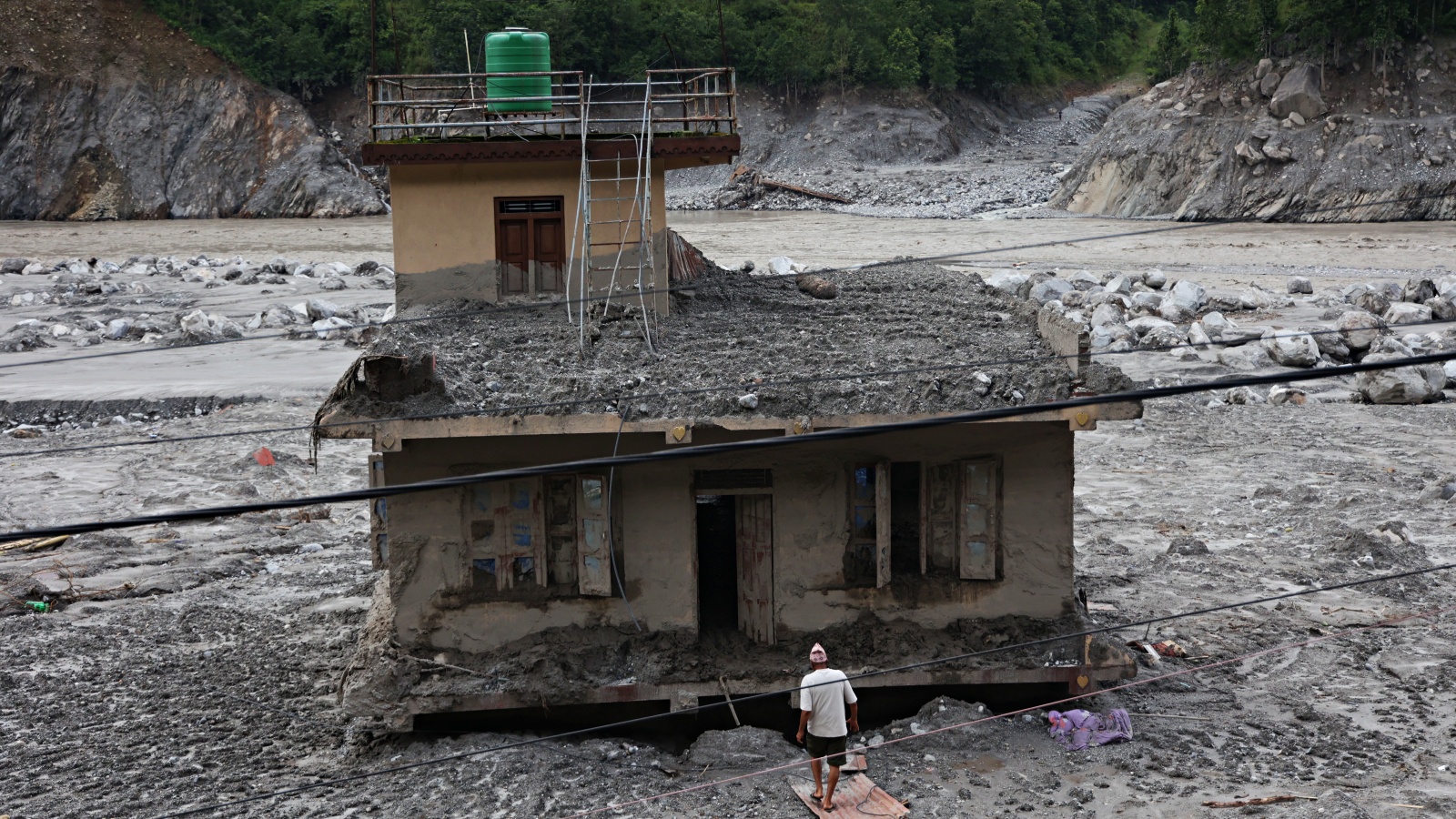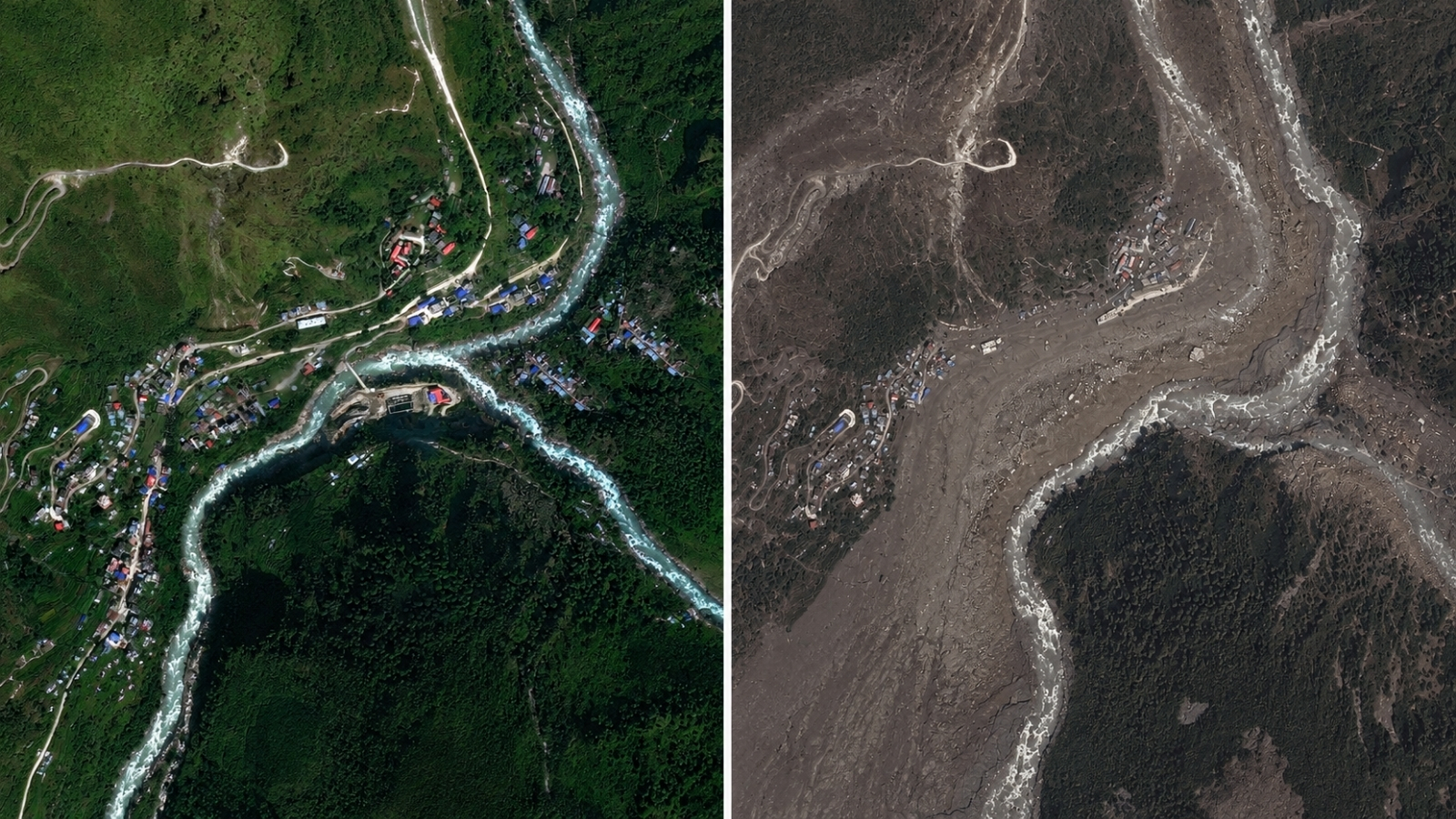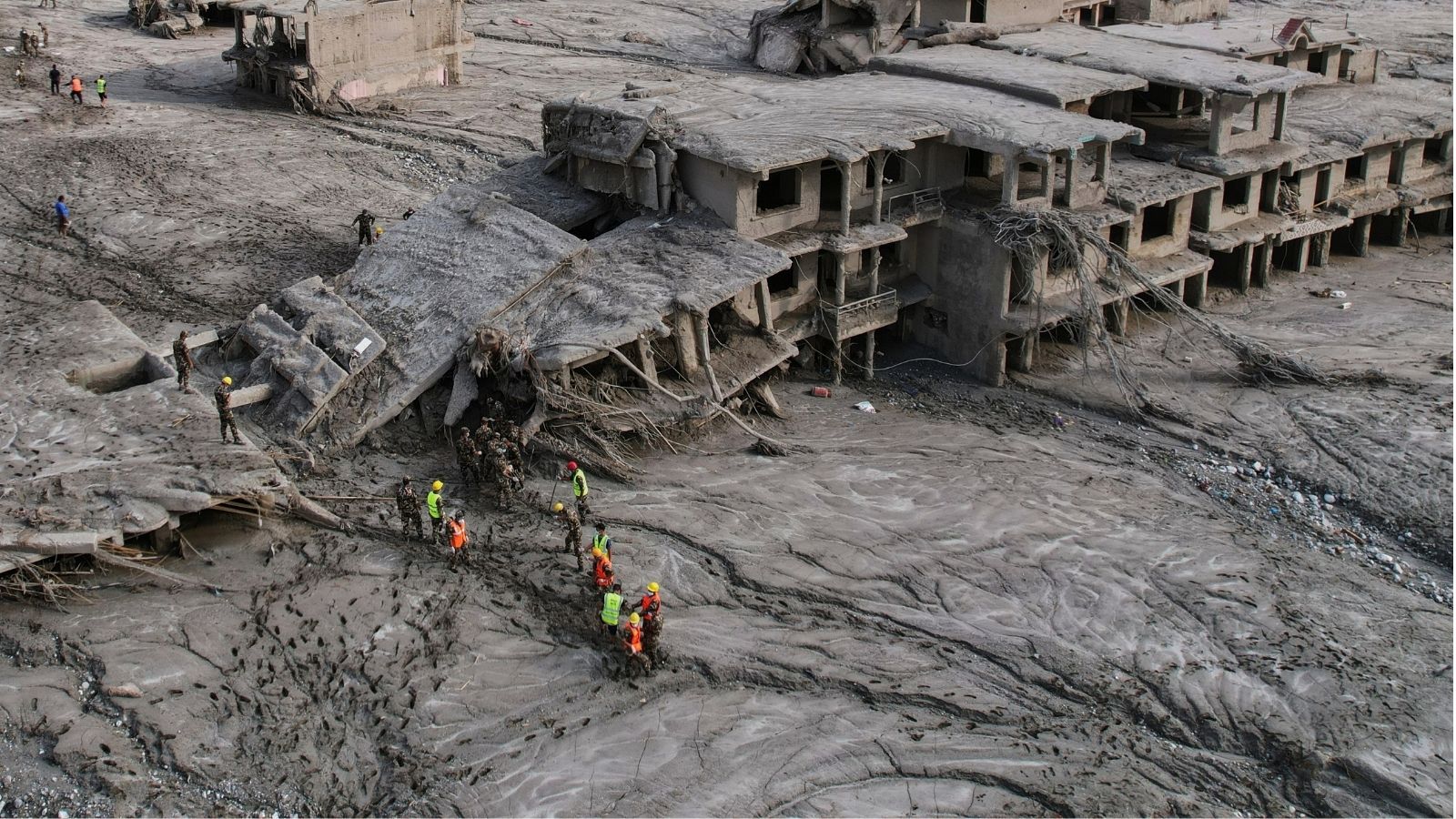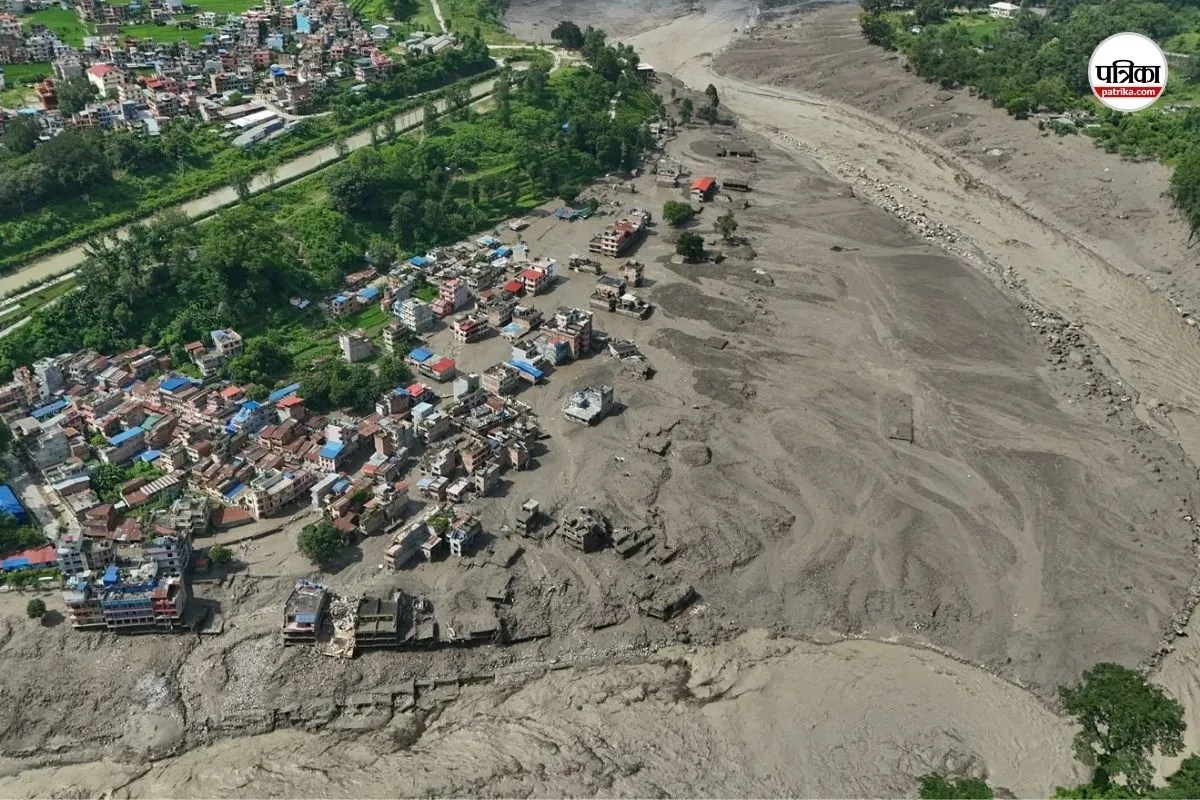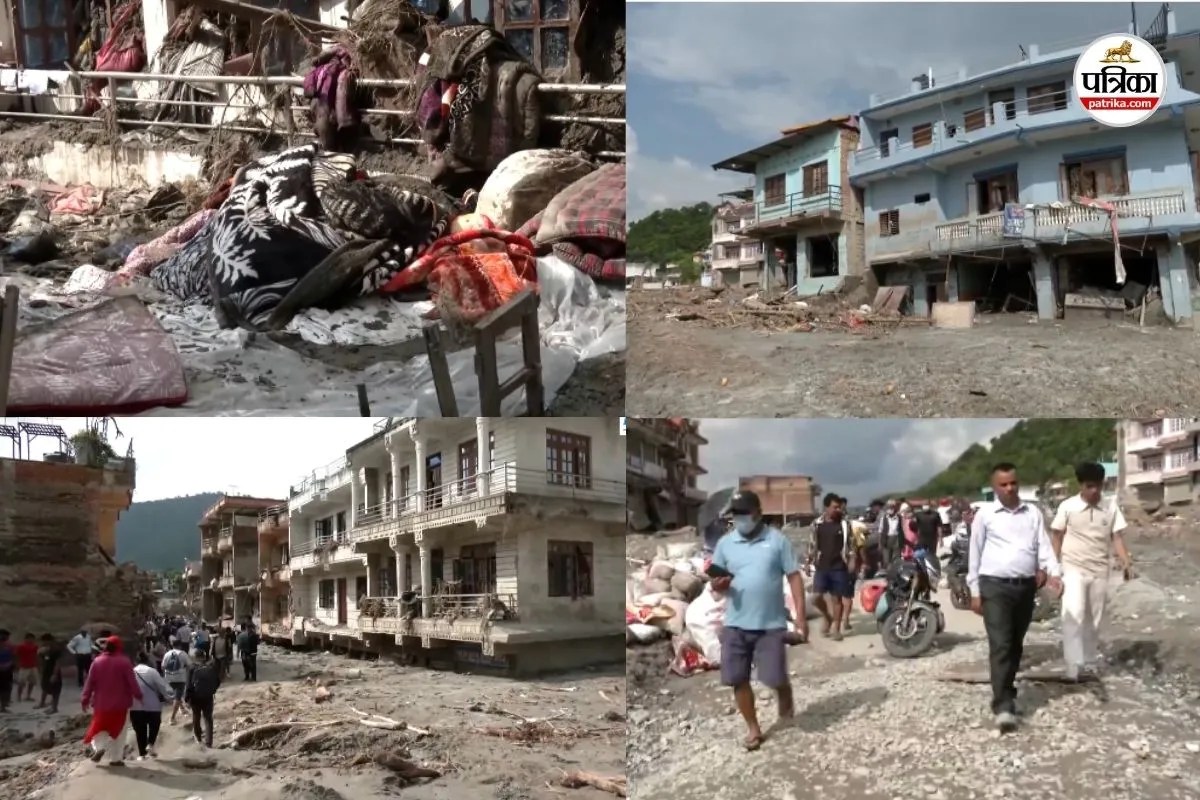
Entire residential clusters transformed into barren wastelands overnight. That is the grim reality facing parts of Nepal right now after a catastrophic glacial collapse and flash flood tore through mountain valleys. When you look at the ground zero areas today, you don't see normal flood damage. You see thick layers of gray silt, pulverized rock, and sand stretching as far as the eye can see.
The Scale of the Himalayan Catastrophe
Ministers touring the hardest-hit zones haven't held back their assessment. Officials have noted that the sheer scale of the disaster makes immediate damage estimation nearly impossible. Entire villages like Soley in Nuwakot were practically wiped off the map, buried under feet of mud.
What actually happened up in the mountains?
- A massive chunk of ice and rock broke loose near the border region.
- This triggered an avalanche-style debris flow into the river systems.
- Water levels in rivers like the Trishuli spiked violently in minutes.
- The resulting wall of water carried boulders, trees, and infrastructure downstream.
People are wandering through the grey slurry of what used to be their neighborhoods, trying to salvage pots, pans, or family documents. Most return empty-handed. The mud has hardened like concrete in some places, locking away everything underneath.
The Search for Missing Lives Continues
While authorities struggle to clear blocked arteries and shattered bridges, the human toll keeps climbing. Hundreds of people remain unaccounted for, including scores of foreign tourists and pilgrims traversing the Himalayan routes. Rescue teams equipped with helicopters are pulling survivors from isolated pockets, yet challenging weather continues to ground flights and stall operations.
Amidst the despair, survival stories still emerge. Rescue crews recently pulled a 97-year-old woman alive from the wreckage of a care home after she spent hours trapped beneath debris. Hauling her out via a construction excavator bucket became a brief symbol of resilience in an otherwise bleak landscape.
Yet, individual miracles don't change the macro picture. Drinking water contamination is rampant, local medical clinics are overwhelmed, and temporary shelters are filling up fast.
What Recovery Demands Now
Governments and international agencies are pledging millions in emergency aid, but money alone won't rebuild washed-out mountain passes or restore altered riverbanks overnight. Experts agree that changing climate patterns in the Himalayas are making these high-altitude outbursts increasingly frequent and volatile.
If you want to help or track ongoing relief efforts, look directly to established humanitarian channels like the Red Cross or specialized local disaster funds operating on the ground in Kathmandu. The priority right now is ensuring clean water and medical supplies reach the displaced before secondary health crises take hold.