Protests erupted across major global capitals as Israeli Prime Minister Benjamin Netanyahu delivered a defiant address at the United Nations General Assembly, directly challenging international consensus and inflaming an already volatile geopolitical climate. The speech, characterized by sharp rhetoric and a wholesale rejection of multilateral peace frameworks, served as a lightning rod for deep-seated grievances regarding the ongoing military campaign in Gaza and the broader regional stalemate.
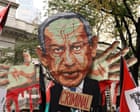
When a leader of a nation engaged in intense asymmetric warfare takes the podium of the world's premier diplomatic body to dismiss cease-fire appeals, the fallout is instantaneous. Streets from New York to London filled with demonstrators carrying banners denouncing the address before the final sentences had even echoed through the chamber. This immediate friction highlights a widening chasm between official state diplomacy and populist outrage, revealing how international forums have shifted from venues of negotiation to arenas of stark polarization.
The Rhetorical Strategy Behind the Defiance
To understand the speech, one must analyze the domestic and international pressures shaping the speaker's posture. Facing intense scrutiny at home from political rivals, legal battles, and families of hostages demanding a negotiated settlement, the prime minister utilized the global stage to project unyielding strength. Appealing to a specific base requires drawing hard lines in the sand, even if those lines alienate traditional allies and invite severe diplomatic censure.
Diplomatic cables buzzed within minutes of the address concluding. Western allies who traditionally shield Israel in international forums found themselves caught in an awkward defensive posture, forced to parse the prime minister's words while reaffirming their humanitarian commitments. The strategy relies on calculated friction. By daring the international community to impose tangible consequences, the administration calculates that strategic necessity and historical alliances will ultimately prevent a complete diplomatic rupture.
Street Level Fallout and Global Repercussions
Outside the United Nations headquarters on First Avenue, the scene resembled a pressure cooker of competing passions. Pro-Palestinian activists, human rights advocates, and members of the Jewish diaspora critical of current policies converged in numbers that overwhelmed local law enforcement barricades. Chants echoed against the glass facade of the international organization, underscoring a profound disillusionment with the capacity of global institutions to halt civilian casualties or enforce binding resolutions.
Similar scenes played out across Europe and the Middle East. In Athens, Rome, and Amman, demonstrators marched toward diplomatic missions, demanding immediate expulsions of ambassadors and total arms embargoes. These reactions demonstrate that the speech was not merely a diplomatic exercise in rhetoric, but a tangible catalyst for street-level mobilization that threatens to destabilize fragile domestic coalitions in countries attempting to maintain neutrality.
The Diplomatic Cost of Isolation
Every diplomatic maneuver carries a price tag. By explicitly rejecting the two-state paradigm and casting doubt on the efficacy of United Nations agencies operating in conflict zones, the Israeli leadership accelerated a trend toward diplomatic isolation. While domestic audiences may rally around a display of defiant independence, foreign ministries in Washington, Paris, and Berlin are quietly recalculating the parameters of their military and intelligence cooperation.
The friction points are no longer theoretical. Humanitarian access, reconstruction funding, and the legal architecture of international humanitarian law form a complex web of mutual obligations. When a head of government signals disregard for the consensus underpinning these frameworks, partners are forced to contemplate measures that were previously considered unthinkable, ranging from targeted sanctions on extremist cabinet ministers to conditional arms shipments.
Historical Parallels and the Road Ahead
History suggests that defiant speeches at the General Assembly rarely alter ground realities through persuasion alone. Instead, they freeze existing paradigms, hardening the resolve of combatants while providing domestic political cover for prolonged conflict. The speech will be remembered not as a turning point toward peace, but as a milestone in the deepening alienation between traditional Western democracies and an increasingly uncompromising Israeli security establishment.
As the smoke clears from the protest lines and the rhetorical dust settles in the General Assembly hall, the underlying dynamics of the crisis remain entirely unchanged. Millions of displaced civilians face an uncertain future amid ruined infrastructure, hostages remain unaccounted for, and regional actors continue to weigh the threshold for a wider conflagration. The words spoken from the high podium have faded, but the consequences of the defiance continue to ripple across a fractured world.