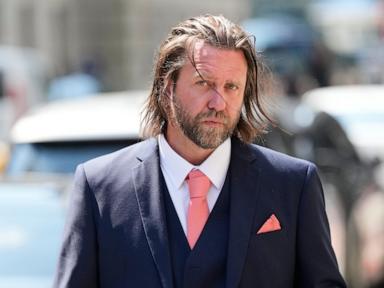
The mainstream media loves a clean, moralistic narrative. When Carl Erik Rinsch, the director of an unfinished sci-fi series called Conquest, blew $11 million of Netflix’s money on risky stock options, Dogecoin, and luxury cars, the press treated it as a cautionary tale of Hollywood hubris. They painted Netflix as the naive victim of a rogue auteur, a billion-dollar studio hoodwinked by a charismatic eccentric.
They have it completely backward.
The $11 million loss wasn't a failure of Netflix's risk management. It was a masterclass in calculated capital allocation. In the hyper-competitive streaming wars, writing an $11 million check that goes up in smoke is a feature, not a bug. It is the cost of buying options on asymmetric upside, and the pearl-clutching over Rinsch's prison sentence misses the entire economic reality of modern entertainment.
The Myth of the Safeguarded Budget
Mainstream commentators ask the same naive question: How could a studio hand over millions without seeing a single finished episode?
They ask this because they do not understand how venture-scale content acquisition works. I have spent years analyzing entertainment balance sheets, and I can tell you that the traditional studio model—where executives micro-manage every dime spent on catering and continuity grips—is dead.
Netflix operates like a venture capital firm, not a 1990s movie studio.
When you deploy billions of dollars a year into content, your goal is not to ensure that every single project hits its delivery date. Your goal is to find the next Squid Game or Stranger Things—hyper-hits that generate billions in enterprise value. To find those black swans, you must place highly speculative bets on volatile creators.
Imagine a scenario where a VC fund invests $10 million into ten different pre-revenue startups. Eight fail completely. One breaks even. One becomes an absolute titan, returning 200x the initial investment. No one calls the VC "naive" for losing money on the eight failures; they call them a genius for backing the winner.
Rinsch was a high-risk lottery ticket. He had a grand vision for a sweeping sci-fi epic. Netflix bought the ticket. The ticket happened to lose. Framing this as a catastrophic failure of corporate oversight implies that Netflix should implement suffocating bureaucracy on every creator, which would instantly kill the creative freedom that attracts top-tier talent in the first place.
The Brutal Math of Streaming Asymmetry
Let us break down the actual numbers, because the $11 million headline is designed to shock people who do not understand corporate scale.
At the time of this production, Netflix’s annual content budget was hovering around $17 billion. Eleven million dollars represents roughly 0.06% of that budget.
To put that in perspective for the average consumer:
- If you make $100,000 a year, $11 million to Netflix is the equivalent of $64 to you.
- It is a dropped line-item.
- It is rounding error noise.
Had Conquest succeeded, it could have anchored a multi-season franchise worth hundreds of millions in subscriber retention and global cultural footprint. The downside was capped at the exact amount invested ($11 million), while the upside was virtually limitless.
When the downside is strictly capped and the upside is infinite, you take that bet every single time. The real disaster for a modern media company is not losing money on a failed project; it is missing out on a massive cultural phenomenon because you were too cowardly to trust a volatile director.
The Danger of the "Safe" Alternative
The lazy consensus suggests that Netflix should have pulled the plug earlier, or heavily audited Rinsch's personal accounts before transferring additional funds.
Let us look at what happens when a studio adopts that risk-averse mentality. Look at the legacy Hollywood studios that treat every dollar like it belongs in a Swiss bank vault. They produce endless, sanitized sequels, derivative reboots, and focus-grouped content that offends no one and excites no one. They are bleeding subscribers and losing billions in market cap because they are terrified of the exact volatility that Rinsch represented.
By letting creators run wild, Netflix occasionally gets burned. But they also get House of Cards, The Crown, and Formula 1: Drive to Survive. You cannot have the massive, culture-shifting hits without accepting the risk of an absolute trainwreck.
The institutional investors who actually understand the entertainment business do not care about the Rinsch fraud. They care about hit-rate efficiency across the entire portfolio. If Netflix's hit-rate stays above their threshold, individual project failures are completely irrelevant.
The Truth About Creative Auditing
There is a glaring downside to this contrarian view, and it is one that industry insiders rarely admit publicly: this model creates an environment ripe for exploitation. When you treat capital allocation like a numbers game, bad actors will inevitably slip through the cracks. Rinsch took advantage of a system built on trust and speed.
But attempting to build an foolproof system to prevent fraud would cost more than the fraud itself. The administrative overhead, the legal friction, and the chilling effect on legitimate, eccentric artists would destroy far more value than $11 million ever could.
Stop looking at the Rinsch case as a breakdown of Hollywood business practices. It was simply the cost of doing business at scale. Netflix didn't lose the game. They played the odds, absorbed the hit, and moved on to the next bet before the ink on Rinsch's sentencing paperwork was even dry.
Stop demanding that creative institutions act like commercial banks. If you want absolute financial predictability, go buy government bonds. If you want to build the dominant media empire of the twenty-first century, you write the check, you take the risk, and you don't cry when a director buys Dogecoin with your pocket change.