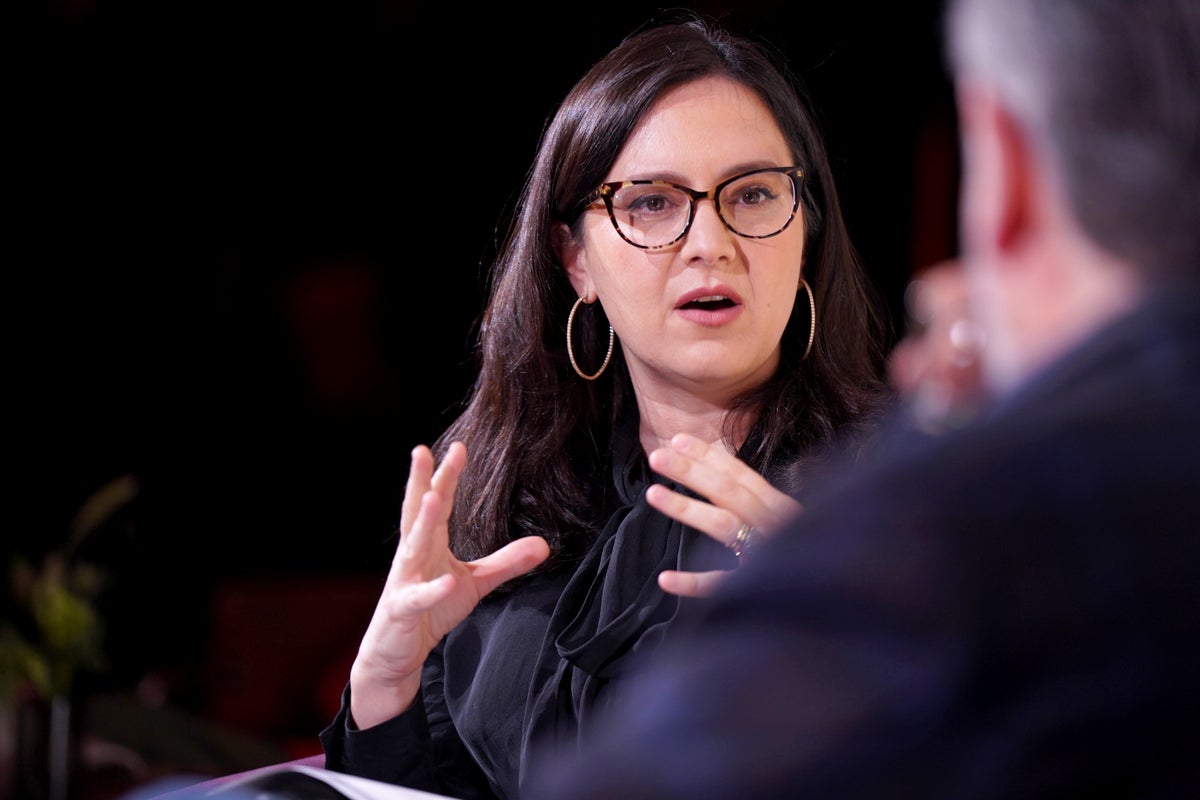
The legacy broadcast model is currently trapped in a terminal feedback loop where audience erosion dictates defensive programming, which further accelerates audience loss. At CBS News, the reported involvement of Bari Weiss as a consultant to the Paramount Global board suggests a shift from conventional "brand refreshing" to a radical re-alignment of the network’s editorial value proposition. This is not a superficial pursuit of "MAGA-coded" talent; it is an attempt to solve the Media Trust Asymmetry, a structural deficit where the perceived ideological distance between the newsroom and the median consumer creates a hard ceiling on growth.
The Architecture of Audience Displacement
To understand why CBS is considering a 60 Minutes overhaul, one must first identify the three primary stressors currently destabilizing the network.
- The Audience-Demographic Mismatch: Broadcast news viewers are aging out of the primary advertising demographic (25-54) at a rate that traditional replacement cannot fix. The cohort replacing them—Gen X and Millennials—has been socialized on decentralized, high-autonomy media (Substack, Podcasts, X), where the authoritative "Voice of God" tone of traditional broadcast is viewed with skepticism rather than reverence.
- Trust Elasticity: Institutional trust has decoupled from professional credentials. In the current market, "credibility" is a function of perceived independence rather than institutional affiliation. By bringing in Weiss—a figure who famously exited the New York Times citing an illiberal newsroom culture—CBS is signaling a pivot toward Counter-Elite Credibility.
- The Revenue Lag: As linear TV ad spend migrates to targeted digital platforms, broadcast networks are forced to optimize for "appointment viewing." 60 Minutes remains the last great citadel of this model, yet its cultural relevance has thinned as it competes with long-form digital competitors who face zero time constraints or FCC oversight.
The Strategic Logic of Political Coding
The phrase "MAGA-coded" is frequently used as a pejorative in media circles, but in a consultancy framework, it represents a specific Market Positioning Strategy. Weiss’s objective is likely the identification of talent that possesses "Cultural Legibility" to the center-right. This is not about partisan advocacy; it is about cognitive empathy for a massive, underserved segment of the American market.
The network’s current challenge is the Filtered Information Problem. When a news organization operates within a narrow ideological bandwidth, it develops blind spots regarding what the public considers important. This leads to "News Gaps"—stories that resonate deeply with the public but are ignored or derided by the editorial board. By introducing a "MAGA-coded" anchor, CBS aims to close this gap, thereby capturing the "Lost Middle" of the American audience that has defected to alternative media.
The Cost Function of Institutional Inertia
Changing a legacy brand like 60 Minutes incurs significant internal friction. The resistance Weiss faces is a predictable byproduct of Organizational Path Dependency. Large institutions become optimized for a specific type of output and find it nearly impossible to pivot when market conditions change.
The risks associated with this intervention include:
- Talent Attrition: Established producers and reporters may view the shift as a violation of the network’s historic mission, leading to a "brain drain" of veteran institutional knowledge.
- Brand Dilution: If the pivot is executed poorly—leaning into grievance-based content rather than rigorous, pluralistic reporting—it risks alienating the existing core audience without successfully onboarding a new one.
- Advertiser Volatility: Certain high-premium brands are risk-averse regarding any content perceived as polarizing. The network must quantify whether the gain in raw viewership outweighs the potential loss in CPM (Cost Per Mille) from sensitive advertisers.
Re-Engineering the Editorial Engine
The Weiss proposal implies a move toward a Pluralistic Editorial Framework. This framework assumes that no single perspective can capture the complexity of a polarized society. Instead of a monolithic voice, the network moves toward a portfolio of voices that reflect the actual diversity of thought within the country.
This transition requires a re-evaluation of the "Package" format. The 12-to-15-minute segments of 60 Minutes are under pressure from two sides: the 15-second TikTok clip and the three-hour Joe Rogan-style interview. To compete, CBS must move toward a Multi-Modal Distribution Strategy, where the broadcast segment serves only as the high-gloss anchor for a much wider ecosystem of long-form digital content, raw data releases, and interactive follow-ups.
The Credibility Deficit and the Weiss Variable
The selection of Bari Weiss as a catalyst for change is a deliberate choice to leverage a Dissident Brand. Weiss represents the "Exit" strategy in the "Voice, Loyalty, and Exit" model of institutional decline. Her presence on the board forces a confrontation with the reality that the prestige news model is failing to reach a majority of the population.
The success of this overhaul depends on whether the network can achieve True Dialectical Tension. It is not enough to simply hire a single anchor with different views. The internal culture must be reconfigured to value internal dissent. If the "MAGA-coded" anchor is isolated or treated as a token, the audience will perceive the insincerity immediately, and the trust deficit will widen.
Structural Bottlenecks to Execution
The merger environment at Paramount Global creates an additional layer of complexity. Strategic shifts are difficult to execute during periods of high corporate uncertainty. The Weiss-led overhaul faces a "Window of Opportunity" problem. If the changes are not implemented before a potential sale or restructuring, the project may be scrapped by new leadership seeking short-term cost-cutting over long-term brand rehabilitation.
The network must also contend with the Algorithmic Shadow. Even if CBS produces world-class, balanced journalism, it must still find a way to penetrate the algorithmic silos that govern how information is consumed today. This requires a technical overhaul as much as an editorial one—investing in a proprietary platform that reduces reliance on third-party social media intermediaries.
Calculated Forecast
The trajectory of the CBS/Weiss partnership indicates a recognition that the "Center" of American media has shifted. The network is essentially conducting a Stress Test of the Legacy Model. If they can successfully integrate a diverse range of political viewpoints without sacrificing editorial rigor, they provide a blueprint for the survival of broadcast news. If they fail, they confirm the thesis that institutional media is incapable of reform, likely triggering a final, rapid migration of viewers to fragmented, independent platforms.
The strategic play here is the abandonment of "View-from-Nowhere" objectivity in favor of Transparent Subjectivity and Rigorous Verification. The goal is not to find a neutral anchor, but to find an anchor whose biases are transparent and whose commitment to the facts is absolute. This is the only currency that retains value in a high-information, low-trust environment.
CBS must move immediately to secure talent that bridges the cultural divide, specifically those with established digital footprints and independent followings. The metric of success will not be the initial ratings spike, but the "New Viewer Retention Rate"—a measure of how many people from outside the traditional broadcast ecosystem can be converted into regular consumers of CBS content. This requires a total deconstruction of the 60 Minutes aesthetic, prioritizing raw, unvarnished inquiry over the polished, often predictable narratives that have defined the program’s recent era.